MercoPress. South Atlantic News Agency
Economy
-
Friday, August 21st 2009 - 11:00 UTC
German surprise rebound confirmed by cautious Bundesbank

German economic growth is likely to gain traction in the coming months, the nation's influential central bank, the Bundesbank, said Thursday after Europe's biggest economy unexpectedly climbed out of recession during the second quarter.
-
Friday, August 21st 2009 - 10:49 UTC
Mexican economy shrinks a record 10.3% in second quarter
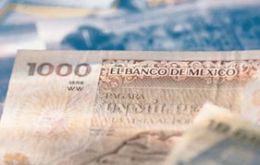
Mexico's economy plunged 10.3% in the second quarter its deepest contraction on record as shrinking exports forced factories to slash production and cut jobs and the tourism industry was knocked out by the A/H1N1 virus flu.
-
Thursday, August 20th 2009 - 16:05 UTC
Argentina and Brazil moving towards “financial integration”

Argentina and Brazil signed Wednesday an agreement to swap domestic currencies for the equivalent of a total 1.8 billion US dollars, which could be used to increase international reserves. The accord was described as an important effort towards “financial integration” in the framework of Mercosur.
-
Thursday, August 20th 2009 - 16:04 UTC
Krugman anticipates strong Latam recovery, but behind Asia

Economics Nobel Prize Paul Krugman warned Wednesday that global real recovery will take time and that he’d be surprised to see within that scenario an improvement in the labour market. However he was upbeat about Latinamerica which he anticipated will recover faster that developed countries, although behind Asia.
-
Thursday, August 20th 2009 - 15:57 UTC
Buenos Aires and Santiago among cheapest cities in the world

Oslo, Zurich, Copenhagen, Geneva, Tokyo and New York are considered the world's most expensive cities based on a standardized basket of 122 goods and services from the UBS “Prices and Earnings” survey.
-
Thursday, August 20th 2009 - 07:17 UTC
Chile in recession: economy sinks 4.5% in the second quarter
Chile’s economy shrank by 4.5% in the second quarter of this year, faring just slightly worse than the 4.4% GDP drop anticipated by economists, the Central Bank reported this week.
-
Thursday, August 20th 2009 - 05:21 UTC
Brazil, Chile, Peru and Colombia recovering from the global crisis

Brazil, Chile, Colombia and Peru are in the process of economic recovery, while Argentina, Bolivia, Ecuador, Paraguay, Uruguay and Venezuela are in a recessive phase according to a report released Wednesday and jointly drafted by Brazil’s Getulio Vargas Foundation and the University of Munich.
-
Thursday, August 20th 2009 - 05:03 UTC
Warren Buffet praises US “rescue” but warns about mounting debt

US billionaire Warren Buffett said that the US economy appears to be recovering, though the “enormous dosages of monetary medicine” used to fix it might pose a threat as “ominous” as last year's financial crisis itself.
-
Thursday, August 20th 2009 - 04:51 UTC
“Deep scars” from recession will an effect for years to come, warns IMF

The world has begun to recover from recession but the process will not be simple, the International Monetary Fund (IMF) has warned. The recession has “left deep scars which will affect both supply and demand for many years to come” according to IMF chief economist, Olivier Blanchard.
-
Thursday, August 20th 2009 - 04:37 UTC
Six million working age adults Britons claiming benefits

The number of British working-age adults claiming benefits is set to hit six million this month, a UK think-tank has predicted. The centre-right Policy Exchange forecast the rise using official Government figures on benefit claimants and the latest unemployment figures.