MercoPress. South Atlantic News Agency
Economy
-
Tuesday, July 13th 2010 - 00:56 UTC
FAO says “some regulation• of commodities future markets is “desirable”

Some regulation of commodities futures markets is desirable, according to FAO, but any intervention should be cautious and stop short of imposing tight limits or an outright ban on such trading
-
Tuesday, July 13th 2010 - 00:47 UTC
For the first time since 2002 Fitch raises Argentina’s credit ratings out of default

Fitch Ratings on Monday raised Argentina's credit ratings out of default, following the completion of a debt swap last month, but said the deal is not enough to open new financing sources for the country.
-
Monday, July 12th 2010 - 03:52 UTC
Argentina and Venezuela with highest (and climbing) inflation in South America

While most of South America is undergoing a deceleration of consumer prices Argentina and Venezuela are the only countries to experience a significant increase in inflation, making it one of the main concerns or public opinion.
-
Monday, July 12th 2010 - 03:48 UTC
Chinese trade “has recovered to pre-crisis levels” affirms Beijing
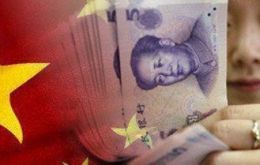
China’s trade surplus widened to the highest this year and exports climbed more than estimated to a record in June, adding pressure on the government to let the currency gain after the U.S. said the Yuan “remains undervalued.”
-
Monday, July 12th 2010 - 03:41 UTC
Record import of soy beans by China during June

Soy-bean imports by China, the biggest buyer, jumped to a record in June after a halt to Argentine soy oil shipments and increasing feed consumption boosted demand from crushers, according to Bloomberg.
-
Saturday, July 10th 2010 - 07:41 UTC
US no longer world’s great consumer; needs to target sustainable debt, says IMF

The US economy is recovering after the global economic crisis, but consumers and financial institutions remain cautious as weak housing markets, high unemployment, and risks in Europe remain a concern, the IMF staff said in a press conference that followed its annual review of the world’s largest economy.
-
Saturday, July 10th 2010 - 07:18 UTC
Argentine agro-exports help boost international reserves to over 50 billion USD

Argentina’s international reserves once again exceeded the 50 billion US dollars mark, boosted by an intervention to the Central Bank by the market in a record purchase of 262 million USD.
-
Saturday, July 10th 2010 - 07:13 UTC
School comic strips to depict the turbulent IMF/Argentina relation

Argentina high school students are enjoying four comic strips, part of the official program, which satirizes the turbulent relation of the country with the IMF, presenting one of the works under the attractive name of “An intruder in the family”.
-
Friday, July 9th 2010 - 05:34 UTC
Euro zone rates unchanged; all eyes set on 23 July EU banks’ stress-tests

The European Central Bank left its key interest rate on hold for the fourteenth consecutive month in July as the region's banks face stress tests to ensure the stability of the financial system that is threatened by investor fears about debt.
-
Friday, July 9th 2010 - 05:29 UTC
UK leaves rates at a record low for the 16th month running

The Bank of England has kept UK interest rates on hold at a record low of 0.5% for the 16th consecutive month. The Bank's Monetary Policy Committee (MPC) also decided on Thursday not to inject any more money into the economy under its policy of quantitative easing (QE).