MercoPress. South Atlantic News Agency
Economy
-
Friday, February 26th 2010 - 01:23 UTC
Fed probe into Wall Street firms role in helping Greece mask debt woes
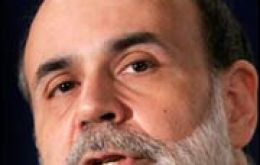
The role of Wall Street firms in deals that may have helped Greece mask its debt woes are under scrutiny in the US, the Federal Reserve chief has said. Ben Bernanke said the Fed and the US financial watchdog were “looking into a number of questions” related to banks' derivatives arrangements with Greece
-
Thursday, February 25th 2010 - 05:03 UTC
Argentine court keeps freeze on Central Bank reserves

An Argentine federal court kept a hold on the government’s plan to use 6.6 billion US dollars in Central Bank reserves to pay debt, sending the case to the Supreme Court for a final ruling, Argentina’s Court Information Center Web site said.
-
Thursday, February 25th 2010 - 04:52 UTC
Bernanke reaffirmed low interest rates for an extended period
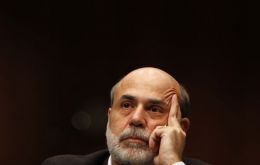
United States stocks rose on Wednesday after the Federal Reserve chairman reaffirmed his commitment to keep interest rates low for an extended period to sustain the still fragile recovery. Ben Bernanke told Congress a weak job market and tame inflation warranted keeping rates close to their near-zero level for the time being.
-
Thursday, February 25th 2010 - 04:48 UTC
Official Argentine economy data shows recovery in underway

Argentina's trade surplus widened 25% in January from the same month a year ago as both exports and imports rose, signalling an economic recovery is underway.
-
Thursday, February 25th 2010 - 01:25 UTC
EU ready to reach trade agreements with Latinamerica by next May

Spanish president Jose Luis Rodríguez Zapatero and European Commission president Jose Manuel Durao Barroso said they were confident of a successful conclusion of trade and cooperation agreements the EU is currently in the process of negotiations with Latinamerica.
-
Thursday, February 25th 2010 - 01:21 UTC
World trade drops 12% in 2009; re-launching Doha round “imperative”

World Trade Organisation director-general Pascal Lamy said on Wednesday that international trade fell by 12% in 2009, a marked deterioration on previous estimates which put the drop closer to 10%.
-
Thursday, February 25th 2010 - 01:16 UTC
Good prospects in 2010 for Latam commodities and energy exporters

A report released this week in Mexico by the inter American Development Bank, (IDB) forecasts a good year for Latinamerican countries exports of commodities and energy but a slower recovery for Central America and the Caribbean more dependent on tourism and remittances.
-
Wednesday, February 24th 2010 - 06:46 UTC
Officially recession is over but Mexico’s economy contracted 6.5% in 2009
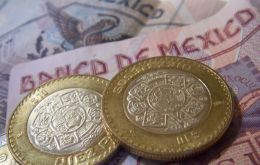
Mexico’s GDP shrank by 6.5% last year amid the global recession, greater than the 6.2% of 1995 but the less severe end of the range of 6.5 percent to 7.5% decline forecast by the Mexican central bank.
-
Wednesday, February 24th 2010 - 02:29 UTC
Intra-Mercosur trade experienced one of its worst years in 2009
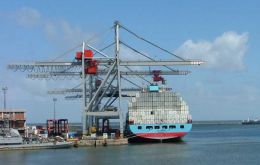
Trade among Mercosur members plummeted in 2009 under the effects of the international slowdown which severely limited access to financing and made credit in the region harder to obtain, according to a report from the Inter American Development bank, IDB.
-
Tuesday, February 23rd 2010 - 03:26 UTC
Financier Soros warns about future of the Euro and Euro-zone

The Euro risks falling apart unless Euro-zone member nations alter the way they tackle future debt crises, financier George Soros warned Monday in an article published in the Financial Times.

