MercoPress. South Atlantic News Agency
Economy
-
Wednesday, September 17th 2008 - 21:00 UTC
US current account deficit increased 4.3% in second Q

United States current account trade deficit increased by 4.3% to 183.1 billion US dollars in the second quarter of this year, up from 175.6 billion in the first quarter, the US Commerce Department reported Wednesday.
-
Tuesday, September 16th 2008 - 21:00 UTC
Citibank report warns Uruguay about higher inflation risks

Uruguay's fiscal deficit will be double the government's targets for 2008 and 2009 “increasing risks” for the coming year (which happens to be an electoral year). Clearly “expansive” monetary and fiscal policies together with mounting pressure for higher salaries and an “overheated economy” will sustain “strong” inflationary pressures this year and in 2009.
-
Tuesday, September 16th 2008 - 21:00 UTC
Uncertainties and “rough spots” ahead for world markets
Leading Asian markets plunged in the aftermath of the collapse of one of the US top investment banks, Lehman Brothers. Shares in Japan, South Korea, China and Taiwan were down by 4 to 6%, having been shut on Monday for a bank holiday.
-
Tuesday, September 16th 2008 - 21:00 UTC
IMF chief predicts end of independent investment banks

The global financial crisis is not over and more banks could close, possibly leading to the disappearance of independent investment houses, IMF chief Dominique Strauss-Kahn told reporters in Cairo.
-
Tuesday, September 16th 2008 - 21:00 UTC
Fed rate unchanged; injects 70 billion to boost liquidity
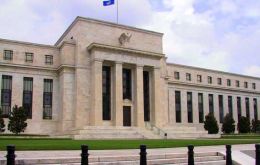
The United States Federal Reserve left interest rates unchanged at 2% on Tuesday arguing slower economic growth but also warning about an inflation outlook “highly uncertain”.
-
Monday, September 15th 2008 - 21:00 UTC
Brazil: Development of oil will help expand 4% in 2009

Brazil's economy is forecasted to expand 4% in 2009 as oil exploration bolsters investment even as the United States and European Union slowdown hamper global growth, according to the country's Planning Minister Paulo Bernardo.
-
Monday, September 15th 2008 - 21:00 UTC
Uruguay favors more trade accords, with or without Mercosur

Uruguay formally proposed its Mercosur partners to begin a round of negotiations geared to reach trade agreements with the European Union, United States, South Korea and Canada. The proposal had been advanced early August but was formalized early September in Brazil during a meeting of the Mercosur Foreign Relations Commission.
-
Monday, September 15th 2008 - 21:00 UTC
Lehman Brothers files for bankruptcy. Wall Street in turmoil

The fourth-largest investment bank in the US, Lehman Brothers, has said it will file for bankruptcy protection, amid a growing global financial crisis.
-
Monday, September 15th 2008 - 21:00 UTC
Nobel Prize Stiglitz: crisis should be less serious than 1929

The crisis now gripping world financial markets should be less serious than that of 1929, Nobel Prize laureate Joseph Stiglitz said on Monday because new monetary and fiscal “instruments” could prevent a Great Depression.
-
Monday, September 15th 2008 - 21:00 UTC
Bank of America takes over Merrill Lynch for 50 billion USD

Bank of America is to buy Merrill Lynch in a deal worth 50 billion US dollars that will create a new financial giant. The deal came amid a hectic weekend on Wall Street, with Lehman Brothers announcing that it would file for bankruptcy protection.