MercoPress. South Atlantic News Agency
Economy
-
Friday, November 25th 2022 - 08:31 UTC
IMF unveils guidelines for Paraguay to unblock foreign financing

The Executive Board of the International Monetary Fund (IMF) has approved this week a technical two-year support program for Paraguay regarding macroeconomic policies.
-
Thursday, November 24th 2022 - 13:10 UTC
Brazilian agriculture record sales; China main client, soy and beef leading exports

Brazilian agribusiness exports reached a record of US$ 136.10 billion in the first ten months of 2022, which represents a 33.0% increase in value over the same period in 2021, according to the country's official foreign trade office. China remained as the leading destination for Brazilian commodities, purchasing US$ 45.28 billion, equivalent to 33.3% of total exports Brazilian agriculture.
-
Wednesday, November 23rd 2022 - 10:20 UTC
Argentine exports hit historic highs in October
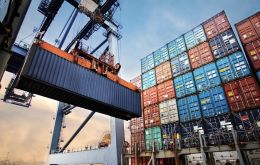
Argentina's Foreign Ministry Tuesday announced that the country's exports had amounted to US$ 7.901 billion in October, thus reaching new historic highs for this month.
-
Wednesday, November 23rd 2022 - 08:53 UTC
DBRS ups Uruguay's credit rating
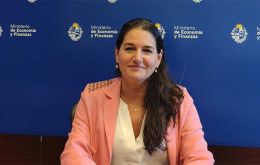
Canadian rating agency DBRS Morningstar upgraded Uruguay's foreign currency sovereign debt score from BBB Low to BBB as a result of Montevideo's “substantial improvement” in the country's fiscal outlook, it was reported Tuesday.
-
Tuesday, November 22nd 2022 - 10:07 UTC
Argentina promoting medium and small companies exports to UK

Sponsored by the Argentine Foreign and International trade ministry, a business delegation from Argentina visited the UK for a round of negotiations involving companies linked to the food and beverage industries.
-
Tuesday, November 22nd 2022 - 08:37 UTC
Fourth Kirchner government climax, 12 month food inflation at 100%

The basic food basket, CBA, in Ushuaia, Tierra del Fuego province, Argentina soared 9,5% during October while the overall food basket, CBT, 9%, according to the latest figures from Indec, the country's stats office. This is 50% higher than the inflation rate for the month of October which stood at 6,3%.
-
Monday, November 21st 2022 - 10:44 UTC
Goldfajn chosen new IDB boss
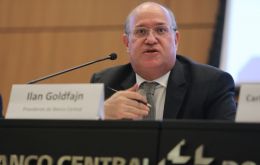
Brazil's Ilan Goldfajn was elected Sunday as the new head of the Interamerican Development Bank (BID), it was reported in Washington DC.
-
Monday, November 21st 2022 - 10:26 UTC
Lacalle Pou to seek Uruguay's joining TPP

Uruguayan President Luis Lacalle Pou announced his country would apply to join the Trans-Pacific Partnership, in a move to have access to more competitive tariffs, which has caused a stir with Mercosur and could jeopardize other negotiations with China, it was reported.
-
Monday, November 21st 2022 - 10:13 UTC
Brazilian 2022 exports of soybean estimated to reach 78 million tons, and corn some 40 million tons
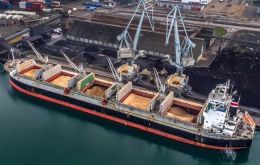
Brazil’s soybean exports are expected to reach 78 million tons this year, 9.3% down from 86.3 million tons in 2021, according to the grain exporters’ association Anec. But the figure is 2.5 million tons higher than the previous 75.5 million tons estimate for full-year soybean shipments.
-
Monday, November 21st 2022 - 09:05 UTC
Mar del Plata union requests lifting of measures banning offshore oil drilling
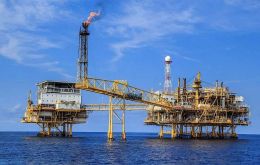
The Mar del Plata branch of Argentina's General Labor Confederation Union sent a note to the Courts requesting all precautionary measures stopping offshore oil exploration be lifted so that the companies can start working in the North Argentina Basin.

