MercoPress. South Atlantic News Agency
Economy
-
Saturday, May 23rd 2026 - 01:44 UTC
Messi joins billionaire athletes club after crossing USD 1 billion net worth threshold

Argentine footballer Lionel Messi, 38, has crossed the USD 1 billion net worth threshold and joined the exclusive group of billionaire athletes, according to the Bloomberg Billionaires Index. The captain of the Argentine national team, world champion in Qatar 2022 and winner of eight Ballons d'Or, now shares the category with his historic sporting rival, Portuguese forward Cristiano Ronaldo, who reached the milestone in 2023 after signing with Al-Nassr of the Saudi Pro League.
-
Thursday, May 21st 2026 - 06:59 UTC
Falklands’ oil, in June upgrade begins in Asia to adapt Aoka Mizu FPSO to Sea Lion development needs
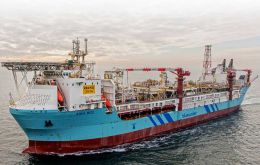
Rockhopper Exploration (AIM:RKH), has highlighted progress at the Sea Lion oil development in the North Falkland Basin, operated by Navitas Petroleum. The first two phases will use the Aoka Mizu FPSO with capacity of 55,000 barrels per day, while a new memorandum of understanding for a second FPSO could lift total capacity by a further 125,000 barrels per day, significantly expanding the project’s production potential if implemented.
-
Wednesday, May 20th 2026 - 23:38 UTC
Argentina opens economic bids for Paraná-Paraguay waterway amid warnings of irregularities
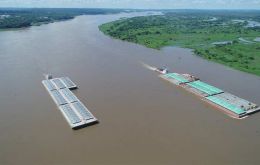
The government of Javier Milei proceeded on Tuesday to open the economic bids submitted by the two international consortia competing for the 25-year concession of the Paraná-Paraguay waterway, Argentina's main fluvial trade artery, despite a warning from the Public Prosecutor's Office about the existence of “serious and obvious irregularities” that could give rise to criminal and administrative consequences. The Peronist opposition has filed a bill in Congress demanding the immediate suspension of the process.
-
Wednesday, May 20th 2026 - 01:27 UTC
The European Union unblocks tariff deal with United States after ten months of negotiation
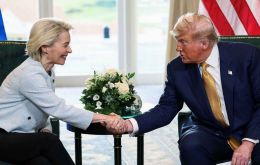
Negotiators from the European Parliament, the Council of the European Union, and the European Commission reached a provisional agreement in the early hours of Wednesday on the final text of the tariff pact with the United States, in a decision that closes ten months of negotiations marked by pressures, threats, and successive blockages in the European Parliament. The Cypriot presidency of the Council, exercised during the first half of 2026, confirmed the breakthrough through the X social media platform and emphasized that the aim of the agreement is to “enhance a stable and predictable trade relationship” between the two blocs.
-
Monday, May 18th 2026 - 17:41 UTC
London Stock Exchange rises 1.26% driven by oil and defense sectors
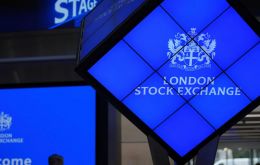
The London Stock Exchange closed on Monday with a gain of 1.26%, driven by the advance of oil and defense companies, in a session marked by the rise of crude oil amid the lack of progress in negotiations between the United States and Iran to end the war. The main index, the FTSE 100, added 128.38 points to close at 10,323.75, while the secondary FTSE 250 advanced 0.07% to 22,611.70 points.
-
Monday, May 18th 2026 - 05:37 UTC
The Falklands turn into a small South Atlantic economic power as the ghosts of 1982 return
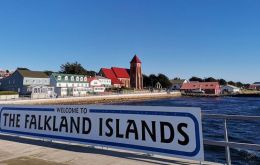
The Falkland Islands are going through their traditional “commemoration season,” the cycle of ceremonies that recall the 1982 war each year, culminating in Liberation Day on 14 June, at a moment defined by two overlapping realities: the consolidation of the archipelago as a small economic power in the South Atlantic and the reactivation of diplomatic tensions with the United States and Argentina. A feature published on Saturday by the British newspaper The Sunday Times, written by Matthew Campbell from Fitzroy, captures the contrast between growing economic prosperity and the anxiety generated by the recent leak of a Pentagon memorandum.
-
Thursday, May 14th 2026 - 09:27 UTC
Venezuela announces formal restructuring of its external debt after nearly a decade in default
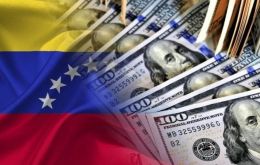
The Venezuelan government on Wednesday announced the formal launch of an “integral and orderly” restructuring of the country's public external debt and that of the state oil company PDVSA, in the most concrete step by acting President Delcy Rodríguez's administration toward financial normalization after nearly a decade in default. The communiqué, issued by the Sectoral Vice Presidency for the Economy, sets as its central objective “to put the economy at the service of the Venezuelan people and free the country from the burden of accumulated debt.”
-
Wednesday, May 13th 2026 - 20:00 UTC
Warsh to succeed Powell at the Fed with inflation at three-year high
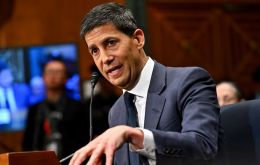
The US Senate on Wednesday confirmed economist Kevin Warsh as the 17th chair of the Federal Reserve in a 54-45 vote, in a transition that hands control of the world's most influential central bank to President Donald Trump's pick at a moment of strong inflationary pressure. Warsh, a former Fed governor during the 2008 financial crisis and a former Morgan Stanley banker, will formally take office on Friday 15 May, following the departure of Jerome Powell, whose eight-year term has been marked by successive economic crises and a prolonged clash with the White House over the central bank's political independence.
-
Tuesday, May 12th 2026 - 13:31 UTC
Brazil's inflation accelerates to 4.39% in April driven by food and pharmaceuticals
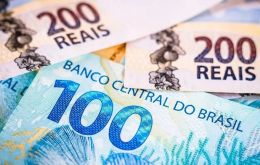
Year-on-year inflation in Brazil accelerated to 4.39% in April, up from 4.14% in March, pressured mainly by rising prices for food and pharmaceuticals, the Brazilian Institute of Geography and Statistics (IBGE) reported on Tuesday. The national consumer price index advanced 0.67% from the previous month, 0.21 percentage points below March, reflecting a slower monthly pace even as the annual comparison continues to climb.
-
Tuesday, May 12th 2026 - 13:14 UTC
Argentina sees new university protest as government pledges post-march dialogue
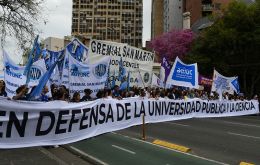
Argentina's public universities are staging the fourth Federal University March on Tuesday against the budget adjustment imposed by Javier Milei's government, with the main rally in Plaza de Mayo and simultaneous mobilizations in the country's major cities, while the national administration announced it will meet with rectors after the protest to discuss the allocation of funds for university hospitals. The day combines a strike with suspended classes, a broad opposition turnout, and an official discursive shift aimed at opening a dialogue channel without yielding on the substance of the dispute.

