MercoPress. South Atlantic News Agency
Environment
-
Saturday, April 23rd 2022 - 10:30 UTC
Co-authors of a paper on seabirds in the Falkland Islands, winners of the Ecological Society of America's top award

A study on seabirds in the Falkland Islands was recently selected as the winner of the Ecological Society of America's W.S. Cooper Award. The winners of the prestigious award are co-authors Jacquelyn Gill, associate professor in the School of Biology and Ecology and the Climate Change Institute, and Kit Hamley, Ph.D. candidate in the Climate Change Institute.
-
Wednesday, April 20th 2022 - 09:46 UTC
Abundance, Exploitation, Recovery: A Portrait of South Georgia

SGSSI has been featured in the New York Times as a shining example of world-leading conservation with measurable positive impact. Charting the visible return of biodiversity within the territory during the lifetime of those who have worked there, the article showcases the role humans have to play in improving the natural environment whilst still living and working in it, underlining how governments can be a force for positive change.
-
Tuesday, April 19th 2022 - 20:01 UTC
Antarctic sea ice reaches all-time low, according to new scientific report

A new scientific report has shown that the icy mass in Antarctica has shrunk below 1.4 million square kilometers for the first time since measurements began being recorded in 1978.
-
Monday, April 18th 2022 - 09:49 UTC
UK investing heavily in Antarctica and Arctic research to remain world leader in polar science
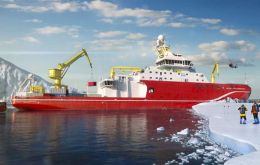
The UK is investing in modernizing its Antarctica and Arctic research facilities, with total funding of £670 million, including £290 million announced this week. As a world leader in polar science, UK research conducted in the region is of global importance. This is in addition to existing science funding activities.
-
Monday, April 18th 2022 - 09:13 UTC
Record high temperature recorded in Antarctica
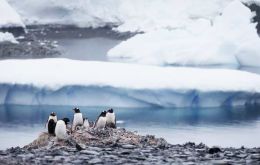
Recent measurements in Antarctica have reflected the effects of global warming when an unprecedented 34°C temperature was detected, thus setting a new record, it was reported. The findings stemmed from sensors attached to rocks in Fildes Bay in the coastal zone.
-
Saturday, April 16th 2022 - 09:48 UTC
Brazilian scientists find new way to capture carbon from the atmosphere
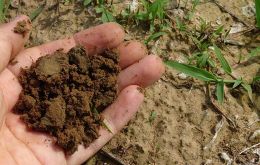
According to a report published Friday by Agencia Brasil, a group of scientists from that country has found new techniques which could be of use in forest recovery and increase the capture of carbon from the atmosphere. April 15 was Brazil's National Soil Conservation Day.
-
Saturday, April 16th 2022 - 08:06 UTC
Trying to understand the melting process of the largest ice shelf in Antarctica

A new study by scientists from British Antarctic Survey (BAS) has used computer modeling to rank the factors responsible for the Larsen C ice shelf melt according to their severity. The review is an important contribution to the understanding of the largest remaining ice shelf on the Antarctic Peninsula.
-
Friday, April 15th 2022 - 21:46 UTC
Nearly 400 killed in “Biblical” South African floods

Devastating floods throughout the whole week in South Africa have left at least 395 people dead by Friday and countless families displaced from their homes. While relief work continues, weather forecasts are anything but encouraging.
-
Thursday, April 14th 2022 - 10:30 UTC
Drones give HMS Protector the cutting edge to punch through polar ice

Drone experts from Culdrose have given the Royal Navy’s Antarctic research ship ‘eyes in the sky’ to help Ice Patrol HMS Protector punch through the polar ice. Seventeen of the icebreaker’s crew are now qualified in operating drones from the deck of the ship, which has just completed her stint around the frozen continent for this season.
-
Wednesday, April 13th 2022 - 09:49 UTC
Brazil: Two reported dead in new clash involving garimpeiros

A new armed confrontation allegedly involving garimpeiros has left at least two people dead and five others injured in Brazil's Yanomami Indigenous Land, it was reported.