MercoPress. South Atlantic News Agency
Health & Science
-
Thursday, July 25th 2013 - 02:41 UTC
H1N1 influenza has claimed the lives of 38 people in Argentina
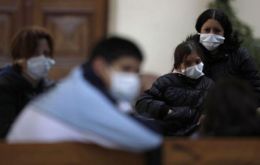
The H1N1 Influenza A virus has claimed the lives of 38 people so far this year in Argentina, a regional health official said this week, following the confirmation of two more deaths in the western province of San Juan.
-
Tuesday, July 23rd 2013 - 17:22 UTC
Cardiovascular diseases remain number one cause of death, says WHO

Cardiovascular diseases remain the number one cause of death throughout the world, and killed nearly 17 million people in 2011, that is 3 in every 10 deaths. Of these, 7 million people died of ischemic heart disease and 6.2 million from stroke, reports the World Health Organization.
-
Tuesday, July 23rd 2013 - 07:39 UTC
Mujica praises the OAS and the report on the drug problem in the Americas

The Organization of American States (OAS), Secretary General José Miguel Insulza, presented on Monday Uruguayan president José Mujica the Report on the Drug Problem in the Americas, prepared by the hemispheric institution following a mandate of the Sixth Summit of the Americas.
-
Monday, July 22nd 2013 - 06:32 UTC
OAS chief Inzulza in Uruguay to present report on drug problem in the Americas

The Organization of American States Secretary General José Miguel Insulza begins Monday a two day visit to Uruguay for the formal presentation of the “Report on the Drug Problem in the Americas” which has the support of several Latinamerican countries and former leaders of the region who have proposed a completely new approach to the drugs challenge.
-
Monday, July 22nd 2013 - 05:56 UTC
Paraguay reports outbreaks of ‘greening’ in its citrus plantations

Paraguay’s plants and seeds sanitary office, SENAVE, has reported 63 outbreaks of ‘greening’ or HLB in citrus groves and further admits that the geographical dissemination state of the bacterial canker disease is in “an advanced stage” despite all institutional efforts.
-
Monday, July 22nd 2013 - 00:18 UTC
Introducing the Exlana sheep after eight years of development

The concept of an easier care animal is not new – as SIG, a group of eight sheep farmers developing Sheep Improved Genetics, are the first to admit. But after years of breeding sheep through genetics, not cosmetics, the Exlana breeders say they have bred the ultimate animal.
-
Wednesday, July 17th 2013 - 20:21 UTC
Latin America becoming prime destination for medical tourism

The high cost of healthcare has created the lucrative phenomenon of medical tourism. An IPK International survey revealed roughly 3% of the world’s population travels to foreign countries for medical treatment, while Patients Beyond Borders, which publishes international medical travel guidebooks, reported the medical tourism industry is a 40 billion dollars a year business.
-
Tuesday, July 16th 2013 - 03:55 UTC
Closer to discovering how genetic flaws increase obesity risks

The mystery of a genetic flaw which greatly increases the risk of obesity in one in six people has been solved by an international group of scientists. A version of an obesity gene, called FTO, had been linked to a bigger belly, but the reason why was uncertain.
-
Friday, July 12th 2013 - 22:11 UTC
Despite lavish spending, health of the US population has fallen behind that of economic peers

The United States is falling behind its economic peers in most measures of health, despite making gains in the past two decades, according to a sweeping study of data from 34 countries.
-
Friday, July 12th 2013 - 06:40 UTC
Right to abort of raped-pregnant 11-year-old triggers major controversy in conservative Chile
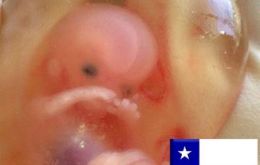
A pregnant 11-year-old Chilean girl who was allegedly raped by her stepfather should be granted all medical options, including the right to abort, rights group Amnesty International said on Thursday. The pregnancy of 'Belen,' as she is known has sparked an outcry in one of South America’s most conservative countries, where abortion is banned under all circumstances.
