MercoPress. South Atlantic News Agency
Health & Science
-
Thursday, March 26th 2009 - 17:58 UTC
UN underlines HIV-tuberculosis link

The head of the United Nations agency charged with coordinating the fight against HIV/AIDS is in Brazil this week promoting awareness of the link between the epidemic and tuberculosis and the necessity to address discrimination in the South American country’s response to HIV.
-
Friday, March 20th 2009 - 06:57 UTC
UN blames surging food prices on large-scale speculation
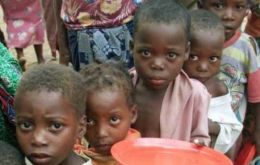
Both the surging food prices from 2007 to 2008 and their subsequent drop in some areas are a result of large-scale speculation by financial investors, according to a new report by the United Nations trade body, which called for greater regulation to protect millions of poor people worldwide.
-
Thursday, March 19th 2009 - 16:40 UTC
Antarctic ice cap melting much faster than predicted
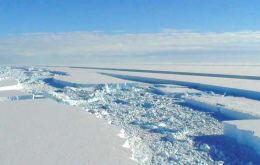
Two more scientific studies show a large part of the Antarctic ice cap melting at a much faster rate than previously predicted.
-
Thursday, March 19th 2009 - 16:34 UTC
UN pushes for ratification of global pact outlawing cluster bombs

The pace of the ratification of a global pact outlawing cluster bombs must be accelerated to relegate the deadly weapons “to the pages of history,” Deputy Secretary-General Asha-Rose Migiro said Wednesday.
-
Thursday, March 19th 2009 - 06:08 UTC
Condoms essential to fight AIDS epidemics says UN
With over 7,400 new HIV infections daily, comprehensive approaches – including condom use – are essential to stop the spread of the AIDS epidemic, the Joint United Nations Programme on HIV/AIDS (UNAIDS) said Wednesday, warning that there is no “single magic bullet” for prevention.
-
Tuesday, March 17th 2009 - 10:10 UTC
Dengue confirmed in five countries and in Brazil’s posh seaside resort

The mosquito transmitted dengue disease which has caused havoc in the heartland of South America and at least five countries, has now been reported in the northeast of Brazil where authorities confirmed Monday the spread of the disease with a death toll of 25 people since the beginning of the year and 4.751 new cases reported in the last week.
-
Friday, March 13th 2009 - 06:23 UTC
Surging global population adds to water crisis warns UN

The surging growth in global population, climate change, widespread mismanagement and increasing demand for energy have tightened the grip on the world’s evaporating water supplies, warned a new United Nations report released today.
-
Thursday, March 12th 2009 - 16:09 UTC
Bolivian president Morales chews coca leaf and calls for respect
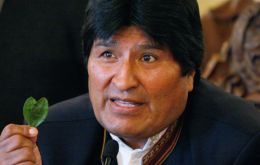
Bolivian president Evo Morales ate a coca leaf in front of delegates at the UN summit on drugs in Vienna on Wednesday, to underline his demand that the raw ingredient used to make cocaine be removed from the United Nation's list of prohibited drugs.
-
Thursday, March 12th 2009 - 08:28 UTC
Planet Earth ever so crowded: 7 billion by early 2012

The world’s population will hit 7 billion early in 2012 and top 9 billion in 2050, with the majority of the increase taking place in developing countries, according to revised United Nations estimates released today.
-
Thursday, March 12th 2009 - 04:25 UTC
Paraguayans consume eight times more beer than milk

Beer consumption in Paraguay is eight times that of milk according to the Paraguayan Chamber of Dairy Industries based on information from the Pan-american Health Organization.
