MercoPress. South Atlantic News Agency
Latin America
-
Saturday, April 6th 2013 - 04:14 UTC
“Nothing or nobody” can separate Argentina and Uruguay, Mujica tells the world
Despite Uruguayan President Jose Mujica had anticipated he would give no further explanations about his at least controversial remarks about Argentina’s presidencial couple, Cristina and Néstor Kirchner, the Uruguayan leader on Friday midday stated in his daily broadcast that “nothing or nobody” could separate the brotherly nations.
-
Saturday, April 6th 2013 - 03:50 UTC
Brazil claims trade situation with Argentina is “less than satisfactory”
Brazil admitted that the trade situation with Argentina is “less than satisfactory”, given the ongoing barriers and restrictions imposed by Buenos Aires and revealed that the bilateral trade balance is now inclined in favour of its southern neighbour and Mercosur associate.
-
Friday, April 5th 2013 - 07:18 UTC
Argentina strongly protests President Mujica remarks about Nestor and Cristina Kirchner
Uruguayan president José Mujica’s controversial statements caught on an open microphone referred to President Cristina Fernandez and her late husband Nestor Kirchner, triggered a strong response from the Argentine government saying that such comments are “unacceptable, denigrating and offend the memory of a dead person”.
-
Thursday, April 4th 2013 - 22:24 UTC
“The old lady is worse than the cross-eyed man” says President Mujica
Uruguay’s President Jose Mujica, speaking without realizing a microphone was on, referred to Argentine President Cristina Fernandez de Kirchner as that ‘old lady’ saying she is “worse” than her late husband and predecessor, Nestor Kirchner.
-
Thursday, April 4th 2013 - 07:59 UTC
Argentina again this year will use reserves to comply with debt commitments
Argentina will use 2.3 billion dollars of central bank reserves this year to meet payments to international financing organizations and on its official bilateral debt, according to the Official Gazette.
-
Thursday, April 4th 2013 - 07:07 UTC
On Mine Awareness Day, OAS praises Colombia, Peru and Ecuador
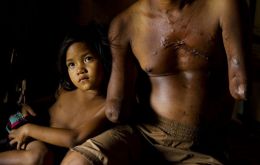
On the International Mine Awareness Day (April 4), the Organization of American States highlighted the successful humanitarian demining efforts throughout the Americas. National authorities in Colombia, Ecuador and Peru are to be commended for increasing awareness of the dangers posed by landmines, for reducing the number of landmine victims, and for assuming responsibility for their national programs, said OAS.
-
Wednesday, April 3rd 2013 - 23:50 UTC
Falkland Islands’ success in Colombia: debate at leading university and speech before Congress
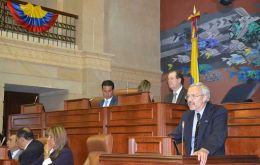
A Falkland Islands delegation concluded this week a very successful visit to Colombia where they not only met with local authorities and lawmakers but also addressed the Lower House of Congress and were able to express loud and clear the Islanders’ message born out of the recent referendum in which they overwhelmingly voted to remain a British Overseas Territory.
-
Wednesday, April 3rd 2013 - 07:08 UTC
Falklands’ lawmaker regrets South American leaders take for granted Argentina’s version of events
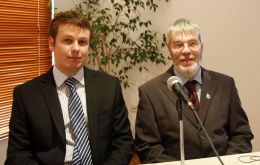
Falklands’ lawmaker Gavin Short regretted on Tuesday in Bolivia that the governments of South America take for granted the Argentine version of the conflict between Argentina and the UK over the Islands sovereignty without ever having listened to the other side.
-
Wednesday, April 3rd 2013 - 07:03 UTC
Maduro launches presidential campaign saying ‘Chavez’s spirit’ appeared to him in the form of a singing bird

Ruling-party presidential candidate Nicolas Maduro said on Tuesday at the childhood home of late Venezuelan leader Hugo Chavez that he felt that his deceased mentor appeared to him in the form of a “little bird”, blessed him and made a strong call ‘on to (electoral) battle’.
-
Wednesday, April 3rd 2013 - 06:57 UTC
Uruguayan Senate approves by a clear majority same-sex marriage
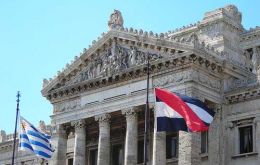
The Uruguayan Senate voted overwhelmingly, 23-8, in favor of a same-sex marriage measure Tuesday, which now must return to the Lower House before it is finally approved and signed by President Jose Mujica who has indicated he supports the measure.

