MercoPress. South Atlantic News Agency
Latin America
-
Monday, December 15th 2025 - 09:23 UTC
Peru declares health alert over H3N2 and measles
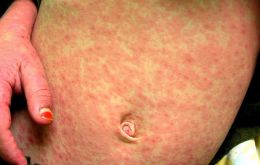
Peru's Health Ministry (Minsa) has declared a nationwide Epidemiological Alert (No. 008-2025) as a preventative measure against the potential entry and spread of infectious diseases, including the seasonal Influenza A (H3N2) subclade K variant and measles.
-
Monday, December 15th 2025 - 09:08 UTC
Peru grants US troops access next year
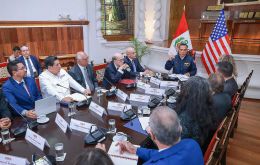
Peruvian authorities have officially greenlighted the entry of United States military personnel for the entirety of 2026 to conduct joint training, support, and security assistance exercises with local armed and police forces, it was announced this weekend in Lima.
-
Saturday, December 13th 2025 - 09:19 UTC
Five-month preemptive arrest for former Bolivian President Arce

Former Bolivian President Luis Arce Catacora has been placed under preemptive arrest at the San Pedro detention facility in La Paz for five months, pending a corruption inquiry regarding the mismanagement of funds intended for indigenous projects when he served as Economy Minister under Evo Morales (2006-2019).
-
Friday, December 12th 2025 - 09:24 UTC
Nearly half of Latin America hit by informality, ILO warns

The International Labour Organization (ILO) warned Thursday that informality continues to affect almost one out of every two workers in Latin America and the Caribbean, reporting a regional average of 47% in 2025.
-
Thursday, December 11th 2025 - 10:14 UTC
Petro suggests Maduro moves on to “transitional government”
Colombian President Gustavo Petro has intensified diplomatic pressure on his Venezuelan counterpart, Nicolás Maduro, calling for a “general amnesty” and the formation of a “transitional government with the inclusion of all” to resolve Venezuela’s protracted political crisis.
-
Wednesday, December 10th 2025 - 22:59 UTC
Former Bolivian President Arce arrested in corruption probe
Former Bolivian President Luis Arce Catacora was arrested in La Paz on Wednesday afternoon in connection with a major corruption case involving the now-defunct Indigenous Peoples Development Fund (Fondioc).
-
Wednesday, December 10th 2025 - 10:23 UTC
Honduran crisis deepens as elections remain undecided
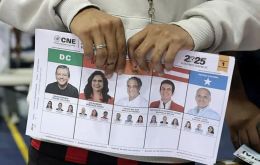
Honduran President Xiomara Castro has escalated the political crisis surrounding the undecided November 30 presidential election, condemning what she termed “interference” by US President Donald Trump and claiming an “electoral coup” was underway.
-
Tuesday, December 9th 2025 - 10:29 UTC
Ecuador: Former President Lenín Moreno to face trial for bribery
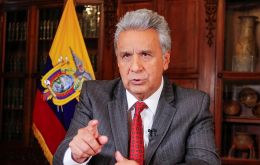
Former Ecuadorean President Lenín Moreno (2017-2021) has been ordered to stand trial on bribery charges in the high-profile Sinohydro Case regarding his alleged corruption deeds tied to the construction of the country's largest hydroelectric plant while Moreno served as Vice President under Rafael Correa (2007-2017).
-
Tuesday, December 9th 2025 - 10:27 UTC
Sweden closing Embassy in Bolivia
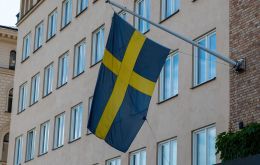
Swedish Ambassador to Bolivia Johanna Teague announced Monday that her country was downsizing its mission in Bolivia, leading to the closure of the diplomatic mission in La Paz by the end of 2026.
-
Tuesday, December 9th 2025 - 10:22 UTC
Fifth Kenyan Police group arrives in Haiti
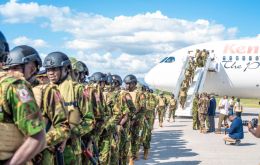
A new contingent of 230 “highly specialized” Kenyan police officers landed at Toussaint Louverture International Airport on Monday, to reinforce the newly established Gang Suppression Force (GSF) in its fight against heavily armed groups.