MercoPress. South Atlantic News Agency
Mercosur
-
Friday, December 17th 2010 - 23:12 UTC
Paraguayan president confirms Mercosur/EU trade agreement is top of the agenda
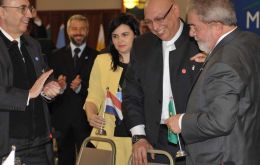
Conditions are ready to reach in the short term a trade agreement with the European Union, said Paraguayan president Fernando Lugo whose country, and for the next six months, holds the pro tempore chair of the South American block.
-
Friday, December 17th 2010 - 07:17 UTC
Mercosur after closer trade relations with Cuba, Palestine, Syria and NZ
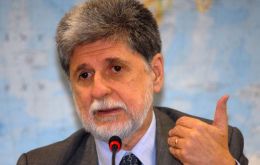
Member nations of Mercosur will seek to boost economic and political ties with Cuba in a bid to make the island an associate member of the trade bloc.
-
Friday, December 17th 2010 - 07:11 UTC
Mercosur condemns UK on Malvinas; promises to monitor shipping in support of oil activities
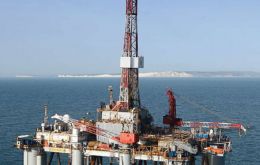
The Mercosur summit approved Thursday a declaration protesting “formally and energetically” UK’s decision to hold military exercises in the Malvinas islands and reiterated support for Argentina’s sovereignty claim over the South Atlantic Islands.
-
Friday, December 17th 2010 - 06:45 UTC
Mercosur summit launches ambitious action plan to ensure customs union

Mercosur leaders meeting in Brazil launched a plan to adopt common trade, investment and immigration policies to help underpin unprecedented economic growth in the region.
-
Friday, December 17th 2010 - 06:42 UTC
Paraguayan industry calls Lula da Silva an “arrogant hypocrite”
The Paraguayan Industrial Union, UIP, called Brazilian president Lula da Silva an “arrogant hypocrite” for making promises he never honoured, and attacked President Fernando Lugo for generating ‘overblown fantasy expectations’.
-
Thursday, December 16th 2010 - 03:58 UTC
Australia present at the Mercosur summit in Brazil
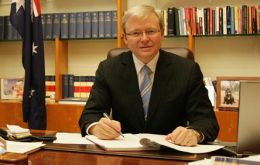
Australian Foreign Secretary Kevin Rudd will be present at the two-day Mercosur summit which begins Thursday in Foz de Iguazu. Rudd met on Wednesday with his Brazilian peer Celso Amorim ahead of the summit and in the framework of the “Australia-Brazil Dialogue” created last September.
-
Thursday, December 16th 2010 - 03:45 UTC
Trade among Mercosur members forecasted to reach 42 billion USD
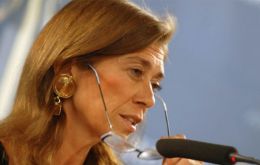
Trade between the four member Mercosur block is expected to reach 42 billion US dollars in 2010 revealed Argentine Industry minister Debora Giorgi who on Thursday will be participating of the Mercosur summit in Foz de Iguazu, Brazil.
-
Wednesday, December 15th 2010 - 05:53 UTC
Mercosur: a High Representative post to create “consensus” in summit’s agenda
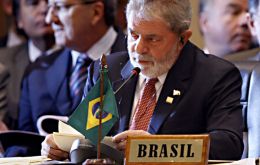
Mercosur could end up with a High Representative post following this coming presidential summit in Foz de Iguazu. According to Brazilian sources the initiative has been discussed with partners Argentina, Uruguay and Paraguay and should be approved next Thursday/Friday.
-
Wednesday, December 15th 2010 - 04:17 UTC
Mercosur with the best growth performance in the region in 2010
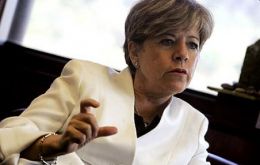
Mercosur full member countries with the exception of Brazil will have the best growth performance in the region this year, according to the annual report from the UN Economic Commission for Latin America and the Caribbean, Cepal which was announced this week in Santiago de Chile.
-
Tuesday, December 14th 2010 - 06:48 UTC
Brazilian president-elect will work for stronger Mercosur institutions
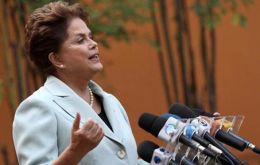
Brazilian president-elect Dilma Rousseff will attempt to strengthen Mercosur institutions and establish a protagonist dialogue with United States, according to the presidential advisor on international affaire Marco Aurelio García who has been confirmed in his post.