MercoPress. South Atlantic News Agency
Politics
-
Saturday, February 19th 2011 - 06:19 UTC
Ambitious Uruguayan trade and investment incursion to India
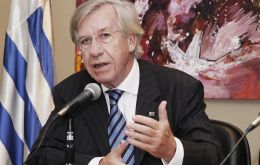
Considered one of the most ambitious trade and investment incursions to Asia, a delegation of Uruguayan business people headed by Vice-president Danilo Astori begins Saturday a seven-day official visit to India.
-
Saturday, February 19th 2011 - 06:17 UTC
US reveals content of the cargo from US Air Force plane seized by Argentina
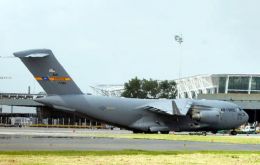
The US State Department released a press statement detailing the content of the cargo seized by Argentine authorities in the US Air Force plane case, and said that despite a “discrepancy regarding the serial number of one of the weapons, the quantity and type of weapon was consistent with the official manifest” provided to Argentine officials.
-
Saturday, February 19th 2011 - 06:03 UTC
G20 negotiators fail to agree targets to reduce global imbalances
Negotiators have failed to agree targets to reduce global economic imbalances on the first day of the two-day G20 meeting in Paris. The countries want to better coordinate economic policies to avoid a repeat of the 2008 global financial crisis.
-
Saturday, February 19th 2011 - 05:42 UTC
Milestone for Buenos Aires police force: two women officers get married

A same sex couple, members of Argentina’s Federal Police and with the same rank, promised eternal love at a simple, warm and joyful ceremony in Buenos Aires City downtown Tribunals’ palace.
-
Friday, February 18th 2011 - 23:48 UTC
Argentina/Brazil agree on monitoring committee to oversee bilateral trade

Argentina and Brazil agreed Friday to set up a Monitoring Committee in order to exclude Brazilian products from being affected by the imports non-automatic licence system announced this week by the administration of President Cristina Fernandez de Kirchner.
-
Friday, February 18th 2011 - 16:53 UTC
“Beginning of the end for Mercosur” warn Uruguayan industrialists

The chairman of the Uruguayan Chamber of Industry, Washington Burghi, warned that Argentina’s decision to restrict imports could be “the beginning of the end” for the Mercosur. However Argentine ambassador in Montevideo said decisions are targeted against Asian imports with the purpose of defending Argentine jobs.
-
Friday, February 18th 2011 - 16:38 UTC
China again raised bank reserves (eight times in 12 months) to rein inflation
China’s central bank raised reserve requirements for lenders 10 days after boosting interest rates as Premier Wen Jiabao tackles accelerating inflation and the risk of asset bubbles in the fastest-growing major economy.
-
Friday, February 18th 2011 - 15:45 UTC
Chile hikes rates but faces dilemma of imbalances and Peso appreciation

The Central Bank of Chile (CBC) hiked interest rates by 25bps to 3.5% on Thursday night targeting growing economic imbalances and the threat of higher inflation, reports Capital Economics latest update.
-
Friday, February 18th 2011 - 14:19 UTC
Colombian president says he has FARC leader and his command on target

Colombian president Juan Manuel Santos said this week that military forces know the exact hiding place and movements of the FARC guerrilla maximum leader, Alfonso Cano, and brushed aside any chance that he might escape.
-
Friday, February 18th 2011 - 14:11 UTC
UK/Spain reaffirm commitment to Trilateral Dialogue on Gibraltar

UK and Spain's foreign ministers reaffirmed Thursday their commitment to the Tripartite Forum (UK/Spain/Gibralar) for Dialogue following a bilateral meeting in London, reports the Gibraltar Chronicle.