MercoPress. South Atlantic News Agency
Politics
-
Thursday, May 13th 2010 - 10:58 UTC
Bolivian Presidency Buys Manchester United Dassault Falcon Craft
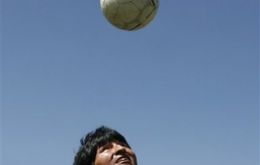
The Bolivian government confirmed this week that it has bought a luxury airplane model Dassault Falcon 900Ex Easy that originally belonged to Manchester United. The admission came in the midst of growing social unrest to protest for a higher national minimum wage.
-
Thursday, May 13th 2010 - 10:53 UTC
UNASUR Closer to its Formal Existence: Peru Ratifies Founding Charter
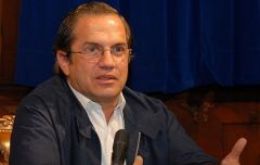
Peru became the fifth country to ratify the Union of South American Nations founding treaty, which means the organization is now only four short for the nine to become legally effective.
-
Thursday, May 13th 2010 - 10:27 UTC
EU Calls on Argentina Not to Restrict Food Imports
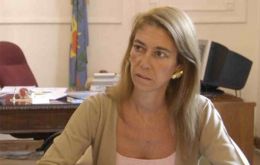
The European Union asked Argentina not to restrict food imports, which was reported by manufacturers and producers. Manufacturing sources said that restrictions began being applied in the last few days on products that are also elaborated locally, in a non-written measure that primarily affects the EU and Brazil.
-
Wednesday, May 12th 2010 - 22:15 UTC
Spain Under Pressure from Europe Unveils Drastic Cuts to Contain Budget Crisis
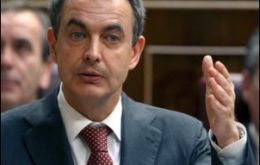
Under pressure from Europe to deliver (shape up or ship out) Spain's PM has outlined a plan to tackle the country's budget crisis, amid concerns that problems afflicting Greece may spread across the Eurozone.
-
Wednesday, May 12th 2010 - 21:57 UTC
Santos Promises More Uribe and Retakes Lead in Colombian Presidential Campaign
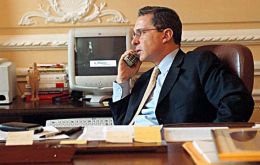
With less than three weeks to Colombia’s May 30 presidential election, the incumbent candidate Juan Manuel Santos has recovered lost ground and the surprise hopeful Antanas Mockus with his “green tide” has fallen back with opinion polls showing a technical draw.
-
Wednesday, May 12th 2010 - 07:18 UTC
Chile’s Piñera to Address Business Leaders Previous to Latam/EU Summit
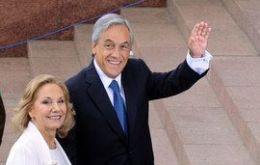
Chile’s president Sebastian Piñera has a busy schedule planned for the upcoming Latin America, the Caribbean and the European Union Summit scheduled for Madrid early next week. Piñera will use the opportunity to explain exactly what he wants to do with his four years of presidency.
-
Wednesday, May 12th 2010 - 07:09 UTC
World Markets Lower After Taking a Second Look at Euro Rescue Plan
United States shares closed lower on Tuesday as global stock markets stalled on niggling worries over European debt problems. On Wall Street, the Dow Jones index closed down 0.34% following a turbulent day's trading, and a nearly 4% rise on Monday.
-
Wednesday, May 12th 2010 - 07:01 UTC
Argentina Confident Bondholders Will Join Debt-Swap: Wednesday D Day
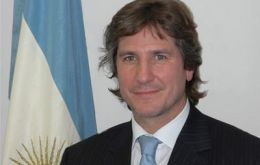
Argentine Economy Minister Amado Boudou held a meeting Tuesday with 40 international investors at the New York Palace Hotel, within the framework of his United States road show to encourage bondholders to join the Government's debt-swap.
-
Wednesday, May 12th 2010 - 03:56 UTC
Falkland Islands Represented at London Festival of Stamps
The Falkland Islands is attending the 2010 International Stamp Exhibition, one of the highlights of the London Festival of Stamps—a year long celebration of stamps, stamp design and postal heritage which also marks the centenary of the accession of George V, the philatelist king.
-
Wednesday, May 12th 2010 - 00:03 UTC
Argentina, Brazil, Paraguay Angry with Oscar-Winning Director Bigelow Film Project

Argentine Secretary of Tourism said Enrique Meyer said that Argentina, Brazil and Paraguay are angry with Oscar-winning director Kathryn Bigelow's latest project, a film focusing on a border region, shared by the three countries and thought to be a centre for smuggling and terror financing.