MercoPress. South Atlantic News Agency
Tag: Argentine Senate
-
Friday, August 7th 2026 - 10:58 UTC
Argentine Senate passes property bill after dropping two key chapters
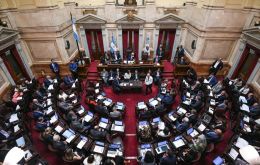
Argentina's Senate approved in the early hours of Friday, by 37 votes to 33, the Inviolability of Private Property bill promoted by Deregulation Minister Federico Sturzenegger, after the governing bloc withdrew the two chapters that drew the most resistance. The text now goes to the Chamber of Deputies.
-
Wednesday, August 5th 2026 - 23:10 UTC
Argentine government pulls chapter on land sales to foreigners from Senate debate
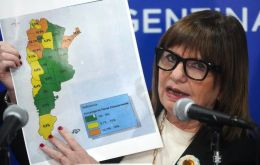
Argentina's governing bloc withdrew on Wednesday the rural land chapter of the Inviolability of Private Property bill from the Senate agenda, lacking the votes to pass it and hours before the session scheduled for Thursday.
-
Saturday, February 28th 2026 - 01:09 UTC
Argentina lowers age of criminal responsibility from 16 to 14, Senate approves new juvenile regime
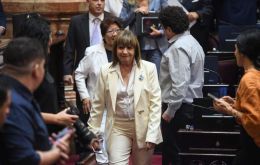
Argentina’s Senate passed a law on Friday lowering the minimum age of criminal responsibility from 16 to 14, a flagship “tough on crime” initiative backed by President Javier Milei. The bill cleared the upper house with 44 votes in favor, 27 against and one abstention, after it had already been approved by the Chamber of Deputies the previous week.
-
Thursday, February 26th 2026 - 22:41 UTC
Uruguay and Argentina ratify the EU-Mercosur deal, leaving entry into force to Brussels
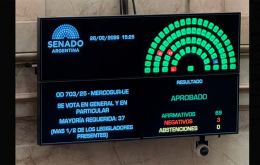
Uruguay and Argentina ratified on Thursday the trade agreement between Mercosur and the European Union, becoming the first founding members of the South American bloc to complete parliamentary approval. Whether the treaty begins to apply now hinges on decisions inside the EU, as a separate legal review process continues following moves in the European Parliament.º
-
Friday, February 20th 2026 - 04:02 UTC
Argentina’s lower house backs Milei labour reform bill without article 44
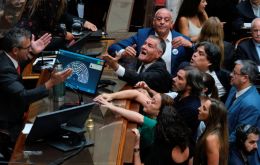
Argentina’s Chamber of Deputies approved President Javier Milei’s “labour modernisation” bill on Thursday, but with a last-minute change that removed article 44, one of the proposal’s most disputed provisions. Because the text was amended, it must return to the Senate for a final vote, a timetable the government wants completed ahead of the March 1 opening of the ordinary congressional session.
-
Thursday, February 12th 2026 - 12:50 UTC
Argentina’s Senate approves Milei’s labour reform amid protests and clashes
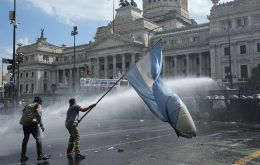
Argentina’s Senate gave initial approval to President Javier Milei’s labor reform bill after a marathon session that ran for more than 14 hours and unfolded amid street protests outside Congress. The draft cleared the upper chamber by 42 votes to 30 and will now move to the Lower House (Chamber of Deputies) for final consideration.
-
Wednesday, February 11th 2026 - 05:16 UTC
Argentina Senate set to vote labor reform after last-minute deal on key changes
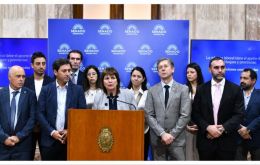
Argentina’s ruling coalition and centrist opposition blocs in the Senate reached a deal to vote on a labor reform bill on Wednesday, starting at 11 a.m., during an extraordinary session, according to the final draft circulated in the upper house and local reporting. The revisions steered by Senate ruling bloc leader Patricia Bullrich are key to advancing the labor reform and include dropping the corporate income tax cut—preserving revenues for provinces and the federal government—concessions to unions and business chambers on mandatory contributions, maintaining the allocation to union-run health funds, and moderating the original severance fund proposal.
-
Friday, September 5th 2025 - 10:27 UTC
Argentine Senate overrides Milei's veto against Emergency Disability Law
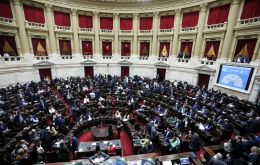
Argentina's Senate voted Thursday by 63 to 7 to override President Javier Milei’s veto of the Disability Emergency Law, making it the first time in 22 years that Congress has successfully overturned a presidential thumbs down.
-
Friday, April 4th 2025 - 08:35 UTC
Argentine Senate gives thumbs down to Milei's Supreme Court nominees
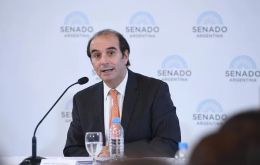
Argentina's Upper House Thursday gave its thumbs down to the two candidates President Javier Milei had nominated to fill vacancies on the Supreme Court (CSJN). While Manuel García-Mansilla has already been sworn in for the duration of the current Legislature as per a presidential decree, Ariel Lijo chose not to follow suit because he was not granted unpaid leave as the magistrate in charge of the Buenos Aires City Federal Court # 4.
-
Friday, February 21st 2025 - 09:38 UTC
Argentine Senate okays no PASO elections and in absentia trials
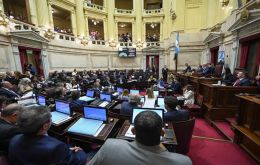
Argentina's Senate Thursday passed a bill suspending the Primary, Open, Simultaneous, and Mandatory (PASO) elections for 2025 with 43 affirmative votes, 20 against, and six abstentions. The initiative simplifies the electoral process and leaves it up to each political force to appoint its candidates in the manner they see fit. In addition, the Upper House approved the Trial in Absentia bill, which among other things would allow the Iranians accused of the 1994 AMIA bombing to be tried. Thursday's session also highlighted internal parliamentary divisions among the various legislative blocs.