MercoPress. South Atlantic News Agency
Tag: China
-
Friday, November 5th 2021 - 08:48 UTC
Chinese carmaker to halt Uruguay operations

The Chinese carmaking company Lifan has announced it would halt all of its operations in Uruguay and leave the country after agreeing to pay overdue wages to some 60 workers who have been laid off and alre already on unemployment insurance.
-
Monday, November 1st 2021 - 17:53 UTC
Shanghai Disneyland shut down after one tourist tests positive for COVID-19

Chinese authorities have decided to shut down Disneyland and Disneytown temporarily In Shanghai between Monday and Tuesday out of COVID-19 concerns, it was announced.
-
Monday, November 1st 2021 - 08:55 UTC
Biden announces US-UE negotiating carbon-conscious trade agreement
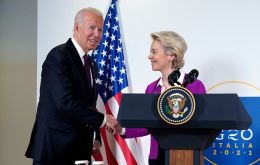
As the Glasgow COP26 climate Summit was starting, US President Joseph Biden said from Rome that the United States and the European Union had agreed to negotiate “the world's first trade agreement based on how much carbon is in a product”.
-
Friday, October 29th 2021 - 11:46 UTC
Brazilian minister expects reopening of China beef market: negotiations in final phase

Brazil's Minister of Agriculture, Tereza Cristina, denied that diplomatic relations with China are strained and said that she does not see the continuation of the Chinese ban on Brazilian beef, which has lasted for nearly two months, as a political act.
-
Thursday, October 28th 2021 - 09:17 UTC
China approves meat imports from Italy; Brazil and Ireland still out in the cold
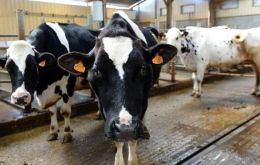
China’s customs administration said this week that it had approved beef imports from Italy as of October 26th. China relies heavily on imports to meet the growing demand for meat from an increasingly affluent middle class.
-
Tuesday, October 26th 2021 - 08:50 UTC
China goes back to lockdown and other restrictions as Delta variant keeps spreading

Chinese authorities have decided to go back to restrictive sanitary measures as around 133 cases of COVID-19 were detected in 11 provinces last week. The Beijing marathon has also been suspended.
-
Thursday, October 21st 2021 - 09:00 UTC
China deals blow to Brazilian economy by holding import ban on meat
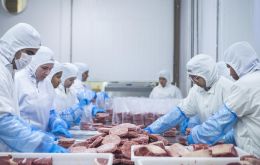
China's decision to uphold a ban on meat imports from Brazil means US $ 450 million less for the coffers of President Jair Bolsonaro's administration, it was reported Wednesday. It was also good news for Uruguay.
-
Wednesday, October 20th 2021 - 09:05 UTC
Brazil impatient as China has yet to return to purchase beef
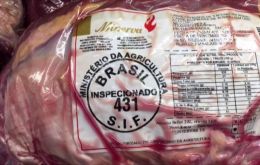
Brazil's minister of agriculture and livestock Tereza Cristina has sent a letter to the head of Beijing's Customs office in which she expresses her willingness to discuss the current ban on Brazilian beef exports to China, according to farm media.
-
Tuesday, October 19th 2021 - 08:36 UTC
Pig production recovers in China and pork prices fall

Pork production in China soared in the third quarter of this year, according to official data released on Monday, as big farming businesses built huge industrial breeding establishments last year to recover the swineherd hit by the deadly African swine fever.
-
Monday, October 18th 2021 - 23:59 UTC
Brazil, Uruguay FMs stay mum after Montevideo meeting: rumors soar

Silence prevailed Monday in Montevideo after Uruguay's Foreign Minister Francisco Bustillo Monday welcomed his Brazilian counterpart Carlos França to discuss bilateral issues, particularly a possible 10% reduction of Common External Tariffs among Mercosur members.