MercoPress. South Atlantic News Agency
Tag: Fake News
-
Monday, September 9th 2019 - 08:52 UTC
Under BBC initiative international media signs initiative to fight misinformation

A dozen international media organizations have signed up to a new initiative launched by the BBC to fight misinformation. The French news agency AFP said in a statement it has joined the BBC initiative, alongside organizations such as the European Broadcasting Union, the Financial Times, First Draft, The Hindu, the Wall Street Journal, CBC/Radio Canada, Reuters and the Reuters Institute, as well as partners Facebook, Google and Microsoft.
-
Monday, July 1st 2019 - 09:59 UTC
Uruguay: No surprises in a primary with a record of candidates

In a primary election full of new faces and overshadowed by accusations of “dirty” campaigns, there were no surprises in the results of the internal elections of Uruguay's main political parties, according to the data of the pollsters. Daniel Martínez (Frente Amplio), Luis Lacalle Pou (National Party) and Ernesto Talvi (Colorado Party) will represent the three parties with the greatest adhesion in the country, starting a new stage in the national elections in October.
-
Wednesday, June 26th 2019 - 09:17 UTC
Relief for Facebook legal problems in Brazil: fine reduced to US$ 5 million

Facebook Inc’s fine for withholding WhatsApp messages from a drug-trafficking investigation in Brazil should be reduced to 23 million reais (US$ 5 million), a Brazilian federal appeals court ruled on Tuesday.
-
Thursday, April 18th 2019 - 09:43 UTC
Transparency International blasts Brazilian Justice for violating freedom of expression
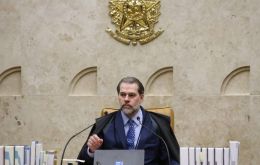
A decision by Brazil’s Supreme Federal Court (STF) to demand the suppression of a media report concerning one of the court’s sitting judges violates the freedom of the press, warns Transparency International Brazil. The demand to remove the report from the internet is unacceptable, risks the international image of Brazil and goes against fundamental principles of the democratic rule of law.
-
Monday, February 18th 2019 - 10:01 UTC
MPs demand tough urgent action against Facebook to combat spread of fake news
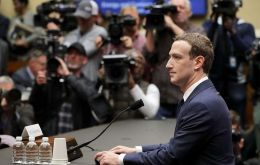
Facebook needs for stricter regulation, with tough and urgent action necessary to end the spread of disinformation on its platform, MPs have said. A House of Commons committee has concluded that the firm's founder Mark Zuckerberg failed to show “leadership or personal responsibility” over fake news.
-
Wednesday, November 28th 2018 - 09:14 UTC
Facebook's Zuckerberg blasted by politicians from nine countries for missing a hearing
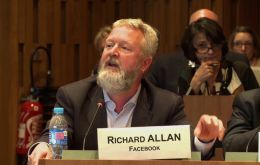
Politicians from nine countries reacted angrily to the absence of Facebook founder Mark Zuckerberg at a hearing on Tuesday. The event is part of an unprecedented international inquiry into disinformation and fake news.
-
Monday, November 5th 2018 - 08:40 UTC
Brazilian media fearful of Bolsonaro's threats to cut public sector marketing budgets
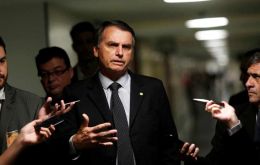
For Brazil's right-wing President-elect Jair Bolsonaro, attacking critical press outlets almost daily on social media is not enough. Once in office, he vows to hit their bottom line. With half a billion dollars in public-sector marketing budgets coming under his discretion, the former Army captain is threatening to slash ad buys with adversarial media groups, striking at the financial foundations of Brazil's free press.
-
Thursday, November 1st 2018 - 08:28 UTC
UK and Canadian lawmakers want to question Facebook's Zuckerberg on “fake news” and disinformation
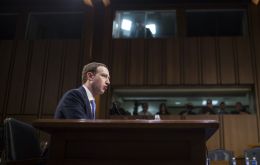
British and Canadian politicians have joined forces in calling on Facebook founder Mark Zuckerberg to explain “failures of process” regarding the spread of propaganda on the social network. Leading MPs from both parliaments co-signed a letter to Mr Zuckerberg announcing an “international grand committee” on “disinformation and fake news” to be held at the end of November.
-
Friday, October 19th 2018 - 08:40 UTC
Facebook's “war room” to combat fake news ahead of Brazil and US elections

During the first round of Brazil's presidential election on 7 October, Facebook staff noticed something suspicious on the social network. A story posted to Facebook incorrectly claimed the election was delayed because of protests. The company's data scientists and operations team scrambled to pull down the misinformation before it went viral.
-
Friday, October 5th 2018 - 08:34 UTC
Haddad accuses Bolsonaro's team of fake news about him and his family

The leading leftist candidate for Brazil's presidency accused front-runner Jair Bolsonaro of spreading falsehoods about him and his family on social media, as new polls showed the far-right candidate's lead widening with days before the vote. The accusations marked a shift in strategy for Workers' Party candidate Fernando Haddad, who had earlier avoided direct attacks on Bolsonaro.