MercoPress. South Atlantic News Agency
Tag: Falklands War
-
Wednesday, June 22nd 2022 - 09:43 UTC
Gibraltar minister attends Falkland Islands remembrance ceremony
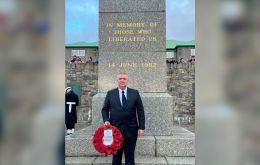
Gibraltar Minister for Housing, Employment, Youth and Sport, Steven Linares MP, represented the Rock in marking the 40th anniversary of the Liberation of the Falkland Islands from Argentine occupation in 1982.
-
Tuesday, June 21st 2022 - 10:00 UTC
Airborne Forces remember the Falkland Islands' conflict at Aldershot
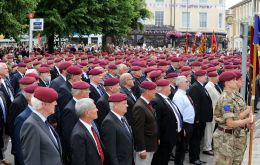
The sacrifices and successes of those who took part in Operation Corporate, the Liberation of the Falkland Islands from the Argentine military forty years ago, were both commemorated and celebrated in the ‘Home of the British Army’, Aldershot.
-
Tuesday, June 21st 2022 - 09:54 UTC
Argentine Army Panhard AML90 refurbished in time for Falklands 40th anniversary
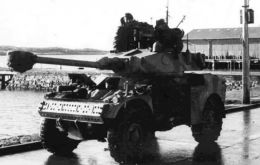
A French built armored reconnaissance vehicle which saw service during the 1982 Falklands conflict by the Argentine Army has been painstakingly refurbished in time for the Falklands 40th Anniversary.
-
Monday, June 20th 2022 - 09:30 UTC
UK domestic problems could favor resumption of talks on Falklands with Argentina, says Malvinas secretary
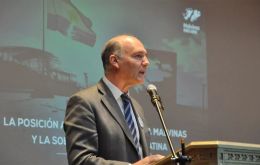
The head of the Argentine Secretariat on Malvinas, Argentine Antarctica and South Atlantic Islands who will be also attending the UN Special Decolonization Committee this week said he was optimistic about a resumption of Falklands/Malvinas discussions with the UK.
-
Monday, June 20th 2022 - 09:29 UTC
MLA Spink at Veterans massive parade in Portsmouth
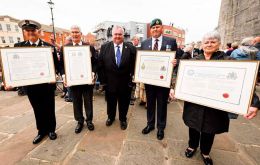
Falkland Islands lawmaker MLA Roger Spink was present at the Veterans gathering in Portsmouth on Sunday to remember their fallen comrades. The event has been described as the largest of its kind in the UK so far.
-
Saturday, June 18th 2022 - 11:13 UTC
Falklands Veterans memorial service and parade in Portsmouth on Sunday
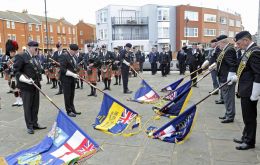
Falkland Islands Veterans from all branches of the British military will be holding the annual memorial service and parading on Sunday, in Portsmouth, to mark the fortieth anniversary.
-
Friday, June 17th 2022 - 10:28 UTC
Falklands' landmarks to be named after 238 fallen in 1982
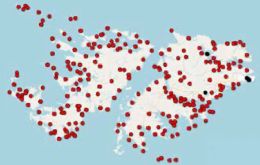
Additional locations around the Falklands are to be named after the 258 servicemen and civilians who gave their lives for the liberation of the Falklands in 1982 as part of the 40th Anniversary commemorations.
-
Thursday, June 16th 2022 - 10:01 UTC
Falklands' Veterans limited from claiming “cold injuries”, because of a 1987 Crown Armed Forces Act
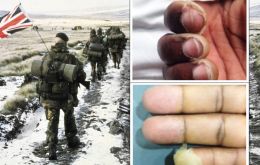
Falklands' War Veterans are currently exempt from claiming damages for “cold injuries” suffered during the war with Argentina and are seeking legal advice against the Ministry of Defense (MoD), according to the lawyer acting on their behalf.
-
Thursday, June 16th 2022 - 10:00 UTC
Defense Secretary Wallace pays tribute to Falklands' Veterans

Defense Secretary Ben Wallace has paid tribute to veterans of the Falkland Islands conflict. In an address released by the Ministry of Defense (MOD), Mr Wallace reflected on the “sacrifice” and the “amazing achievement” of the UK's Armed Forces.
-
Thursday, June 16th 2022 - 09:59 UTC
Veterans will always find “a home from home” in the Falklands, MLA Roberts tells SAMA82 members
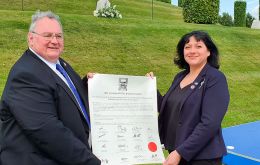
Every bearer of the South Atlantic Medal will always find “a home from home”, Falkland Islands lawmaker Leona Roberts assured the men and women of Operation Corporate as they bestowed the Freedom of the Falklands on them, on Turesday, 14 June. .