MercoPress. South Atlantic News Agency
Tag: Inflation
-
Friday, August 30th 2024 - 09:50 UTC
Argentina makes imports easier to tackle inflation

On Thursday, Argentina's Economy Ministry announced that it would suppress bureaucratic hindrances to importing key industry inputs such as steel, aluminum, and construction materials to “encourage competition and lower costs.” The measure also comes with a reduction in PAIS tax on purchases abroad to further tackle inflation. Representatives of the local steel industry expressed their objections and denounced that relevant safety measures were being disregarded.
-
Monday, August 19th 2024 - 10:18 UTC
Consumption plunges in Argentina despite Milei's optimism

Consumption in Argentina has dropped below the pandemic and 2001 levels as the South American country's economy continues its erratic behavior under Libertarian President Javier Milei, whose administration depicts a different scenario. A survey conducted by the pollsters Scentia showed the loss of purchasing power and the recession on mass consumption.
-
Tuesday, August 13th 2024 - 07:39 UTC
July consumer prices up in Brazil; central bank ready to raise interest rates to fight inflation

Prices in Brazil were up 0.38% in July, stats office IBGE said on Friday, accelerating from the 0.21% increase reported in June and exceeding an economists' poll forecast of a 0.35% monthly rise.
-
Tuesday, August 6th 2024 - 10:16 UTC
Uruguay's YoY inflation up but still within target range
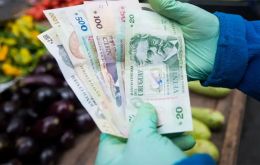
Uruguayan authorities released a report Monday showing that year-on-year inflation stood at 5.45% in July, thus remaining within target range although dangerously approaching its upper limits. According to the National Institute of Statistics (INE), the Consumer Price Index (CPI) recorded a monthly variation of 0.11% and accumulated an increase of 3.73% so far this year.
-
Saturday, July 13th 2024 - 10:22 UTC
Argentina tops list of LatAm countries with the highest inflation for the 9th straight month
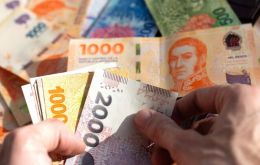
Argentina was found to boast the dubious honor of topping the list of Latin American countries with the highest inflation for the ninth month in a row after Friday's release by the National Institute of Statistics and Census (Indec) of the latest report regarding June's figures. The CPI went up 4.6% while all the other countries recorded variations below one digit.
-
Tuesday, June 25th 2024 - 09:41 UTC
Brazil's yearly inflation projection adjusted slightly upwards
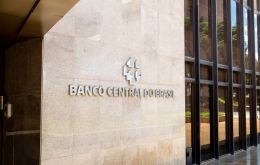
Brazil's Central Bank (BCB) Monday released the latest edition of its Focus Bulletin showing a slight upward adjustment in the Broad National Consumer Price Index (IPCA) from 3.96% to 3.98% this year, Agencia Brasil reported. The index is considered the country's official inflation. The weekly survey among leading financial institutions also projected an increase from 3.8% to 3.85% next year while for 2026 and 2027 the forecasts were 3.6% and 3.5% respectively.
-
Wednesday, May 22nd 2024 - 10:55 UTC
Argentine province of Misiones on the brink of collapse over inflation-dwindled wages

The Northeastern Argentine province of Misiones has been virtually paralyzed for five consecutive days as workers from various walks of life are on strike in demand of inflation-matching wage hikes.
-
Saturday, May 18th 2024 - 10:57 UTC
Wages keep losing purchase power in Argentina, study finds
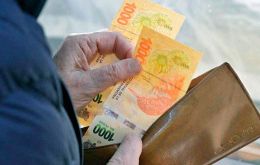
According to a study released Friday in Buenos Airers by the Research and Training Center of the Argentine Republic (Cifra), formal wages took a slump of nearly 15% in the last semester, particularly after the Dec. 13 118.3% devaluation of the local currency once Javier Milei took office as president.
-
Tuesday, May 14th 2024 - 23:05 UTC
Argentina: Inflation keeps decelerating in April

Argentina's National Institute of Statistics and Census (Indec) Tuesday announced that April's Consumer Price Index (CPI) stood “at 8.8% in April 2024 compared to March and 289.4% year-on-year.” The government agency also noted in its X account that “they accumulated an increase of 65% in the first quarter.”
-
Saturday, May 11th 2024 - 10:43 UTC
Wages trail inflation in Argentina under Milei

Inflation outpaced salaries in March by 11% to 10.3%, according to a report by Argentina's National Institute of Statistics and Censuses (Indec) released Friday in Buenos Aires. In yoy terms, the Wage Index increased by 200.8% on average (231.7% in the registered private sector, 183.7% in the public sector, and 129.2% in the informal private sector) and inflation was 287.9%, the survey showed. Hence, President Javier Milei's perception that salaries were recovering turned out inaccurate.

