MercoPress. South Atlantic News Agency
Tag: Moody's
-
Saturday, July 25th 2026 - 09:22 UTC
Goldman Sachs cuts Argentina's growth forecast to 2.7% and looks ahead to the elections

Goldman Sachs lowered its growth forecast for Argentina's economy in 2026 from 3% to 2.7% and anticipated a possible contraction in activity during the second quarter, according to a report by the bank. The institution also said economic performance will increasingly be assessed against the presidential elections of October 2027.
-
Thursday, August 21st 2025 - 10:19 UTC
Moody's upholds Paraguay's investment grading

The international rating agency Moody's on Tuesday reaffirmed Paraguay's sovereign rating at “Baa3”, maintaining a stable outlook. This rating, considered an investment grade, is the result of the South American country's strong economic performance, fiscal discipline, and institutional stability. The Baa3 rating entails lower financing costs, with better borrowing conditions in terms of interest rates and maturities.
-
Saturday, January 25th 2025 - 09:29 UTC
Moody's improves Argentina's grades
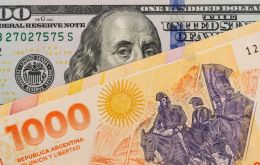
The international credit rating agency Moody's Friday improved Argentina's long-term foreign and local currency issuer grades from Ca to Caa3 but warned that “there are still significant risks to the country's ability to cover upcoming external debt payments.”
-
Tuesday, December 17th 2024 - 10:20 UTC
Moody's downgrades politically shaken France's credit rating
A politically shaken France has been downgraded by Moody's Investors Service from “Aa2” to “Aa3” and the country's long-term outlook went from “stable” to “negative” amid the ongoing “fragmentation” following the appointment of Prime Minister François Bayrou.
-
Saturday, November 16th 2024 - 10:43 UTC
Sheinbaum not happy with Moddy's lowering Mexico's grading

Mexican President Claudia Sheinbaum Friday expressed her disappointment after the credit rating agency Moody's lowered her country's grading from stable to negative citing an alleged “institutional weakening.” The newly elected head of state insisted “more arguments or evidence” were needed to back up that claim and denounced that there was a bias against Mexico. On Thursday, Moody's changed Mexico's credit outlook from stable to negative, due to a recent reform to the Judiciary.
-
Saturday, July 27th 2024 - 08:32 UTC
Moody's upgrades Paraguay's rating amid “robust” economic growth

The credit rating agency Moody's Friday upgraded Paraguay's score to “investment grade” thanks to the South American country's robust economic growth. The new status will facilitate access to credit for both the Paraguayan government and the private sector, it was explained.
-
Saturday, December 9th 2023 - 09:57 UTC
Moody's downgrades China's debt; Beijing insists “unnecessary to worry”
Credit risk agency Moody's is warning about growing problems with the Chinese economy, and has cut its outlook on government-s debt to negative from stable. China has become the world's second largest economy and the main trading partner, among others of South American countries.
-
Tuesday, November 7th 2023 - 10:17 UTC
Moody's says adjustment in Argentina inevitable
A recent report from Moody's heralded that a macro-fiscal adjustment is inevitable in Argentina regardless of who wins the Nov. 19 runoff between Economy Minister Sergio Massa and Libertarian Congressman Javier Milei.
-
Friday, October 6th 2023 - 10:13 UTC
Moody's foresees Argentina's future between bad and worse

Regardless of who becomes Argentina's next president as of Decf. 10, 2023, Moody's foresees inflation in the South American country next year will reach 350%. The rating agency's “baseline scenario” scenario also contemplates an economic contraction of 3.5% by 2023, followed by another 2.5% next year, with prices climbing up to 25% each month.
-
Saturday, May 6th 2023 - 11:00 UTC
Latin America needs to take climate change seriously, says Moody's

According to a Moody's Analytics report published this week, Latin America will lose productivity to climate change if it does not take swift action. The document titled “Latin America under the risk of climate change” explained that governments, companies, and financial institutions should adopt preventive measures to reduce carbon emissions, in order to mitigate eventual damages caused by climate change.