MercoPress. South Atlantic News Agency
United States
-
Monday, July 27th 2026 - 22:26 UTC
Trump asks the Supreme Court to allow his mail-voting restrictions before the midterms
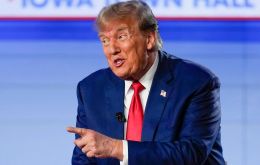
The US government on Monday filed an emergency request with the Supreme Court seeking authorization to implement President Donald Trump's executive order restricting mail-in voting, which lower courts have blocked. The request comes 99 days before November's midterm elections, which will determine control of Congress.
-
Monday, July 27th 2026 - 22:20 UTC
Milei announces Starlink deal to bring satellite internet to 6,000 rural schools

Argentine President Javier Milei announced an agreement between the National Communications Agency (Enacom) and Starlink to provide satellite connectivity to 6,000 rural schools that currently have poor internet access or no connection at all. The announcement was made on Sunday during the main event of the 138th International Livestock, Agriculture and Industry Exhibition in Buenos Aires.
-
Saturday, July 25th 2026 - 12:39 UTC
Brazilian industry estimates nearly half its US exports will face additional tariffs
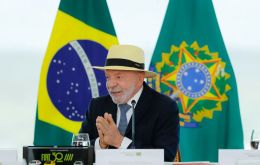
Some 48.7% of Brazilian exports bound for the United States will be subject to some form of additional tariff following the entry into force of the new forced-labor levy, according to a study by the National Confederation of Industry (CNI), the country's main industrial employers' body.
-
Saturday, July 25th 2026 - 09:14 UTC
New US tariff scheme expands Argentine zero-duty lines to 2,212
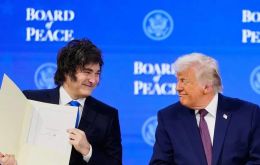
The new US tariff scheme that took effect on Friday raised to 2,212 the number of Argentine tariff lines that can enter the US market at a 0% rate. To the 1,675 lines already covered by the Reciprocal Trade and Investment Agreement (ARTI), signed on February 5 in Washington, another 537 were added following a review by the Office of the US Trade Representative (USTR).
-
Saturday, July 25th 2026 - 09:06 UTC
Trump jokes about a third term at correspondents' dinner, three months after the attack
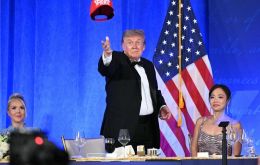
US President Donald Trump joked about the possibility of seeking a third term during his speech at the annual White House Correspondents' Association (WHCA) dinner, held on Friday in Washington. Toward the end of his roughly hour-long remarks, he put on a hat reading “Trump 2028.” The 22nd Amendment to the US Constitution bars a president from serving more than two terms.
-
Friday, July 24th 2026 - 07:05 UTC
Uruguay faces a 12.5% US tariff as its foreign ministry weighs the implications

Uruguay was placed in the highest band of the new US tariff scheme, with an additional 12.5% levy on its exports to the United States, for not having an explicit ban on the import of goods produced with forced labor. The measure, which took effect on Friday, raises the rate that had applied to the country since February, of 10%.
-
Thursday, July 23rd 2026 - 22:33 UTC
US rebuilds its tariff wall with forced-labor levies on 60 economies
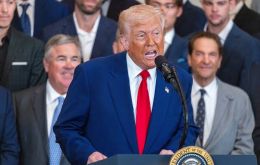
The United States imposed tariffs of between 10% and 12.5% on 60 trading partners, which together account for about 99% of its imports, over what the Office of the US Trade Representative (USTR) described as their failure to adopt and effectively enforce bans on the import of goods produced with forced labor. The measures, announced on Thursday, took effect at 12:01 a.m. on Friday, at the same moment the 10% universal tariff in place since February expired.
-
Thursday, July 23rd 2026 - 07:34 UTC
New York judge sets June 2027 for the start of Maduro and Cilia Flores's trial

Federal Judge Alvin Hellerstein set June 1, 2027, as the preliminary start date for the trial of former Venezuelan president Nicolás Maduro and his wife, Cilia Flores, in the narcoterrorism case they face in the United States. The decision came on Wednesday during the case's third hearing before the US District Court for the Southern District of New York, which lasted only a few minutes.
-
Thursday, July 23rd 2026 - 01:57 UTC
Foreign Secretary Ed Miliband, no friend of “Trumpism”, White House
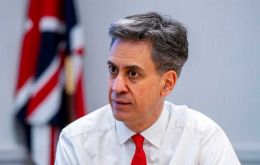
Reports from the United States indicate the White House has raised concerns about UK Premier Andy Burnham’s decision to appoint Ed Miliband as foreign secretary, amid warnings from the Donald Trump administration that he could create tensions in the UK-US relationship, according to reports Tuesday.
-
Wednesday, July 22nd 2026 - 22:26 UTC
Report says Trump is pushing Infantino to lead the UN
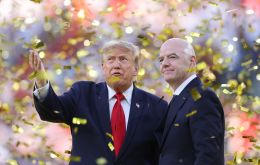
US President Donald Trump is promoting FIFA President Gianni Infantino as a candidate to succeed António Guterres at the head of the United Nations, according to the New York Post, which cited anonymous sources close to the White House. The information has not been officially confirmed by the US government or FIFA, and Infantino himself has not commented publicly.

