MercoPress. South Atlantic News Agency
Stories for December 19th 2025
-
Friday, December 19th 2025 - 21:46 UTC
Ecuador: Three days of mourning after death of former President Rodrigo Borja
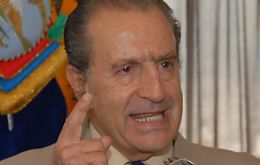
Former Ecuadorean President Rodrigo Borja Cevallos passed away on Thursday, December 18, 2025, at the age of 90. In response to the loss of one of the 20th century’s most influential political figures, President Daniel Noboa has declared three days of national mourning to be observed from December 19 to 21, with the flag flying at half-mast.
-
Friday, December 19th 2025 - 21:34 UTC
Superflu makes it to Argentina and Brazil

Health authorities across South America are on high alert following the confirmed detection of the Influenza A (H3N2) “K subclade” in Argentina and Brazil. The variant, which has already triggered emergency protocols in Chile and Bolivia, is characterized by genetic mutations that may increase transmissibility, though experts emphasize it does not currently appear to be more lethal than standard flu strains.
-
Friday, December 19th 2025 - 10:59 UTC
Signing of EU-Mercosur FTA postponed to January
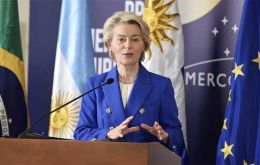
The highly anticipated signing of the free trade agreement between the European Union (EU) and the Southern Common Market (Mercosur), originally scheduled for this Saturday in Foz do Iguaçu, has been officially postponed until January following a surge in domestic pressure and mass protests by European farmers.
-
Friday, December 19th 2025 - 10:53 UTC
CAF okays US$980mn package for Uruguay

The Board of Directors of the Development Bank of Latin America and the Caribbean (CAF) has authorized a landmark US$980 million credit operation for Uruguay. This approval represents one of the largest single financial commitments in the organization's history with the country, targeting a massive overhaul of public infrastructure, climate resilience, and social integration.
-
Friday, December 19th 2025 - 09:02 UTC
Argentine gas brings relief to electricity generation in Uruguay
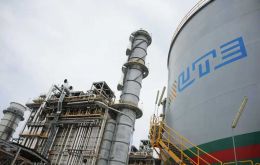
Uruguay's state-owned electricity company UTE (technically the Administración Nacional de Usinas y Transmisiones Eléctricas) announced this week that importing gas from neighboring Argentina has resulted in savings of around US$3 million in the first seven days.
-
Friday, December 19th 2025 - 08:47 UTC
Paraguay's guaraní is most stable currency in the region, Bloomberg finds
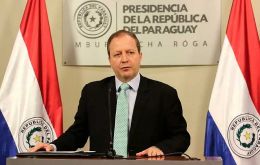
Paraguay's guaraní (PY₲) has been highlighted as the most stable and highest-performing currency in Latin America for 2025. In a report published this week by the specialized outlet Bloomberg Línea, the Paraguayan currency has appreciated over 17% against the US dollar this year, outperforming Mexican and Colombian pesos.
-
Friday, December 19th 2025 - 08:36 UTC
Argentina: National Bioethics Commission created
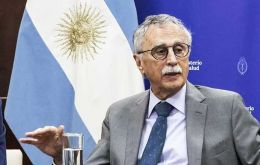
The Argentine government has officially established the National Bioethics Commission through Decree 893/2025. Operating under the Ministry of Health, this new body will serve as the country's sole regulatory authority on health-related ethical evaluations and scientific research.
-
Friday, December 19th 2025 - 08:27 UTC
Health alerts issued in Chile and Bolivia following superflu detections

Health authorities in Chile and Bolivia have activated emergency epidemiological protocols following the confirmed arrival of a new, highly transmissible variant of Influenza A (H3N2), known as the K subclade (also referred to as “supereflu”).
-
Friday, December 19th 2025 - 08:18 UTC
Peru purchasing South Korean tanks in major defense deal

Peru has signed a strategic framework agreement with South Korean defense firm Hyundai Rotem to purchase 54 K2 Black Panther battle tanks and 141 K808 armored personnel carriers, signaling a total modernization of the South American country's capabilities in this regard.