MercoPress. South Atlantic News Agency



Bolivian Gasolinazo conflict advancing to “National Revolution” phase
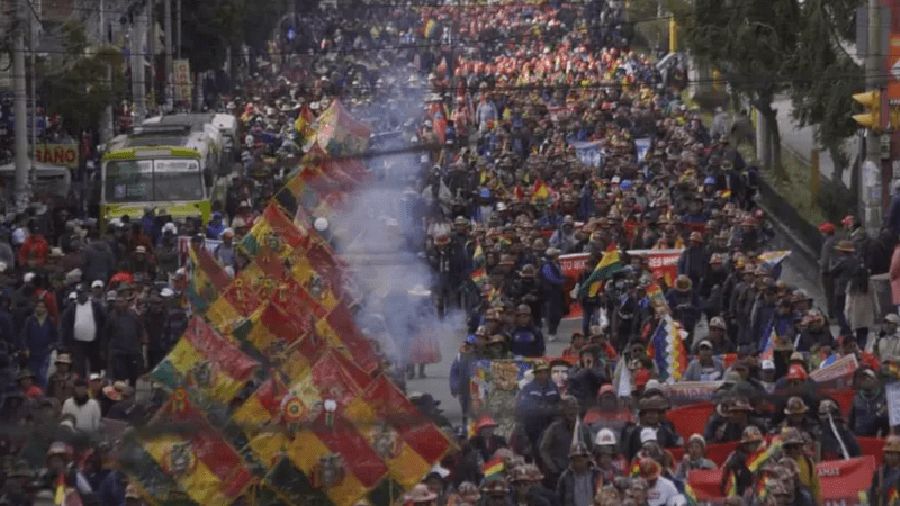 The COB showed up for talks on Friday with a “total repeal or nothing” proposal
 Negotiations between the Bolivian Government of President Rodrigo Paz Pereira and the Bolivian Workers' Union (COB) collapsed on Friday, leaving the country's instability on the brink of further escalation.
Following the breakdown, union leadership abandoned calls for simple roadblocks, warning instead that the country was on the brink of a “national revolution” over the elimination through Supreme Decree 5503 of fuel subsidies resulting in significant price hikes, a phenomenon known as “Gasolinazo.”
While the government maintains the decree is essential for economic stability, the COB has denounced it as an unconstitutional and “submissive” regulation that threatens the fundamental rights of the working class.
COB Executive Secretary Mario Argollo did not mince words regarding the failed dialogue. He accused the government of categorical intransigence despite offers to draft a compromise regulation. “We have to stand up to the government because, unfortunately, it categorically refuses to repeal this damn decree,” Argollo stated. “We had expressed our full intention to rescue the good points and draft another decree in parallel... to make it clear to everyone that this has already become a national revolution.”
Argollo further claimed that the current administration has “betrayed the vote” of the rural communities and labor sectors that brought it to power. “They are not moved; they have no heart,” he added, referring to the more than 50 active roadblocks currently paralyzing the nation’s highways.
The Paz Pereira administration offered a sharply different account of the negotiations. Presidential Minister José Luis Lupo and Economy Minister José Gabriel Espinoza accused the COB leadership of backtracking on previously settled points, including minimum wage increases and worker bonuses contained within the decree.
Lupo noted that the government had been prepared to amend specific articles to settle union sensitivities. However, he claimed the COB returned to the table on Friday with an “unacceptable” ultimatum: total repeal or nothing.
“They returned with an intransigent position, but also a contradictory one,” Espinoza told reporters. “There were leaders who said the entire decree was wrong, including the increase in the minimum wage... articles that had been accepted by different sectors.”
In a move to pin down the union’s demands, the government has formally requested that the COB submit its objections in writing to avoid further “misinterpretations.”
Argollo drew a grim parallel between the current situation and the 1985 enactment of Supreme Decree 21060, which ushered in decades of neoliberal reforms in Bolivia, bringing “the working class to its knees.”
“We cannot allow that mistake in history to happen again,” Argollo concluded.


Top Comments
Disclaimer & comment rulesCommenting for this story is now closed.
If you have a Facebook account, become a fan and comment on our Facebook Page!