MercoPress. South Atlantic News Agency
Marco Rubio: “Our relationship with Delcy Rodríguez's government is productive and respectful”
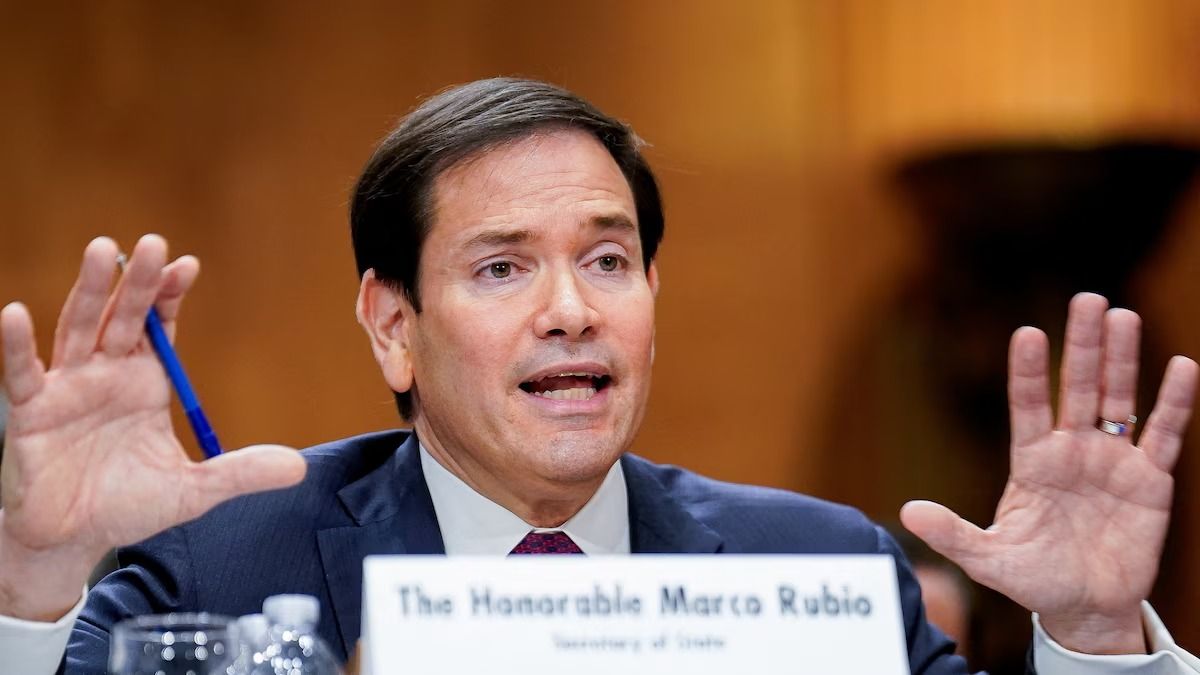 “I can assure you with complete certainty that we are not preparing, do not intend, and do not expect to take any military action in Venezuela at any time,” Rubio said
 U.S. Secretary of State Marco Rubio said on Wednesday that Washington is not considering “any military action” in Venezuela, as he testified before the Senate Foreign Relations Committee to outline the Trump administration’s strategy following the capture of former president Nicolás Maduro earlier this month.
“I can assure you with complete certainty that we are not preparing, do not intend, and do not expect to take any military action in Venezuela at any time,” Rubio said, describing relations with the interim authorities led by Delcy Rodríguez as “productive and respectful,” while stressing that “there is still a lot of work to be done.”
The remarks struck a more restrained tone than a written statement Rubio submitted to the committee the previous night, in which he warned that the United States was prepared to use force if cooperation from Caracas fell short. In his oral testimony, Rubio softened that language while noting that President Donald Trump, as commander in chief, “never rules out options” in the face of specific security threats.
The hearing followed the Jan. 3 operation in which U.S. forces captured Maduro and his wife, Cilia Flores, an action the administration has described as a law-enforcement operation targeting alleged narcotics trafficking. Rubio argued that the mission did not amount to an occupation or an act of war and therefore did not require prior congressional authorization, a position that has drawn scrutiny from lawmakers.
Rubio told senators that Washington has made more progress in recent weeks than initially expected, including opening talks aimed at reducing the influence of Iran, China and Russia in Venezuela. “For the first time in twenty years, we are having serious conversations” on these issues, he said, adding that there are elements within Venezuelan society that favor restoring ties with the United States.
The U.S. roadmap for Venezuela, Rubio explained, unfolds in three phases: stabilization, recovery and transition. The initial phase focuses on restoring critical infrastructure, particularly in the oil sector, long the backbone of Venezuela’s economy. That would be followed by broader economic recovery and, eventually, a political transition leading to “free and fair” elections — a process Rubio acknowledged could take years.
He also expressed optimism about reopening the U.S. embassy in Caracas in the near future, saying the only American military presence currently in Venezuela consists of Marine guards protecting the diplomatic compound. Financing for the process, he added, is partly linked to oil revenues: Washington has already sold Venezuelan crude worth around $500 million, with part of the proceeds transferred to Caracas and the remainder held in a controlled account.
After the hearing, Rubio met behind closed doors with opposition leader María Corina Machado. Speaking afterward, Machado called for a “real transition” and said the release of political prisoners is an “absolute priority.” According to figures compiled by the Venezuelan rights group Foro Penal, more than 300 detainees have been released in recent weeks, while around 700 people remain imprisoned for political reasons.


Top Comments
Disclaimer & comment rulesCommenting for this story is now closed.
If you have a Facebook account, become a fan and comment on our Facebook Page!