MercoPress. South Atlantic News Agency
Marco Rubio says U.S. may use force again in Venezuela if Delcy Rodríguez “does not cooperate”
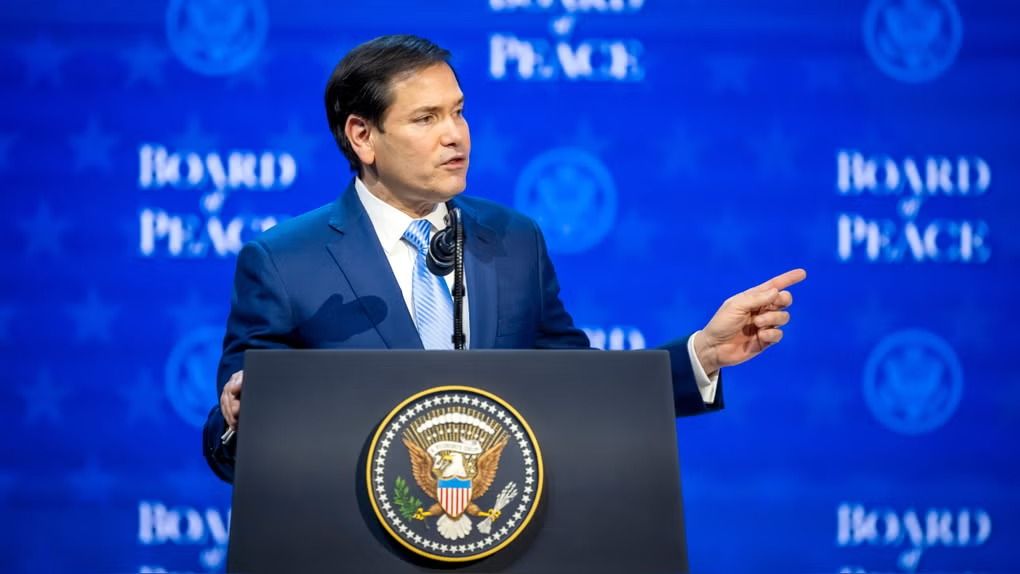 The hearing will be Rubio’s first public appearance before Congress focused on Venezuela since the U.S. military operation of Jan. 3
 U.S. Secretary of State Marco Rubio will tell the Senate Foreign Relations Committee on Wednesday that Washington is prepared to “use force” again in Venezuela if it determines that acting president Delcy Rodríguez is not cooperating “to the level” expected by President Donald Trump’s administration, according to a draft of his prepared remarks cited by media.
Rubio is expected to say the United States will “closely monitor” the interim authorities’ cooperation with a “phased” plan to “restore stability,” adding: “Let there be no doubt… we are prepared to use force to ensure maximum cooperation if other methods fail,” while stressing he hopes such steps will “not be necessary.”
The hearing will be Rubio’s first public appearance before Congress focused on Venezuela since the U.S. military operation of Jan. 3 that resulted in the capture of Nicolás Maduro and his wife, Cilia Flores — an action the White House has framed within its counternarcotics agenda. Reuters reported at the time that the mission had been planned for months and involved U.S. special operations forces and intelligence, alongside a significant regional military posture.
In the draft, Rubio is set to describe the intervention as a “judicial operation” to seize “two narcotraffickers” for trial in the United States, arguing it did not amount to a war and therefore did not require prior congressional authorization. He will also reiterate Washington’s position that Maduro’s 2024 election claim lacked legitimacy — a result disputed by opposition figures and not accepted by several governments.
Rubio will outline commitments he attributes to the interim government: opening Venezuela’s oil sector to U.S. companies with preferential access to output, using crude-sale revenue to purchase U.S. goods, ending oil support to Cuba, and pursuing “national reconciliation.” At the same time, Rodríguez has said Venezuela “does not accept orders” from external actors, though Trump said this week he maintains a “very good relationship” with the interim authorities.
The bilateral track has been reshaped by oil arrangements. Rodríguez has said Venezuela has already received $300 million from a $500 million crude-sale agreement announced by Washington. The Trump administration has acknowledged its roadmap could take years and is structured around stabilization, economic recovery, and a transition toward elections.
After the Senate session, Rubio is scheduled to meet opposition leader María Corina Machado at the State Department.


Top Comments
Disclaimer & comment rules-

Read all commentsWell duhh...
Jan 30th, 2026 - 03:20 am 0Commenting for this story is now closed.
If you have a Facebook account, become a fan and comment on our Facebook Page!