MercoPress. South Atlantic News Agency



Argentina’s Senate approves Milei’s labour reform amid protests and clashes
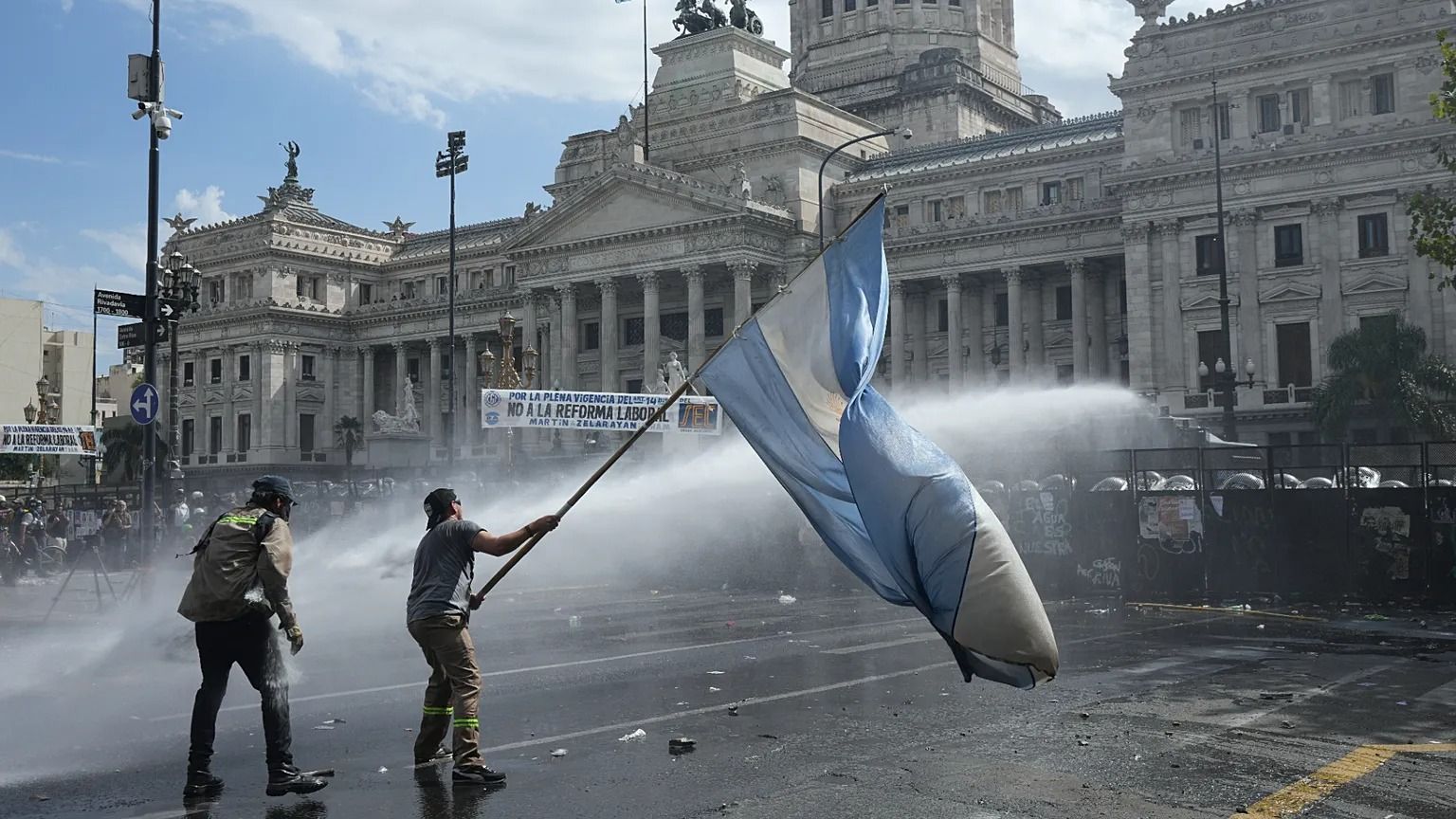 Clashes left at least 15 injured and about 30 detained. Authorities said four police officers were hurt after protesters threw stones and Molotov cocktails, and police used tear gas and water cannons
 Argentina’s Senate gave initial approval to President Javier Milei’s labor reform bill after a marathon session that ran for more than 14 hours and unfolded amid street protests outside Congress. The draft cleared the upper chamber by 42 votes to 30 and will now move to the Lower House (Chamber of Deputies) for final consideration.
The vote came as unions and social organizations rallied against the package. The clashes left at least 15 people injured and around 30 detained, while authorities also reported four police officers hurt, after confrontations that included stones and Molotov cocktails and a police response using tear gas, water cannons and rubber bullets.
The government secured the result with support from regular allies and several provincial blocs, after last-minute adjustments aimed at locking in votes. Senate floor leader Patricia Bullrich defended the reform by arguing the current framework is “obsolete” and discourages job creation. “One of the reasons jobs are not being created is an obsolete labor law,” she said ahead of the vote, according to local reporting.
Key measures highlighted in the bill include lower dismissal costs, the possibility of workdays of up to 12 hours, and changes to working-time rules such as offsetting overtime with time off or shorter shifts, and allowing vacations to be split throughout the year. The text also envisages wages being paid in different currencies and forms, as cited by Argentine outlets summarizing the draft.
One of the most contested provisions is the creation of a Labor Assistance Fund (FAL) to finance severance payments, funded through mandatory monthly contributions of 1% for large companies and 2.5% for small and medium-sized firms, with possible increases under certain conditions. Peronist senator Mariano Recalde called the fund “a scandal” and warned it could weaken pension-system financing.
In the final stretch, the government accepted a set of concessions: it dropped a proposed corporate income tax cut that had appeared in earlier drafts; kept the share of contributions earmarked for union-run health plans; and removed language that would have enabled salaries to be paid through digital wallets instead of bank accounts. With the Senate’s approval secured, the debate now shifts to the Lower House, where the opposition has signaled further resistance and has not ruled out court challenges if the bill passes without major changes.


Top Comments
Disclaimer & comment rulesCommenting for this story is now closed.
If you have a Facebook account, become a fan and comment on our Facebook Page!