MercoPress. South Atlantic News Agency


Trump’s tariff uncertainty adds pressure on the dollar after Supreme Court ruling
 The move adds uncertainty to Washington’s trade relationships
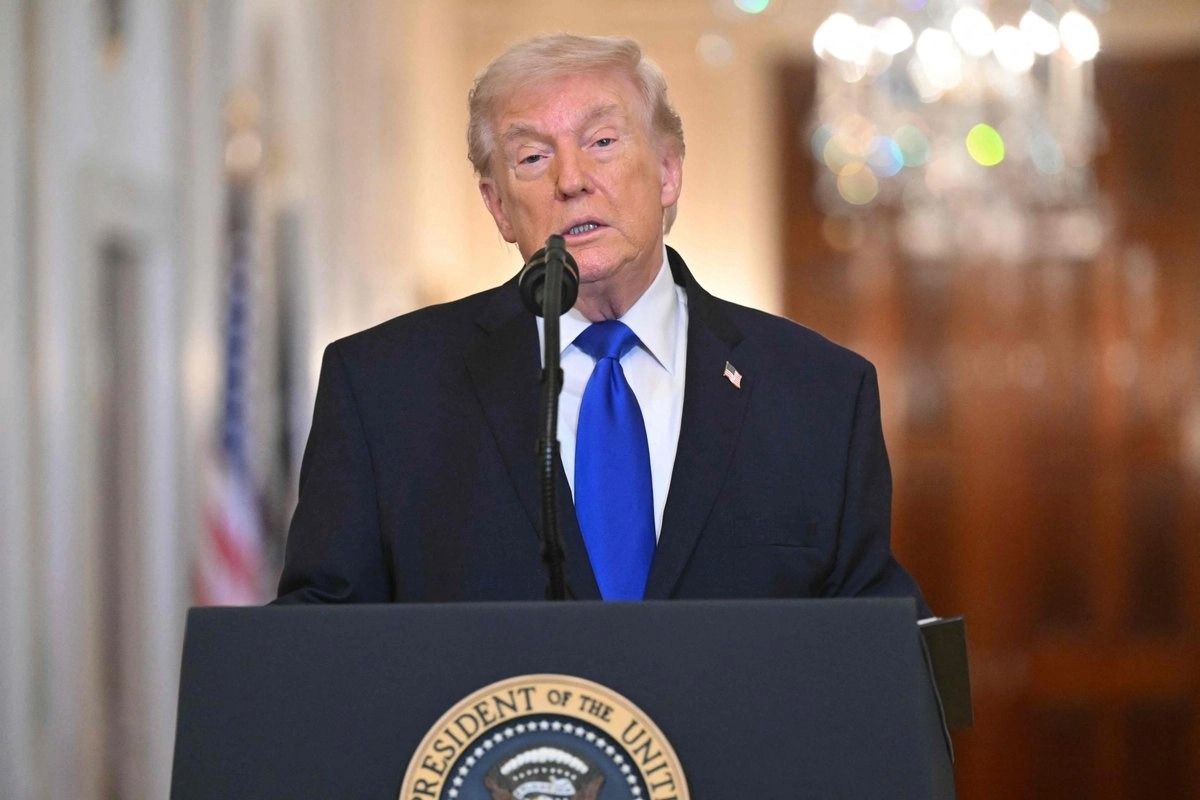
 A fresh round of tariff moves announced by U.S. President Donald Trump has reintroduced market volatility and added pressure on the dollar, as investors and banks debate whether the currency is losing part of its traditional safe-haven role.
The latest episode followed a Supreme Court decision holding that the International Emergency Economic Powers Act (IEEPA) does not authorize the president to impose tariffs, striking down a large share of the previous tariff framework.
In response, the White House shifted to Section 122 of the Trade Act of 1974, a provision that allows temporary import surcharges for up to 150 days to address “fundamental” balance-of-payments problems. A broad 10% surcharge took effect on Tuesday, while Trump has kept the option of raising it to 15%, the maximum under that legal route.
The move adds uncertainty to Washington’s trade relationships. In Europe, the European Parliament froze the ratification process of a trade deal with the United States pending clarity on the practical scope of the new tariff and whether it aligns with agreed commitments.
Carsten Brzeski, ING Research’s global head of macro, said the Supreme Court ruling “sent a clear signal” about limits on presidential power, but he does not expect Trump to treat it as an off-ramp from his tariff agenda. ING also warned the time-limited structure could be prolonged if the administration declares new emergencies or seeks alternative legal tools.
In FX markets, the euro was trading around $1.18. Jefferies’ Europe economist Mohit Kumar argued that a Federal Reserve easing cycle, political uncertainty in the U.S., and efforts by some investors to reduce dollar exposure support the case for a more sustained weakening of the currency over coming quarters.
The debate also intersects with inflation and monetary policy. U.S. consumer prices rose 2.4% year-on-year in January, fuelling discussion about rate cuts later in the year, though analysts caution the timing may not be near-term. Natixis IM Solutions portfolio manager Jack Janasiewicz said that, with November midterms approaching, “affordability” has moved to the forefront and the time required to implement alternative tariffs could provide a temporary respite for prices.
Even so, ING flagged a tail risk: a synchronized sell-off in Treasuries, equities and the dollar if markets conclude that a core pillar of U.S. economic policy is starting to erode.


Top Comments
Disclaimer & comment rulesCommenting for this story is now closed.
If you have a Facebook account, become a fan and comment on our Facebook Page!