MercoPress. South Atlantic News Agency



Revolutionary Guard say Strait of Hormuz is “closed”
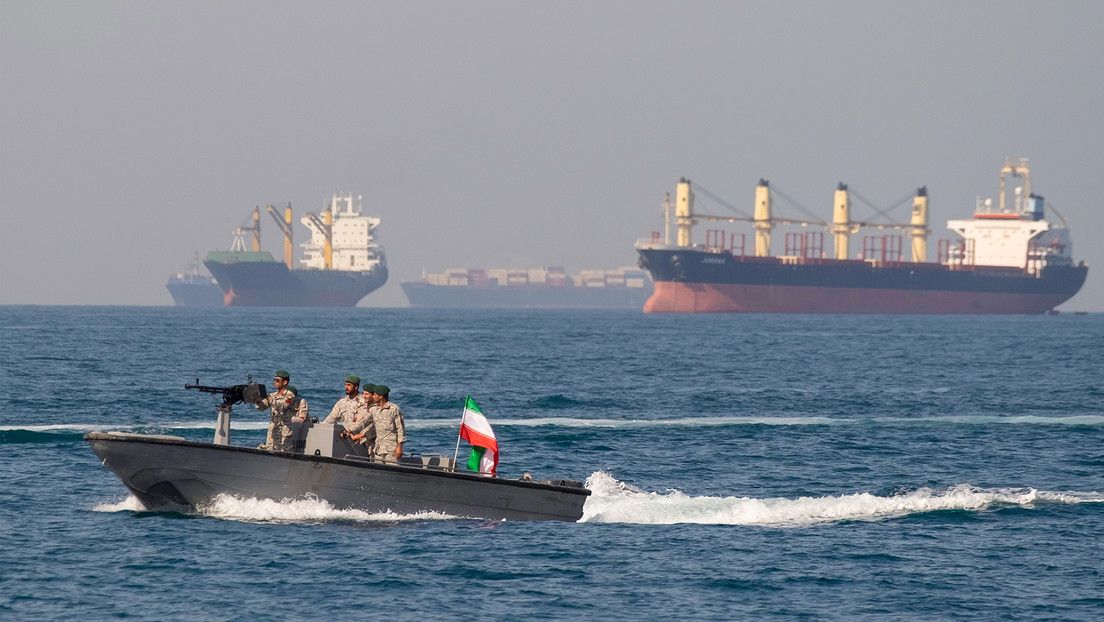 The Strait of Hormuz links the Gulf to the Arabian Sea and is critical for global energy exports
 Iran’s Revolutionary Guards said on Monday the Strait of Hormuz is now “closed” and threatened to attack any vessel attempting to transit, in the most explicit warning yet against the Gulf’s main maritime chokepoint. A Guards commander said they would set any ship “ablaze” if it tried to pass, according to remarks carried by Reuters.
The Strait of Hormuz links the Gulf to the Arabian Sea and is critical for global energy exports. The threat came amid mounting disruption to shipping, following a string of security incidents and reported attacks on vessels in the area over recent days.
Brent crude climbed by about 10% in early trading, briefly pushing above $82 a barrel before paring gains. European gas prices also surged, while gold advanced as investors moved away from risk assets.
In the United States, President Donald Trump said the “big wave” of the Iran offensive has “not yet arrived” and that, while the initial plan envisioned “four to five weeks,” Washington has the “capability” to go much longer. The comments were reported by media and cited by Reuters.
The escalation has also widened on the Lebanon front. Israel’s military announced fresh strikes on Hezbollah targets after cross-border fire attributed to the group. In a heavy round of attacks on Beirut’s southern suburbs and other areas, at least 52 people were killed and more than 150 wounded, according to figures reported by Reuters.
Meanwhile, a drone hit Britain’s RAF Akrotiri base in Cyprus —a British sovereign base area on the territory of an EU member state— causing limited damage and no casualties, UK officials said. The incident followed Prime Minister Keir Starmer’s decision to allow the United States to use British bases for “defensive” action targeting Iranian missile infrastructure.
Diplomatic tensions inside Europe also sharpened. Spain reiterated it would not allow the U.S. to use the jointly operated bases of Rota and Morón for attacks on Iran, and multiple U.S. aircraft subsequently departed the facilities, according to Reuters. Israel’s Foreign Minister Gideon Saar criticised what he described as Tehran’s public thanks to Spain’s government, writing on X that it raised questions about whether Madrid was “on the right side of history.”
Iran’s Red Crescent said at least 555 people have been killed in Iran since the weekend strikes began.


Top Comments
Disclaimer & comment rules-

-

-

Read all commentsThe Iranians made the same threat some 41 years ago (and have since). I was deployed to Khasab on the Musandam Peninsula in 1985, with four Russian-built 130 mm guns. My orders were to deny landings on Omani territory. A big ask for a young man, tense times and it was as hot as hell.
Mar 03rd, 2026 - 11:42 am 0Three days later, an American Carrier group dailed majestically into the Arabian Gulf, defying the threat and ensuring swift and effective retaliation if this international sea lane was closed.
It worked then and will no doubt work now. However, the swarm threat, to counter U.S. technological advantage, is worrying.
Long range sniper then.
Mar 03rd, 2026 - 12:44 pm 0They keep carrier battle groups way out to sea these days, swarm is increasingly what it’s all about now, particularly when dealing with Iranians who have long practiced ‘a symmetric warfare’.
In Ukraine now they have first world war style front lines replete with trenches and dug outs, with a no-man’s-land between patrolled by swarms of drones. No more sweeping armoured offensives when £5m tanks can be knocked out by £500 drones and there are swarms of them.
The big push now in the defence industry is to develop a cost effective ‘drone killing’ system.
Whoever does will be selling as many as they can make.
Good drugs, Brasso? Or bad...? ;)
Mar 05th, 2026 - 02:44 pm 0Commenting for this story is now closed.
If you have a Facebook account, become a fan and comment on our Facebook Page!