MercoPress. South Atlantic News Agency


Latin America faces fertilizer vulnerability; IICA and TFI agree joint plan amid Hormuz crisis
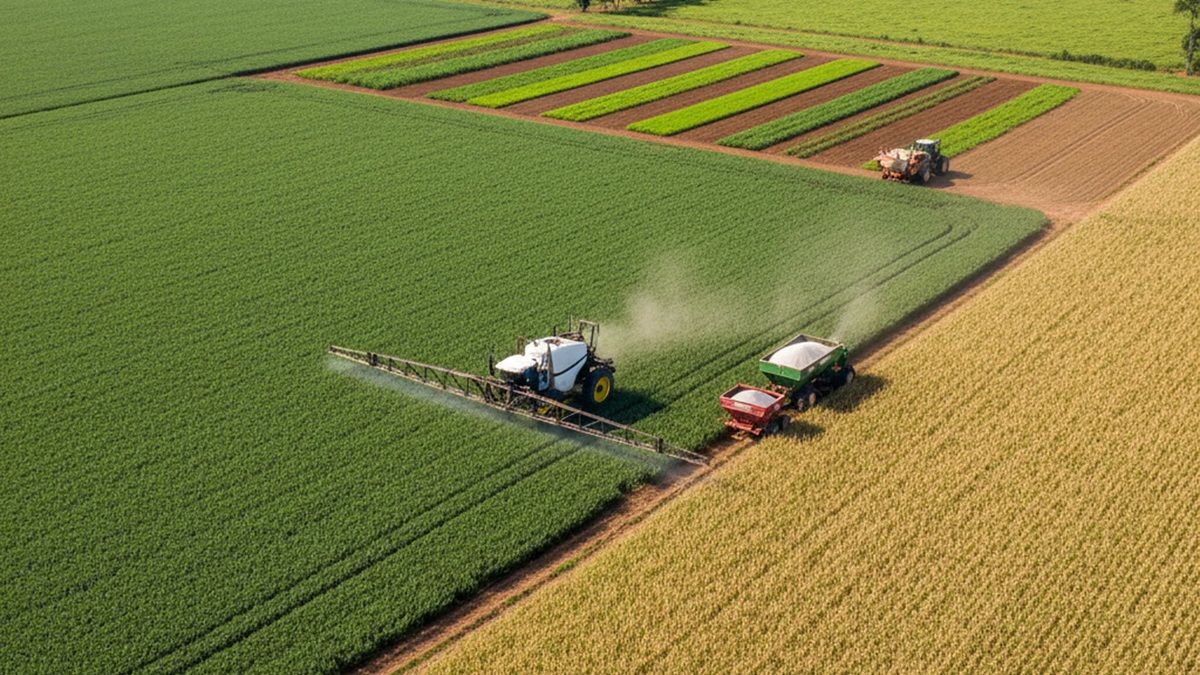 Global fertilizer supply chain faces simultaneous pressures: Chinese restrictions on phosphate exports, US tariffs that reduced nutrient imports, and the disruption of transit through Hormuz
 The Inter-American Institute for Cooperation on Agriculture (IICA) and the U.S.-based Fertilizer Institute (TFI) announced a partnership to secure fertilizer supply across the Americas, amid logistical disruptions and price volatility worsened by the closure of the Strait of Hormuz due to the war between the United States, Israel and Iran.
IICA Director General Muhammad Ibrahim met this week in Washington with TFI President Corey Rosenbusch to define lines of collaboration. The two organizations will jointly produce reports on the fertilizer supply situation across the hemisphere, to be presented to the U.S. Department of Agriculture (USDA) and other relevant public and private institutions, according to an IICA statement.
The initiative addresses a structural vulnerability in the region. Latin America is heavily dependent on fertilizer imports: Brazil, the largest regional consumer, imports approximately 92% of its needs, according to data from the International Fertilizer Association (IFA). The closure of the Strait of Hormuz since March 2 disrupted key trade routes for urea and phosphate supplies from the Middle East and the Persian Gulf. Iran accounts for roughly 8% of global urea exports, and Gulf nations are major suppliers of monoammonium phosphate (MAP), a fertilizer whose deliveries were expected in April and May.
The agreement also includes developing a communication strategy to raise awareness about the region's fertilizer vulnerabilities and the need to stabilize supply through public policy and long-term investment.
A key priority identified by IICA is boosting nitrogen production capacity within the continent. To that end, the institute will facilitate engagement between TFI and Trinidad and Tobago, a major Caribbean natural gas producer whose output is essential for manufacturing nitrogen-based fertilizers such as urea. The diversification of production sources aims to reduce the hemisphere's exposure to geopolitical crises affecting traditional maritime routes.
Ibrahim's visit to Washington also included meetings with USDA officials to advance a joint agenda focused on protecting the hemispheric food supply and expanding agricultural trade opportunities. The IICA-TFI agreement will be formalized shortly through the signing of a memorandum of understanding.
The partnership comes at a time when the global fertilizer supply chain faces simultaneous pressures: Chinese restrictions on phosphate exports, U.S. tariffs that reduced nutrient imports during 2025, and the disruption of transit through Hormuz, which according to the IFA particularly affects Latin America and South Asia — the regions most dependent on Middle Eastern fertilizer supplies.


Top Comments
Disclaimer & comment rules-

-

-

Read all commentsWith regard to fertilizers, Brazil's needs are fully met by Russia. Brazil has no land bridges through the Strait of Hormuz.
Apr 09th, 2026 - 11:00 am 0Russia has already guaranteed our demand for 2026 and 2027. And our crops are projected to yield record production.
Braz
Apr 09th, 2026 - 01:04 pm 0Depends what type of fertilizer you are talking about.
Key Fertilizer Sources for Brazil:
Russia: Primary supplier, accounting for nearly 30% of total imports in 2025, including a significant share of potash and MAP (monoammonium phosphate).
China: A major supplier of nitrogen and phosphate fertilizers.
Canada: Key provider of potash.
Other Sources: Saudi Arabia, Morocco, and the United States (sulphur).
You will be able to get fertilizer going forward, but at an increased price, that will be the cost to Brazil in all this.
Also don’t expect things to return to normal anytime soon, if this war ends tomorrow, it will be months if not years before things are back to normal.
Meanwhile Brazil as a BIG importer of fertilizer is going to feel the pinch, no question.
Russia and Belarus manufacture all the fertilizers that Brazil needs. When Brazil buys fertilizer from Canada or China, it's a matter of economic or diplomatic policy.
Apr 09th, 2026 - 02:11 pm 0Therefore, Brazil has secured all of its fertilizer demand for 2026 and 2027.
Furthermore, Brazil is significantly increasing its imports of Russian diesel, replacing purchases that were previously made from the United States.
https://www.youtube.com/watch?v=Qcj8Ti-Ml6w
Commenting for this story is now closed.
If you have a Facebook account, become a fan and comment on our Facebook Page!