MercoPress. South Atlantic News Agency


Milei government appeals to Supreme Court to avoid applying university funding law
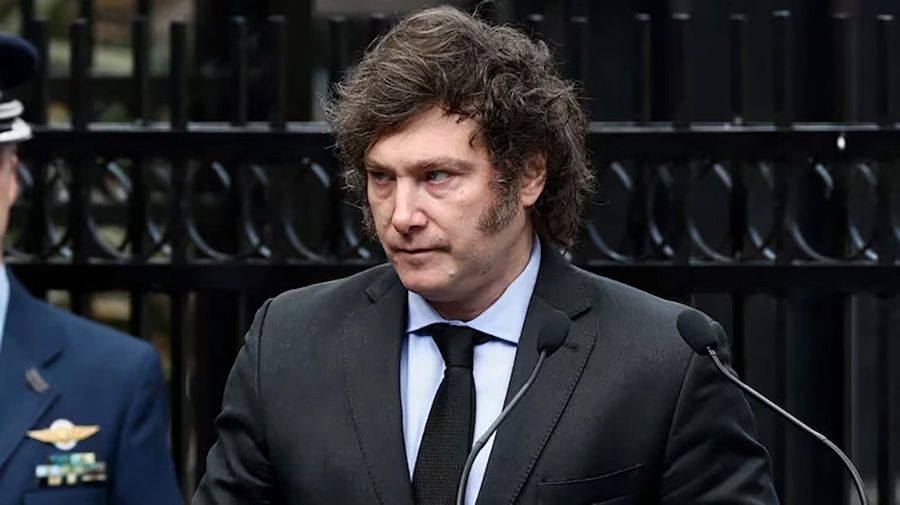 The university conflict has been one of Milei's most politically costly fronts in 2024 and 2025, with massive student and union marches
 Argentina's government filed an extraordinary federal appeal with the Supreme Court on Thursday to avoid complying with the University Funding Law (27.795), which requires it to update faculty salaries and scholarship programs at national universities. The Executive argued that complying with the law would consume 90.3% of available primary spending credits and cause “a significant paralysis of the functioning of all three branches of government.”
The appeal, signed by representatives of the Ministry of Human Capital and Treasury Attorney Sebastián Amerio, argued that obeying the law would result in consequences such as “the suspension of federal police patrols in Rosario, the suspension of food provision in federal prisons, or the closure of all federal courts, the Supreme Court and both legislative chambers.”
The government also requested that three Supreme Court justices — Horacio Rosatti, Carlos Rosenkrantz and Ricardo Lorenzetti — recuse themselves from voting because they are active or on-leave university professors, making them interested parties in the Executive's view.
The law was passed by Congress in 2025 and upheld after legislators overrode a veto by President Javier Milei. It requires the state to restore transfers to public universities dating back to December 2023. The National Inter-University Council (CIN), which represents university presidents, has reported that transfers have suffered a cumulative real decline of 45.6% between 2023 and 2026, according to Infobae.
The judicial process began in October 2025, when CIN and university presidents filed an injunction against decree 759/2025, through which Milei had suspended the law's application. In December, first-instance judge Martín Cormick ordered compliance with the salary updates. In March 2026, the Third Chamber of the Federal Administrative Court, with judges Sergio Fernández and Jorge Morán, upheld the injunction and dismissed the government's arguments, ruling that Congress's insistence gave the law full legal standing.
However, Casa Rosada sources told Infobae it is “very likely” the Court will decline to hear the case since it involves an injunction rather than a substantive ruling. “Backing down is not an option,” a government source told the same outlet, even as the administration admits it lacks the necessary funds. According to official estimates, compliance would cost 2.5 trillion pesos, a figure the Executive says would bring back the fiscal deficit.
University of Buenos Aires vice-rector Emiliano Yacobitti warned that the government's failure to comply “could constitute grounds for dereliction of duty by public officials” and noted that the Court's own jurisprudence holds that injunctions are not final rulings and fall outside its jurisdiction.
The university conflict has been one of Milei's most politically costly fronts in 2024 and 2025, with massive student and union marches that mobilized segments of his own electoral base.


Top Comments
Disclaimer & comment rulesCommenting for this story is now closed.
If you have a Facebook account, become a fan and comment on our Facebook Page!