MercoPress. South Atlantic News Agency


How a British prime minister is replaced: the keys to a possible Starmer succession
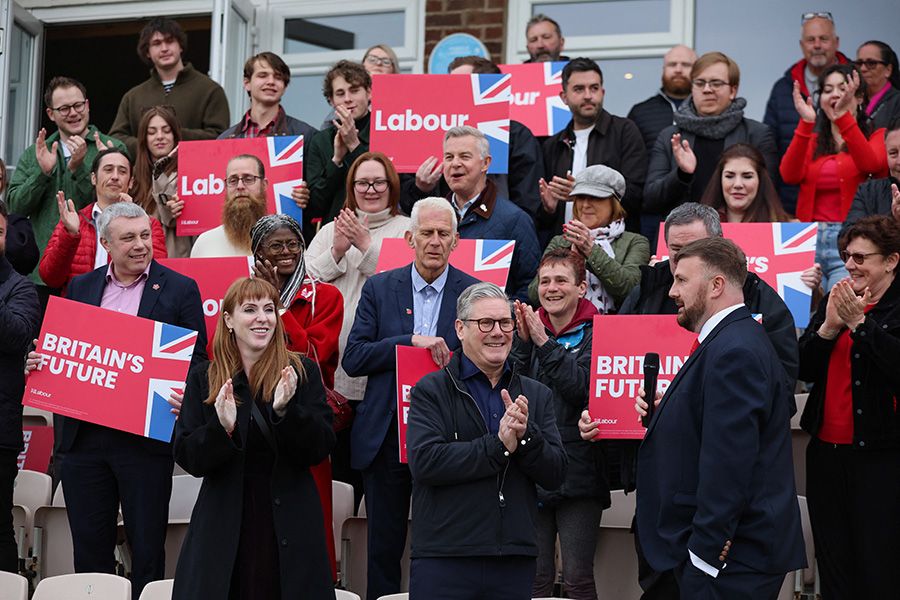 The statutory procedure requires at least one-fifth of the Labour parliamentary group to call for leadership primaries in order to force the prime minister to step aside. Photo: Phil Noble / REUTERS
 British Prime Minister Keir Starmer faces the most serious political crisis since his arrival at Downing Street in July 2024, but a potential change at the head of the government runs up against a web of internal Labour Party rules, the absence of a consensus candidate, and the personal obstacles weighing on the figure best positioned in internal polling. Starmer, who won the 2024 general election with an overwhelming majority, has flatly ruled out resigning despite mounting pressure from his own parliamentary group following Labour's collapse in the local and regional elections of 1 May.
The statutory procedure requires at least one-fifth of the Labour parliamentary group —81 MPs in the current composition— to call for leadership primaries in order to force the prime minister to step aside. That figure is reportedly already being gathered by MP Catherine West in the aftermath of the 1 May vote. An internal confidence motion, by contrast, has no binding effect: the precedent was set by Jeremy Corbyn in 2016, when he lost a vote among his peers by 172 to 40 and nonetheless clung to the post. The 20% rule only takes effect if dissenters agree on a replacement name.
The second obstacle is ideological. From the party's left wing, the names circulating are Manchester Mayor Andy Burnham; former Deputy Prime Minister Angela Rayner; and Energy Secretary Ed Miliband. From the right wing emerge Health Secretary Wes Streeting; Home Secretary Shabana Mahmood; and Foreign Secretary Yvette Cooper. Burnham, 56, Greater Manchester mayor since 2017, is the most popular name, but to bid for the leadership he must first secure a seat in the House of Commons, an access route that Starmer himself has personally blocked. A series of upcoming by-elections to fill vacant seats could open his formal path into Parliament.
Labour's most recent primaries were held in April 2020, with Starmer winning 56% of the vote over Rebecca Long-Bailey and Lisa Nandy. The procedure allows participation by party members and by trade unionists who declare themselves Labour sympathizers; the count unfolds in successive elimination rounds until a candidate clears 50% support.
The party leadership and the British premiership are legally linked, although a deposed leader can continue governing until the formal election of a successor. The most recent precedent dates from 2007, when Tony Blair announced his intention to resign and remained in office with full powers for more than a month, until Gordon Brown took over formally after winning the internal contest and completing the audience of appointment with Queen Elizabeth II, according to EFE.


Top Comments
Disclaimer & comment rules-

-

Read all commentsRearranging the deck chairs on the Titanic.
May 12th, 2026 - 01:59 pm 0It’s the direction of travel that’s the problem not the décor.
Watch for Andy Burnham resigning as Manchester Mayor and standing in a byelection, then Labour loses the resulting Mayoral election, and Burnham loses the byelection to Reform or the Greens.
There are no ‘safe’ labour seats anymore, and many of the current MPs are on very thin margins to begin with.
The working class, northern ‘red wall’ and Welsh valleys seats are the most anti EU/migration areas of the country.
Where no one in the labour leadership is.
But Reform are.
It just goes from bad to worse, changing the current PM will have no effect,
May 13th, 2026 - 12:11 am 0https://www.youtube.com/watch?v=rSbCZ5hcBUM
Commenting for this story is now closed.
If you have a Facebook account, become a fan and comment on our Facebook Page!