MercoPress. South Atlantic News Agency
Tag: Labour Party (UK)
-
Tuesday, August 11th 2026 - 09:44 UTC
Burnham's Labour edges ahead of Reform UK in a YouGov poll for the first time
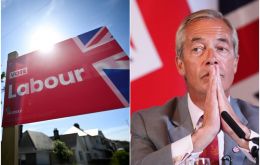
The Labour Party of British Prime Minister Andy Burnham has moved ahead of Reform UK, the right-wing party led by Nigel Farage, in a voting intention survey by YouGov published on Tuesday by The Times. It is the first time this has happened in that pollster's series since Reform took the lead in early 2025.
-
Wednesday, July 22nd 2026 - 09:26 UTC
Burnham’s Britain: what kind of country has UK’s new prime minister inherited?
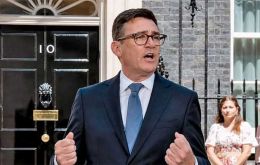
By Ben Wellings, Associate Professor in Politics and International Relations, Monash University - When Andy Burnham was handed the keys to 10 Downing Street on Monday, the United Kingdom will have its seventh prime minister in the ten years since it voted to leave the European Union. It begs the question: what is it about the UK that makes governing it so difficult at this point in time?
-
Sunday, July 19th 2026 - 01:35 UTC
Andy Burnham is the Labour leader, third time lucky for the UK’s prime minister in waiting
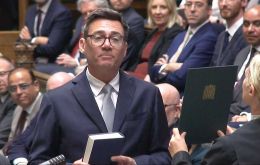
By Eric Shaw, Honorary Research Fellow in Politics, University of Stirling. Mr. Shaw is alzo a member of the Labour Party - A brief introduction, Andy Burnham officially becomes UK Prime Minister next Monday and can be expected to announce plans for new oil and gas drilling in the North Sea, as reported by BBC.
-
Tuesday, May 12th 2026 - 13:21 UTC
How a British prime minister is replaced: the keys to a possible Starmer succession
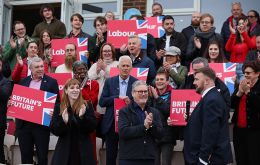
British Prime Minister Keir Starmer faces the most serious political crisis since his arrival at Downing Street in July 2024, but a potential change at the head of the government runs up against a web of internal Labour Party rules, the absence of a consensus candidate, and the personal obstacles weighing on the figure best positioned in internal polling. Starmer, who won the 2024 general election with an overwhelming majority, has flatly ruled out resigning despite mounting pressure from his own parliamentary group following Labour's collapse in the local and regional elections of 1 May.
-
Monday, May 11th 2026 - 20:27 UTC
Over 70 Labour MPs call for Starmer's resignation after election rout
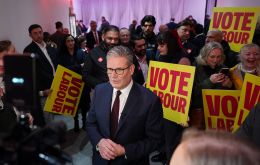
More than 70 Labour Party MPs have publicly called for the resignation of Prime Minister Keir Starmer following the electoral collapse the governing party suffered in last Thursday's local and regional elections. The count, which was rising hour by hour through Monday according to a tracker maintained by the specialist outlet LabourList, includes around ten parliamentarians who joined the pressure in the last 24 hours, alongside a trickle of resignations from government posts.
-
Monday, May 11th 2026 - 08:40 UTC
PM Starmer’s dreadful Monday: will a speech overcome the greatest challenge to his political future
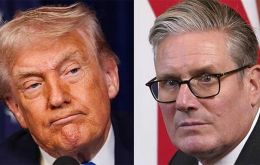
UK’s Prime Minister Sir Keir Starmer this Monday will be facing the greatest threat to his premiership and political future, with a speech in which he is expected to promise bolder action to tackle “big challenges” facing the country, as he battles to persuade his MPs not to ditch him as Labour leader.
-
Thursday, February 26th 2026 - 12:46 UTC
UK government actions to help families with impact of the cost of living
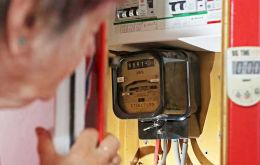
UK Labour government is taking action to help families with the cost of living, “We know that families across the country are feeling the impact of the cost of living - it’s the number one issue impacting working people.
-
Saturday, October 25th 2025 - 09:47 UTC
Brexit damage to UK’s economy admitted by Labour’s chancellor at IMF Summit
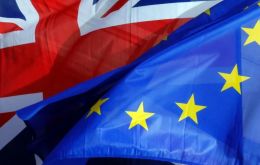
Addressing the International Monetary Fund, UK’s Chancellor of the Exchequer Rachel Reeves admitted the long-term damage done to the UK economy by the 2020 Brexit deal. The chancellor told leading finance ministers and central bankers that, “UK's productivity challenge has been compounded by the way in which the UK left the European Union.”
-
Monday, September 8th 2025 - 09:31 UTC
Reform UK holds its Conference in Birmingham; polls show it eleven points ahead of Starmer’s Labour
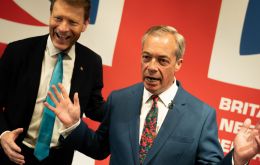
The Reform UK party held its conference at the National Exhibition Centre in Birmingham, 5/6 September with their four MPs, mayors, councilors and more than 10,000 people attending the event.
-
Saturday, May 3rd 2025 - 10:50 UTC
Farage does it again: Reform UK trashes Labour and Tories, becomes main opposition
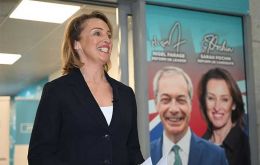
Populist Nigel Farage and his Reform UK party surged into the lead in local elections across England and grabbed one of Labour’s safest parliamentary seats, trashing Conservatives and becoming head of Britain´s opposition, underline UK media.