MercoPress. South Atlantic News Agency


Trump rejects Russia or China custody of Iranian enriched uranium in peace negotiations
 Iran holds approximately 440 kilograms of uranium enriched to 60%, close to the 90% generally required to build an atomic weapon
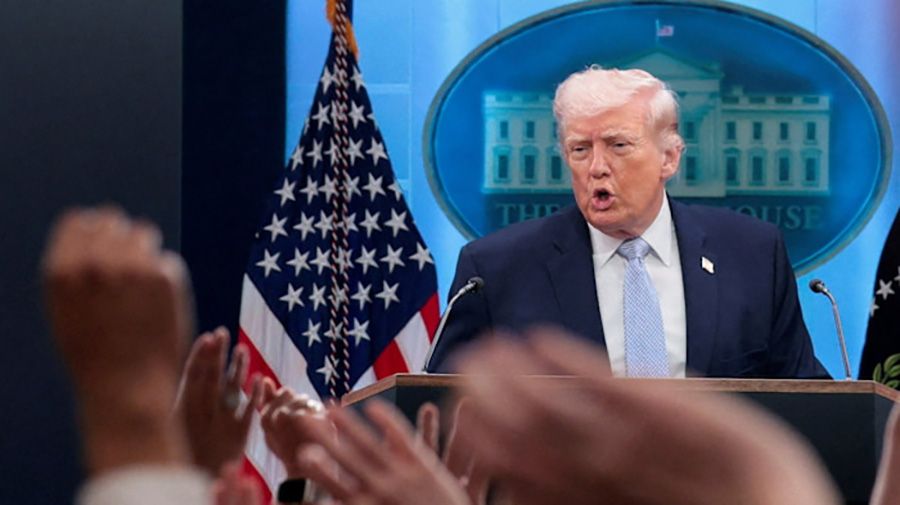
 US President Donald Trump on Wednesday ruled out that Russia or China could take control of Iran's stockpile of enriched uranium as part of a possible agreement to end the war. “No, I would not be comfortable with that,” the president replied tersely to journalists who asked about the possibility of Moscow or Beijing taking custody of the radioactive material with which Tehran could potentially build a nuclear weapon. The statement introduces a new complication into the negotiations both parties are conducting in Doha under Qatari mediation.
Iran holds approximately 440 kilograms of uranium enriched to 60%, close to the 90% generally required to build an atomic weapon. The government of President Xi Jinping has indicated openness both to assuming custody of the material and to subjecting it to a degradation process to reduce the concentration of the fissile isotope uranium-235. Vladimir Putin's government, for its part, has offered to assume custody of Iran's enriched uranium, in line with the role Russia played under the 2015 nuclear deal reached between Iran, the five permanent members of the UN Security Council, and the European Union, under which Tehran transferred around eleven tons of lightly enriched uranium to Moscow.
Trump has stated on several occasions that a future nuclear agreement with Iran must include the transfer of uranium reserves to the United States, explicitly rejecting any transfer to third countries. The position contradicts the mechanisms used in the 2015 JCPOA, which allowed Iran to dispose of sensitive material through its transfer to Russia. The inclusion of Iran's nuclear program in the current negotiations is considered one of the most contentious points between Washington and Tehran, alongside the fate of the missile arsenal and pending sanctions on frozen assets.
The prevailing assessment among analysts consulted by international agencies is that the two parties could agree in a first phase on the reopening of the Strait of Hormuz, through which 20% of the world's oil flows, and defer nuclear component talks to a subsequent stage. This two-phase structure has been confirmed by White House sources and acknowledged by Iranian Foreign Ministry spokesman Esmaeil Baghaei, who said that partial agreements have been reached on several issues without that implying the imminence of a definitive pact. The Doha talks coincided on Monday with new US strikes against targets in southern Iran that the US Central Command described as operations conducted “in self-defense.”


Top Comments
Disclaimer & comment rules-

Read all commentsIran should just build some atomic bombs and warn the United States: any murder of our children will be the sentence of destruction for Los Angeles, San Francisco, Portland, and Seattle.
May 27th, 2026 - 10:02 pm 0Then we'll see what these cowards are made of.
Commenting for this story is now closed.
If you have a Facebook account, become a fan and comment on our Facebook Page!