MercoPress. South Atlantic News Agency


Argentina warns it could 'fully exercise all actions' over Falklands oil drilling plans
 The Sea Lion field, north of the archipelago, is operated by Navitas, which holds 65% of the project, while Rockhopper, which discovered it, retains 35%
 Argentina's government warned that it could “fully exercise all” available actions over plans to develop an oil field near the Falkland Islands, in a fresh escalation of the sovereignty dispute. The Foreign Ministry declared the plans of Britain's Rockhopper Exploration “unlawful” and described that company and its Israeli partner, Navitas Petroleum, as “clandestine,” after the Sea Lion project moved from exploration into development.
“Hydrocarbon exploration or exploitation activities in the disputed areas constitutes an unlawful act under both international law and the Argentine legal system,” the Argentine government said, adding that it “reserves the right to fully exercise all available actions to safeguard its sovereign rights and interests.” Buenos Aires invokes Law 26,659 —which requires Argentine authorization to operate on its continental shelf— and UN resolutions that recognize the dispute with the United Kingdom. Rockhopper had already been declared clandestine and disqualified for 20 years in 2012 and 2013, and Navitas was sanctioned in 2022.
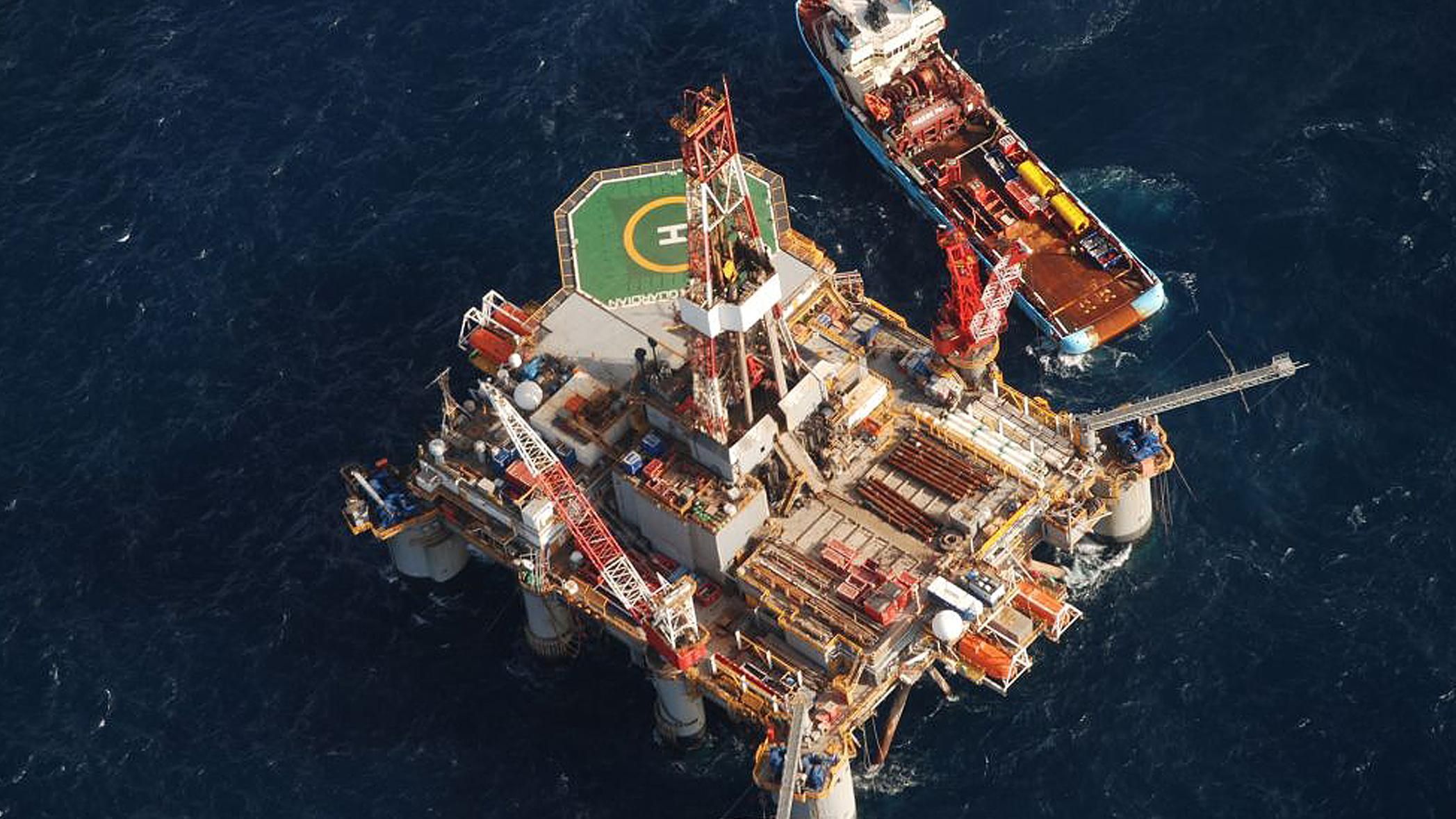
The Sea Lion field, north of the archipelago, is operated by Navitas, which holds 65% of the project, while Rockhopper, which discovered it, retains 35%. The British company recently raised its estimate of recoverable reserves to more than 1 billion barrels, which would make it several times larger than Rosebank, the largest known remaining field in UK waters. The first phase will require an investment of about 2.1 billion dollars and produce 170 million barrels from 2028.
Rockhopper's chief executive, Sam Moody, confirmed that the project had received final approval and was funded for its first stage. He told investors that work was already underway, with first drilling planned for early 2027 and oil production a year later. The production and storage vessel Aoka Mizu has been moved from the North Sea to be fitted for its new role. The Falkland Islands Government would receive a 9% royalty and 26% corporation tax. For analyst Dan Slater, of Zeus Capital, it is a “world class discovery.”
The latest clash followed a speech by Argentine President Javier Milei on Malvinas Day in April, when he warned that his government “will respond with all necessary diplomatic measures” to protect the country's interests. “We act with determination against unilateral and illegitimate activities that seek to exploit resources belonging to the Argentine people,” he said. Milei maintains he will use only diplomatic pressure, though he has announced a sharp increase in military spending that includes the purchase of two dozen F-16 fighter jets from Denmark.
The controversy comes as Argentina expands its oil output thanks to the unconventional Vaca Muerta deposit, where British companies such as Shell, BP and Harbour Energy play a leading role. There are fears Buenos Aires could sideline those firms if Rockhopper and Navitas press ahead with Sea Lion.
The Falkland Islands are a self-governing British overseas territory, so the ban on new exploration that the United Kingdom is pursuing in its own waters does not apply there. A Foreign Office spokesperson said “any decision regarding Sea Lion is for the Falkland Islands government and the private companies concerned,” and reiterated that London is “unwavering” about its sovereignty over the archipelago and the islanders' right of self-determination. Argentina and the United Kingdom fought a brief war over the islands in 1982.


Top Comments
Disclaimer & comment rules-

-

-

Read all commentsSo Argentina is now exposing itself as to just why they are trying to steal a British territory. It has always been about the oil. Not the actual myth they invented about these islands being given to them from Spain when they won their independance in 1816. They fought Spain for six long years. Spain refused to recognise them until 1859.
Jun 05th, 2026 - 09:25 am +4So no rights even if they had existed was ever transferred from Spain.
Spain renounced their actual interests many years earlier in 1779 when it agreed to allow the British settlement to return to full British control.
Argentina did not exist then.
Argentina tried to establish a military presence in 1832 and was removed in 1833, legally by the British. Argentina has since that time been at odds with Britain and as a result invented the myth.
They now talk about potentially going to the ICJ which would once and for all sort this myth out. But we all know that they will never do that because their claim is a myth and they would lose their case. All they will ever do is cry from the roof tops and try and make it look like they are powerful enough to stop Navitas operating in what is British Falkland Islands Waters.
They imposed sanctions on us which have failed to stop our progress because we simply go around them.
They want this bonanza because they know it would resolve their critical international debt problem. They are a struggling economy where almost half their population live in poverty. They are desperate.
We are sitting on potentially a new world discovery of billions of barrels of oil and they know it and it is hurting them badly.
All countries have some idiotic and childish politicians but Argentina takes the gold medal for having the most.
Jun 05th, 2026 - 09:58 am +4“Hydrocarbon exploration or exploitation activities in the disputed areas constitutes an unlawful act under ... international law ... which requires Argentine authorization to operate on its continental shelf”
Jun 05th, 2026 - 11:31 am +4Under the Palmas decision, three important rules for resolving island territorial disputes were decided:
Firstly, title based on contiguity has no standing in international law.
International Court of Justice (ICJ) in the North Sea continental shelf cases, in which Denmark and the Netherlands based their claim inter alia on the doctrine of proximity, i.e., that the part of the continental shelf closest to the part of the state in question falls automatically under that state's jurisdiction. In these cases the ICJ rejected any contiguity type of approach. As for continuity, it is argued, the 1958 Geneva Convention on the Continental Shelf and Contiguous Zone, Article 1, now contained in the 1982 Law of the Sea Convention, Article 76, does not support the view that coastal states have sovereignty over islands above the continental shelf. On the contary it laid down doctrine that islands had their own “continental shelves,” p.74
The Falklands/Malvinas Case Breaking the Deadlock in the Anglo-Argentine...By Roberto C. Laver
Commenting for this story is now closed.
If you have a Facebook account, become a fan and comment on our Facebook Page!