MercoPress. South Atlantic News Agency
Mercosur leaders push for a regional security architecture against organized crime
 The security debate unfolded alongside the trade tensions that dominated the summit
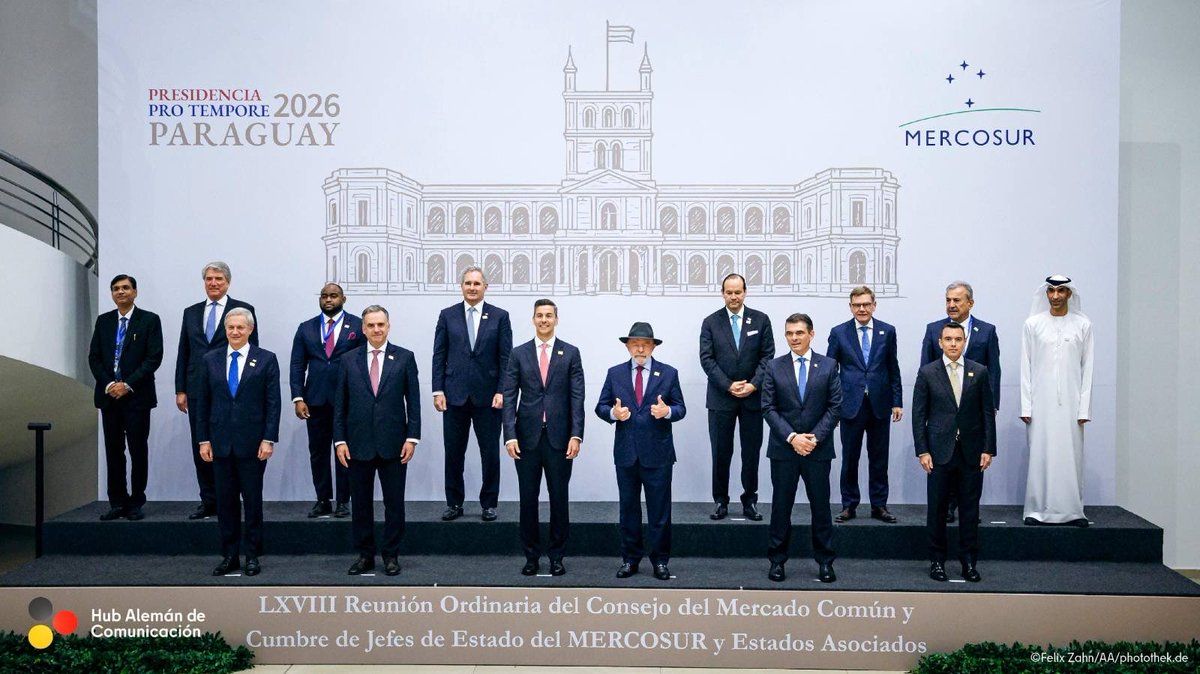
 The fight against transnational organized crime emerged as one of the central themes of Mercosur's 68th summit of heads of state, held on Tuesday in the Paraguayan city of Luque, where several leaders called for building a regional security “architecture” with concrete goals and deadlines. The issue ran through the addresses of the bloc's presidents and those of its associated states, at a summit where Paraguay handed over the pro tempore presidency to Uruguay.
Bolivia's President Rodrigo Paz called for building “a new South American architecture of cooperation on security, strategic intelligence and democratic defense,” holding that “no country will be able to face the challenges of the 21st century alone” in that area. Paz warned about organized crime and drug trafficking, which, he said, “operate without borders and in many cases infiltrated into political systems,” and said Bolivia aspires to become “the great bridge of continental integration.”
Chile's President José Antonio Kast agreed on the need for a joint response. “There is no possible integration when the routes we want to open to trade are already open to organized crime,” he said, proposing that the bloc and its partners build “a security architecture with clear goals and deadlines” addressing integrated border management, the pursuit of illicit financial flows, the control of arms trafficking and intelligence sharing between prosecutors and police. Along similar lines, Ecuador's President Daniel Noboa said regional integration is “more urgent than ever” in the face of “transnational crime that does not respect sovereignties,” and said his country confronts organized crime “with all the force of the State,” in “a war that no country can or should fight alone.”
Uruguay's President Yamandú Orsi, who assumed the bloc's rotating presidency, included security among his term's priorities. He said his country would seek to strengthen regional coordination through greater integration of Mercosur's security information exchange system and new police cooperation mechanisms, “especially in border areas.” “Crime does not recognize borders; our cooperation and our response capacity should not recognize them either,” he said.
The security debate unfolded alongside the trade tensions that dominated the summit. Host Santiago Peña demanded “justice” in the distribution of export quotas under the agreement with the European Union and again claimed 25% of the quotas for Paraguay, warning that its landlocked status imposes extra costs. “What is the use of a free-trade agreement that reproduces the asymmetries that already exist instead of correcting them?” he asked. The meeting, which was not attended by Argentine President Javier Milei —represented by his foreign minister, Pablo Quirno, who called for greater flexibility to negotiate with third countries— closed without an agreement on that distribution.
The leaders also expressed solidarity with Venezuela, after the earthquakes that left more than 1,700 dead, and with Bolivia over the crisis of recent weeks. Brazil's President Luiz Inácio Lula da Silva announced that his country will contribute $100 million a year over a decade to the Mercosur Structural Convergence Fund, aimed at reducing asymmetries among the members.


Top Comments
Disclaimer & comment rulesCommenting for this story is now closed.
If you have a Facebook account, become a fan and comment on our Facebook Page!