MercoPress. South Atlantic News Agency
Tag: Jose Antonio Kast
-
Thursday, September 10th 2026 - 23:28 UTC
68% of Chileans consider the Falklands British and 60% see Argentina as unreliable, poll shows

A majority of Chileans consider the Falklands British and regard Argentina as an unreliable partner, according to the latest Plaza Pública survey by pollster Cadem, released days after Argentine President Javier Milei visited Santiago and met his Chilean counterpart, José Antonio Kast.
-
Thursday, September 10th 2026 - 08:25 UTC
Argentina claims Chile is committed to no logistic support for Falklands’ oil industry
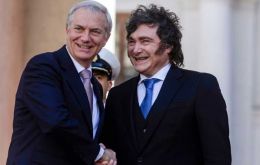
The Argentine government has insisted, following the recent presidential Summit between Javie Milei and Chilean leaded Jose Antonio Kast, that their Andean neighbor will continue to strongly support Argentina’s claim over the Falkland Islands and will render no logistic support related to any hydrocarbons extraction in the Islands”.
-
Friday, September 4th 2026 - 08:01 UTC
Chile backs Falklands claim as Argentina recognizes its sovereignty over Magellan Strait
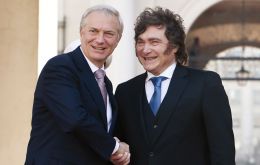
Chilean President José Antonio Kast on Thursday reiterated his government's backing for Argentina's sovereignty rights over the Falklands, South Georgia, the South Sandwich Islands and the surrounding maritime areas, following a bilateral meeting in Santiago with his Argentine counterpart, Javier Milei. At the same meeting, Milei recognized Chilean sovereignty over the whole of the Strait of Magellan.
-
Wednesday, August 26th 2026 - 08:42 UTC
Chile debates a state of emergency of up to eight months without congressional approval
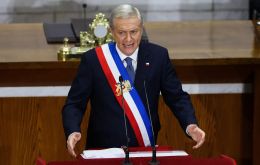
José Antonio Kast's government indicated on Tuesday it was willing to amend the constitutional security reform bill it submitted to the Senate on August 17, after the proposal drew objections both from the opposition and from parties within its own coalition.
-
Tuesday, August 11th 2026 - 09:18 UTC
Kast rules out backing bill that ties abortion access to hearing the fetal heartbeat
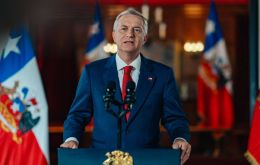
Chilean President José Antonio Kast said on Monday that his government would not push forward a bill introduced by lawmakers from his own coalition that would condition access to legal abortion on a woman agreeing to hear the fetus's cardiac activity.
-
Wednesday, August 5th 2026 - 21:37 UTC
Sixty deputies ask Kast to pardon officers convicted over the 2019 unrest
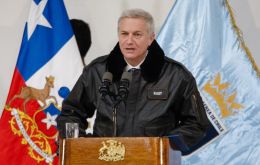
Sixty Chilean deputies asked President José Antonio Kast on Wednesday to grant individual pardons to members of the Carabineros police force and the armed forces convicted over acts linked to their duties during the protests that began on October 18, 2019.
-
Tuesday, July 21st 2026 - 17:59 UTC
Chile declares state of catastrophe in the north after storm leaves at least ten dead
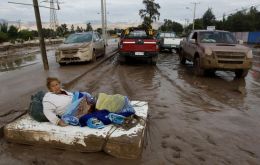
Chile's president, José Antonio Kast, declared on Monday a 30-day constitutional state of catastrophe in the Coquimbo region and the Huasco province, in the Atacama region, in response to the intense storm battering the country's north. According to the government's latest tally, the phenomenon has left at least ten people dead nationwide, four missing, and nearly 100,000 residents cut off by road closures. Authorities warned the toll could rise, as numerous areas remain unreachable.
-
Friday, July 3rd 2026 - 08:55 UTC
In Uruguay, Kast urges harsher penalties for crime leaders and total prison isolation
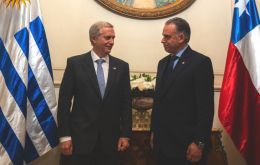
Chile's President José Antonio Kast argued on Wednesday in Montevideo that the region's countries must toughen their laws to combat organized crime, with life sentences for those who lead gangs and a regime of total isolation in prisons to stop them from continuing to operate from behind bars. The president laid out his position after meeting with Uruguayan President Yamandú Orsi, as part of an official visit to Uruguay.
-
Thursday, July 2nd 2026 - 09:11 UTC
Uruguay and Chile agree to coordinate against organized crime after an Orsi-Kast summit
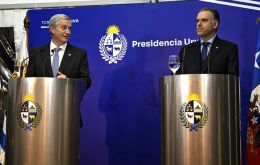
The presidents of Uruguay, Yamandú Orsi, and Chile, José Antonio Kast, agreed to strengthen bilateral cooperation against transnational organized crime, following a meeting held on Wednesday at the Suárez y Reyes presidential residence in Montevideo. In a joint statement, the leaders announced understandings on security, fisheries, Antarctica, the bi-oceanic corridor and economic integration, as part of Kast's official visit to Uruguay.
-
Wednesday, July 1st 2026 - 08:28 UTC
Mercosur leaders push for a regional security architecture against organized crime
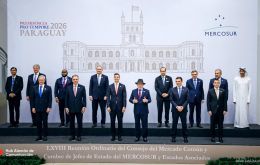
The fight against transnational organized crime emerged as one of the central themes of Mercosur's 68th summit of heads of state, held on Tuesday in the Paraguayan city of Luque, where several leaders called for building a regional security “architecture” with concrete goals and deadlines. The issue ran through the addresses of the bloc's presidents and those of its associated states, at a summit where Paraguay handed over the pro tempore presidency to Uruguay.