MercoPress. South Atlantic News Agency



British Antarctic Survey confirms Antarctica's first dinosaur fossil, 40 years on
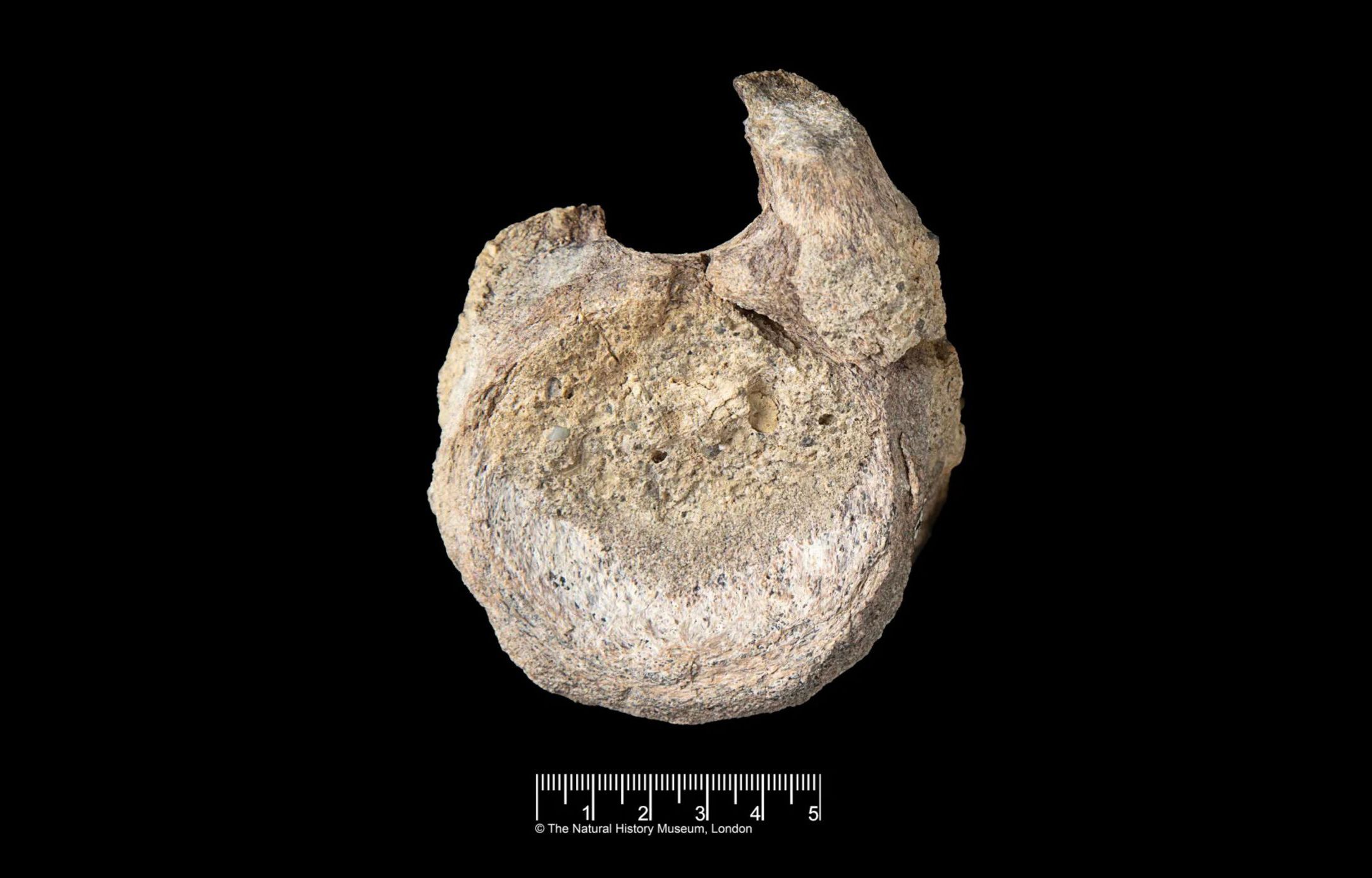 The fossil was collected in December 1985 by geologist Mike Thomson, of the British Antarctic Survey (BAS), during an expedition to James Ross Island, on the Antarctic Peninsula
 A bone collected in Antarctica four decades ago has been identified as the first dinosaur fossil found on the continent, according to a study published in the journal Acta Palaeontologica Polonica. It is a tail vertebra from a titanosaur, the group of long-necked sauropods that includes the largest land animals that ever lived.
The fossil was collected in December 1985 by geologist Mike Thomson, of the British Antarctic Survey (BAS), during an expedition to James Ross Island, on the Antarctic Peninsula. At the time, Thomson recorded it in his field notebook as belonging to a large marine reptile, a reasonable interpretation given that the rocks in the area contain abundant fossils of marine organisms, such as ammonites. The piece was stored for decades in the BAS collections in Cambridge.
The reexamination was carried out by paleontologist Mark Evans, manager of the BAS geological collections, who suspected the bone came from a land dinosaur. “Believe it or not, this is the first bit of dinosaur ever discovered in Antarctica,” said Professor Paul Barrett, of London's Natural History Museum, who led the analysis. Experts identified the vertebra as belonging to the titanosaurs by its distinctive structure, though the fragment does not allow the species to be determined.
The specimen was relatively small: it is estimated to have measured between six and seven meters in length, compared with the more than thirty meters of the largest titanosaurs. Researchers cannot establish whether it was a juvenile or a smaller adult. The vertebra comes from the Santa Marta Formation and dates to the Late Cretaceous, around 82 million years ago. According to the scientists, the animal died on land and its body was carried by a river to the sea, where it sank among marine sediments.
The find provides evidence about conditions in Antarctica at that time, when the continent had no ice sheets and was covered by temperate forests in a warm climate. In that period it was part of the supercontinent of Gondwana and remained attached to the southern tip of South America. The authors suggest that the Antarctic Peninsula may have served as a corridor for titanosaurs to move between South America and Zealandia — the landmass that today includes New Zealand — a hypothesis that, they caution, will require new fossils to confirm.
The researchers note that the retreat of the ice on the Antarctic Peninsula, linked to climate change, is opening access to new sites and could allow future discoveries about the continent's prehistoric biodiversity.


Top Comments
Disclaimer & comment rulesCommenting for this story is now closed.
If you have a Facebook account, become a fan and comment on our Facebook Page!