MercoPress. South Atlantic News Agency



The Falklands pay tribute in London to the merchant seafarers who served in 1982
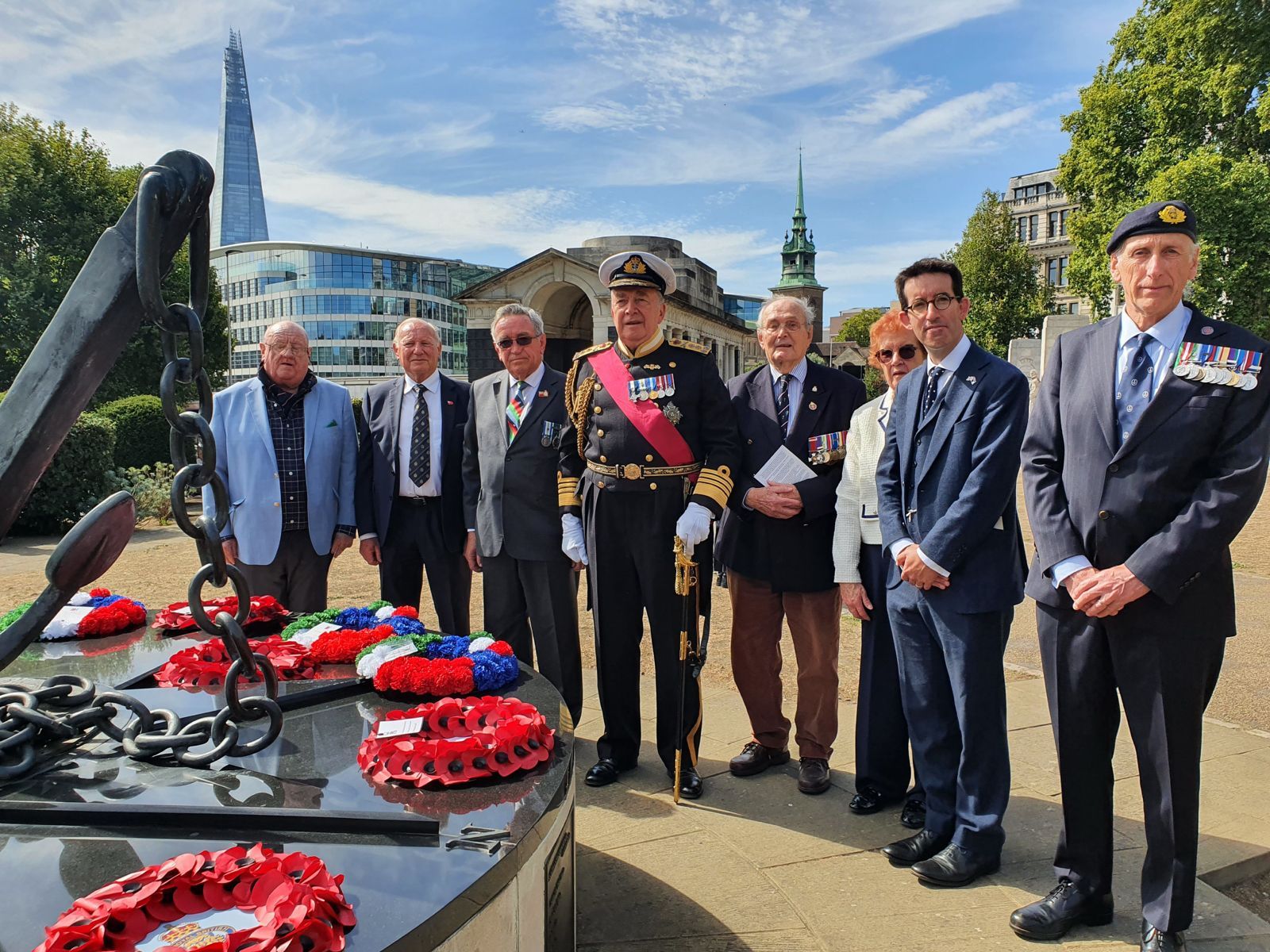 Hyslop with Lord West of Spithead (central) and Chris Locke (right), former Royal Fleet Auxiliary (RFA) Chief Officer, Marine Officer, alongside other attendees at the Navy Day Memorial
 The Falkland Islands Government Representative to the United Kingdom and Europe, Richard Hyslop, laid a wreath on Sunday on behalf of the people and Government of the islands during the annual Merchant Navy Day service held at Trinity Square Gardens in London.
The ceremony took place at the Falkland Islands Memorial, within the grounds of the Merchant Navy Memorial. Hyslop was joined by veterans of the South Atlantic Medal Association, which brings together those who served in the 1982 conflict, and by Lord West of Spithead, patron of the Merchant Navy Association, a former First Sea Lord and himself a veteran of that campaign. Also present was Chris Locke, a former Royal Fleet Auxiliary chief officer who served as Falkland Islands Marine Officer and Harbour Master.
“Each year, we pause to remember the service and sacrifice of merchant seafarers who served during the Falklands War to defend the freedom and right to self-determination of Islanders,” Hyslop said. “We remain hugely grateful to the Merchant Navy, both past and present, for their invaluable role in supporting the Falklands and allowing our modern Islands to prosper.”
The commemoration falls each year on September 3, the date on which the SS Athenia was sunk in 1939, the first British merchant vessel lost in the Second World War. The Red Ensign, the merchant navy's flag, is flown in recognition of a sector that carries more than 90% of the United Kingdom's trade.
During the 1982 conflict, the British Ministry of Defence requisitioned or chartered dozens of civilian vessels under the arrangement known as Ships Taken Up From Trade, among them the liners Canberra and Queen Elizabeth 2, used as troop transports. The costliest episode was the loss of the Atlantic Conveyor, a converted container ship struck by a missile on May 25, 1982, which sank with the loss of twelve lives, including that of its master, Ian North. Heavy-lift helicopters intended for the land campaign went down with her.
Maritime transport remains central to the archipelago, which depends on shipping for its supplies and for the export of its fisheries production, the main source of income for its economy.


Top Comments
Disclaimer & comment rulesCommenting for this story is now closed.
If you have a Facebook account, become a fan and comment on our Facebook Page!