MercoPress. South Atlantic News Agency



Argentina files criminal complaint against Navitas over Falklands; firm silent, shares slide
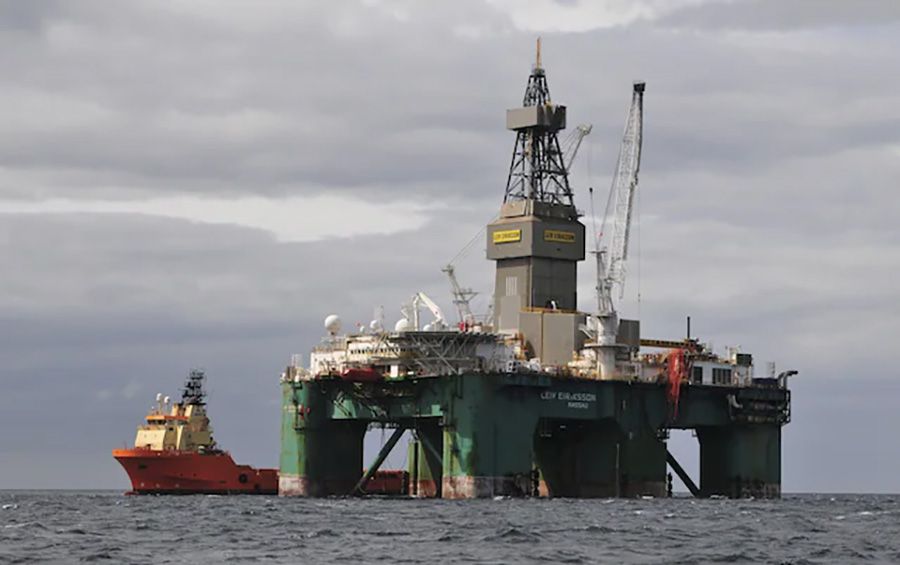 Navitas did not respond to the complaint. Following President Milei's initial announcement, the company said it did not expect those remarks to have a material effect on the project's development
 Argentina's government formally filed a criminal complaint on Tuesday against Israeli oil company Navitas Petroleum and four other firms over hydrocarbon exploration in waters near the Falklands, with the company yet to respond to the accusation and amid a slide in the share prices of those involved.
The filing, submitted to federal court by Foreign Minister Pablo Quirno with the backing of Treasury Attorney General Sebastián Amerio, targets Navitas Petroleum Development & Production Ltd., Navitas Petroleum Atlantic United, Navitas Petroleum LP, JHI Associates Inc. and Eco (Atlantic) Oil & Gas Ltd., along with their directors, managers, administrators and representatives. According to the statement from the Office of the President, three of those companies “allegedly” hold licenses granted by what it calls the “illegitimate government of the United Kingdom” to operate in the basin north of the archipelago. The government said the complaint amounts to an action to protect natural resources and Argentine sovereignty. The allegations remain unproven.
The complaint invokes Law 26,659, passed in 2011 under President Cristina Fernández de Kirchner, which bars participating in, financing or providing services to unauthorized hydrocarbon activity on the Argentine continental shelf and allows bans of up to 20 years. The same statute was applied against Navitas in 2022 by Alberto Fernández's government, which barred the company for two decades alongside sanctions on other operators. Argentina had already declared activity in the area clandestine in 2012 and filed a similar complaint in 2015; neither measure halted the project.
Navitas did not respond to the complaint. Last week, following President Javier Milei's initial announcement, the company said it did not expect those remarks to have a material effect on the project's development or its timetable. A spokesperson for Rockhopper, the British partner holding 35%, declined to comment and referred questions to Navitas. Both companies have maintained that they operate under valid licenses issued by the self-governing Falkland Islands government, which Argentina does not recognize. Rockhopper is not among the companies named in the complaint.
Tel Aviv-listed Navitas operates and controls 65% of Sea Lion, a field roughly 220 kilometers north of the islands with estimated reserves of 1.7 billion barrels. The first phase, approved by both partners last year, is scheduled to begin extraction in 2028 at a rate of 50,000 barrels per day.
The most immediate impact was felt in financial markets and along the supply chain. Shares in Navitas and Rockhopper had fallen more than 14% since the presidential address, according to quotes circulated by Argentine media, while the oil services chamber CASEPE announced that its member companies would not take part in Sea Lion.
In his address last Thursday, Milei described oil extraction in the archipelago as a danger to Argentine sovereignty and dismissed the 2013 referendum, in which 99.8% of residents voted to retain their status as a British overseas territory. He argued that the islanders inhabit “usurped” territory and therefore lack any legitimate right to self-determination. That same day he announced the revival of plans for a naval base in Ushuaia, and on Monday he instructed Economy Minister Luis Caputo to prioritize it in the 2027 budget.
The United Kingdom responded on Tuesday in the House of Commons. Foreign Office Minister Kirsty McNeill said there could be no doubt about Britain's commitment to the islanders and described hydrocarbon production as “a commercial decision” for the Falkland Islands government and the companies involved, adding that the archipelago's future is for its own residents to determine.
Sovereignty over the islands remains disputed between London and Buenos Aires more than forty years after the 1982 war.

Top Comments
Disclaimer & comment rulesNo comments for this story
Please log in or register (it’s free!) to comment. Login with Facebook