MercoPress. South Atlantic News Agency
Agriculture
-
Tuesday, May 22nd 2012 - 06:05 UTC
Exports of heifers booming as China build ‘factory-modelled” dairy farms

Agribusiness company Elders says it can't get enough dairy heifers from Australia to supply China's growing demand and for the second consecutive year, a record shipment of 100,000 cattle will sail from dairies in Australia, New Zealand and Uruguay.
-
Saturday, May 12th 2012 - 09:19 UTC
Poor year for Argentine exports of apples and pears: lesser volumes and lower prices
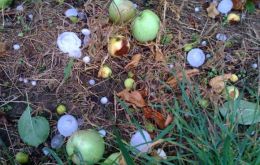
The Argentine Chamber of Integrated Fruit Exporters, CAFI reported that apple and pear exports continued a sharp decline in terms of exported volume, with a downfall of 30% (about 90.000 tons in total) compared to the previous year and 15% less in relation to 2010.
-
Monday, May 7th 2012 - 04:59 UTC
Soybeans becomes Uruguay’s main export item, estimated at 1.1bn in 2012
Soybeans are set to establish several records this year in Uruguay: exports will be above one billion dollars; for the first time the oilseed will be the leading export item of the country displacing beef and prospects for the next season are that over a million hectares will be planted.
-
Saturday, April 28th 2012 - 05:41 UTC
Forty countries worldwide celebrated Malbec Day, Argentina’s emblematic grape and wine
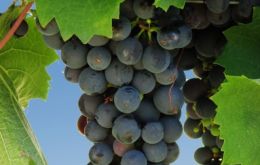
Wine enthusiasts across the globe gathered to celebrate World Malbec Day, a great opportunity for novices and connoisseurs alike to sample some of Argentina’s flagship varietal.
-
Friday, April 27th 2012 - 23:11 UTC
World Bank Food Price Watch jumped 8% in four months to March

Global food prices increased by 8% from December 2011 to March 2012 due to higher oil prices, adverse weather conditions, and Asia’s strong demand for food imports, according to the World Bank Group’s latest Food Price Watch.
-
Thursday, April 26th 2012 - 06:07 UTC
Brazilian congress approves forest bill that further threatens Amazon basin

Brazil’s Lower house of Congress on Wednesday approved a bill that weakens the country’s benchmark environmental law protecting the Amazon and other areas, a move that some fear will lead to a spike in deforestation.
-
Monday, April 16th 2012 - 06:02 UTC
Uruguay became prisoner of Argentina, when it rejected a free trade accord with the US

Uruguay has fallen prisoner of Mercosur and Argentina because it did not sign the free trade agreement with the United States which was offered to the country in the previous government of Tabare Vazquez, said two-times President Julio Maria Sanguinetti.
-
Saturday, April 14th 2012 - 06:17 UTC
Ocampo drops out from World Bank bid; gives full support to Nigerian candidate
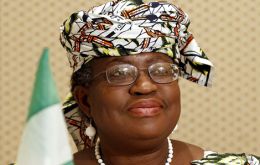
Former Colombian finance minister Jose Antonio Ocampo ended his bid to become World Bank president on Friday, leaving two candidates in an unprecedented challenge to US control of the global development institution.
-
Tuesday, April 10th 2012 - 23:10 UTC
US confirms poor soy crops in Argentina and Brazil; prices soar to 2008 levels
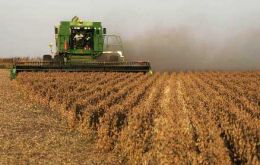
Drought in major soybean producers Brazil and Argentina cut their production more deeply than expected the US government said on Tuesday in a report that drove prices to near their highest since 2008.
-
Wednesday, April 4th 2012 - 02:20 UTC
Brazil soy farmers expected to plant a record acreage after this year’s dismal crop
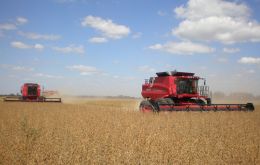
Brazilian farmers will likely plant at least 26.2 million hectares with soybeans in the next crop, up 1.1 million hectares from the current 2011-12 crop, forecaster Agroconsult said Tuesday.
