MercoPress. South Atlantic News Agency
Agriculture
-
Saturday, November 22nd 2025 - 09:56 UTC
Chile launches “Cherry Express” to China season
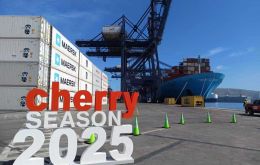
Chile has officially begun its 2025-2026 fresh cherry export season by sea, with the first dedicated “Cherry Express” ships sailing directly from the Port of San Antonio to China this week. The season is heavily reliant on the Asian market, which purchases approximately 93% of all Chilean cherry exports.
-
Thursday, November 20th 2025 - 21:06 UTC
Paraguay finalizes first poultry shipment to Philippines
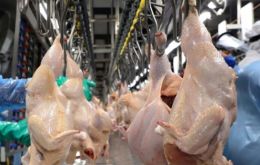
Paraguay has successfully completed its first-ever export of poultry meat to the Philippines, achieving a significant milestone in its strategy to expand trade with the Asian market. The inaugural shipment took place just two months after the Philippine market was officially opened to the South American country's poultry products, it was reported this week in Asunción.
-
Wednesday, November 19th 2025 - 15:36 UTC
Brazil estimates another record harvest in 2025/26, totaling 354 million tons
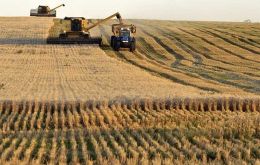
Brazil’s 2025/26 grains and oil seed harvest is estimated should reach 354.8 millon tons, representing an 0.8% over the previous record harvest, according to the second survey by the country’s National Supply Company, CONAB, which was completed earlier this month.
-
Tuesday, November 18th 2025 - 10:16 UTC
US drops tariffs on hundreds of Peruvian agricultural products

The United States has granted a major expansion of Peruvian tariff-free products to enter its market, Foreign Trade and Tourism Teresa Mera confirmed on Monday in Lima.
-
Saturday, November 15th 2025 - 10:41 UTC
Uruguayan cows stranded off Türkiye due to certification issues
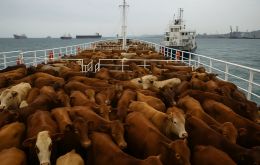
Nearly 3,000 head of cattle exported from Uruguay are stranded aboard a cargo ship off the coast of Türkiye, unable to unload their cargo due to irregularities in their health and commercial certifications, according to Turkish authorities.
-
Wednesday, November 12th 2025 - 09:36 UTC
China and Uruguay launch joint agri-science cooperation project
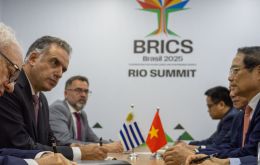
Scientific and educational institutions from China and Uruguay have signed a memorandum of understanding to establish a groundbreaking Joint Pasture Agriculture Laboratory, aiming to strengthen scientific and technological cooperation in agricultural innovation under China's Belt and Road Initiative.
-
Tuesday, November 11th 2025 - 15:23 UTC
FAO Food Prices decline in October, with the exception of beef
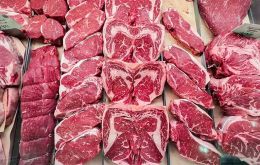
World food commodity prices generally declined in October, driven largely by ample global supplies, according to the benchmark measure released by the Food and Agriculture Organization of the United Nations (FAO). However beef continued to rise because of a very firm global demand.
-
Monday, November 10th 2025 - 10:26 UTC
French minister vows to block EU-Mercosur FTA out of concern for its farmers
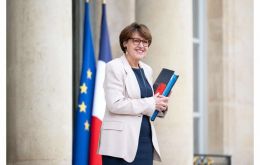
France has once again cast a negative note on the proposed Free Trade Agreement between the European Union (EU) and the Southern Common Market (Mercosur). Agriculture Minister Annie Genevard stated emphatically that her country would not sign a deal that “condemns its farmers.”
-
Friday, November 7th 2025 - 12:25 UTC
Lula invites other countries to support TFFF initiative
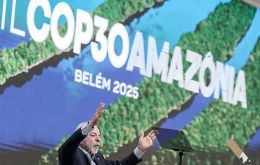
Upon launching the Tropical Forest Forever Facility (TFFF) during the Climate Summit in the Amazon city of Belém, in the State of Pará, on Thursday afternoon, Brazilian President Luiz Inácio Lula da Silva invited other nations to support the initiative. “Forests are worth more standing than cut down. They should be included in our countries’ GDP. Ecosystem services need to be remunerated, as do the people who protect forests. International green funds are not up to the challenge,” insisted Lula.
-
Tuesday, November 4th 2025 - 09:41 UTC
Japan is one step closer to allowing Brazilian beef imports

The opening of the Japanese market to Brazilian beef appears imminent, as a Japanese government delegation is scheduled to visit Brazil this month to conduct a final audit of local meatpacking plants. Negotiations gained significant momentum following President Luiz Inácio Lula da Silva's visit to Tokyo in March.
