MercoPress. South Atlantic News Agency
Agriculture
-
Thursday, June 30th 2022 - 09:40 UTC
Putin ensures Brazil a steady fertilizer supply; but prices have soared from US$ 360 to US$ 650 a ton
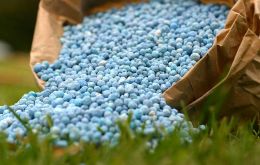
President Vladimir Putin in a phone call with Jair Bolsonaro said Russia will ensure that fertilizer trade with Brazil remains uninterrupted. Fertilizers, especially nitrogen, phosphorus, and potassium, are widely used by Brazilian farmers and have made the country a world food powerhouse.
-
Thursday, June 30th 2022 - 09:33 UTC
Brazil, a net wheat importer, has broken export records in 2021/22
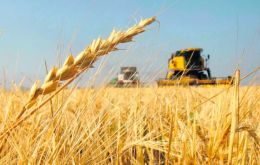
Brazil, among the largest wheat importers in the world, --mainly from Mercosur associates--, is breaking consecutive export records in 2022. In less than six months, until June 20, Brazil exported more than twice as much wheat as in 2021, that is 2.5 million tons vis-a-vis 1.12 million tons in the whole year.
-
Wednesday, June 8th 2022 - 21:48 UTC
FAO's forum on fisheries and aquaculture meets for the first time since pandemic

Fisheries and aquaculture still face sustainability challenges, but as trade in the sector continues to grow, its contribution to food security and the safeguarding of livelihoods remains critical, QU Dongyu, Director-General of the Food and Agriculture Organization of the United Nations (FAO), said on Tuesday.
-
Wednesday, June 8th 2022 - 09:34 UTC
Cuba and Argentina deepen agricultural assistance
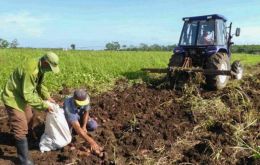
Cuban and Argentina have agreed on mutual agricultural cooperation to boost the livestock of the Caribbean country with the support of the National Institute of Agricultural Technology (INTA) and Argentine companies, it was announced Tuesday.
-
Wednesday, June 8th 2022 - 08:59 UTC
World food commodity prices declined modestly in May, according to FAO report
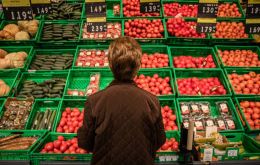
World food commodity prices declined modestly in May for the second consecutive month, although wheat and poultry prices pushed higher, the Food and Agriculture Organization of the United Nations (FAO) reported.
-
Tuesday, May 31st 2022 - 10:00 UTC
Brazilian rice exports booming; challenge for all three Mercosur partners
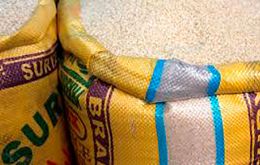
Brazilian rice exports (husk base) totaled 451.3 thousand tones during the first quarter, more than double the same period in 2021 when 207.7 thousand tons were shipped, reports the Brazilian Rice Industry Association (Abiarroz).
-
Saturday, May 28th 2022 - 10:10 UTC
China forecasted to reduce soy oil consumption because of the lockdowns
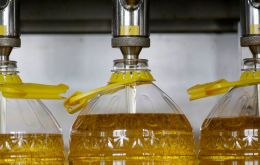
Plunging demand for soy oil in China is expected to cut consumption of the oilseed in the world’s biggest user as lockdowns to prevent the spread of COVID have shuttered restaurants and canteens, according to traders and analysts. China is the world’s top consumer of edible oils, with millions of restaurants guzzling about half of the country’s roughly 17 million tons of soy oil, made from crushing soybeans.
-
Thursday, May 19th 2022 - 20:22 UTC
Paraná downspout means heavy losses for Argentine exports

A most unusual low water level of the Paraná river has caused losses of nearly US$ 280 million so far in 2022 to Argentine rural producers and exporters, it was reported.
-
Wednesday, May 18th 2022 - 09:53 UTC
Wheat has become a most promising crop, following on the Ukraine war and India's ban on exports
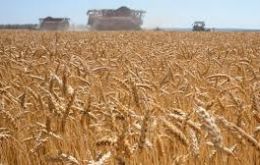
The intense heat wave in India which has turned out to be the hottest spring in the last one hundred years is having its impact on people, fauna and agriculture. Thermometers recording 50 degrees centigrade, and the lack of water, has forced the government in New Delhi to halt all wheat exports, in anticipation of any shortages that could lead to extreme situations.
-
Saturday, May 14th 2022 - 19:58 UTC
Argentina wheat crop estimates for 2022/23 lowered, given fears of dry climate
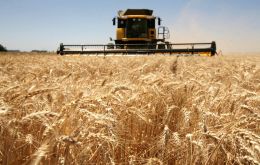
Because of forecasted dry weather the Rosario Grains Exchange anticipates a lesser wheat crop in Argentina for the 2022/23 season. The Exchange projects Argentine wheat production to decline to 19 million tons, down from a record the 22.1 million tons in 2021-22, as a La Niña weather pattern is expected to reduce rainfall in the coming months.
