MercoPress. South Atlantic News Agency
Argentina
-
Monday, December 19th 2011 - 01:08 UTC
Uruguayan navy air patrol escorts Spanish fishing vessel heading for Falklands
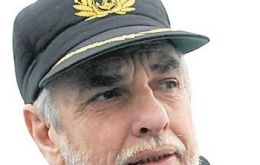
As Spanish vessel with Falkland Islands fishing licence was harassed Saturday morning by the Argentine Coast Guard on leaving the port of Montevideo for the South Atlantic and had to reroute course in Uruguayan waters until reaching the high seas.
-
Saturday, December 17th 2011 - 05:49 UTC
Uruguayan Foreign Minister says Falklands are an “inadmissible colonial enclave”

Uruguay considers that British control over the Falklands or Malvinas Islands constitutes a “colonial enclave”, which is “inadmissible”, and that is why Falklands’ flagged vessels are barred from entering Uruguayan ports, said on Friday Foreign Affairs minister Luis Almagro.
-
Saturday, December 17th 2011 - 05:00 UTC
First CFK reply to Moyano: “best way to defend workers is to look after government”

”The best way to defend workers is to look after the government” said Argentine Interior Minister Florencio Randazzo, the first official response to organized labour union boss Hugo Moyano speech on Thursday to a packed stadium of 80.000 roaring teamsters
-
Saturday, December 17th 2011 - 04:51 UTC
Powerful leader of organized labour breaks away from Cristina Fernandez

In a high voltage exchange with Argentine President Cristina Fernandez, the head of the powerful organized labour unions CGT, Hugo Moyano said he was stepping down from all his posts in the ruling Peronist movement since it had become “an empty shell void of Peronism” but would continue fighting for the workers movement which is the essence of Peronism.
-
Saturday, December 17th 2011 - 03:24 UTC
Argentine ‘official’ November inflation reached 0.6% and 8.6% in eleven months

The consumer price index in Argentina during the month of November increased 0.6% according to the official stats office Indec, which is less than half the percentage released by private estimates through the so called Congress inflation index.
-
Friday, December 16th 2011 - 19:04 UTC
UK discussing with Uruguay officials docking ban for Falklands flagged vessels
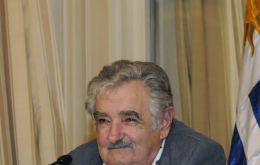
The British Embassy in Montevideo is discussing with Uruguayan authorities the implications of President Jose Mujica public statement that Falklands/Malvinas flagged vessels “are banned from docking in the port of Montevideo”.
-
Friday, December 16th 2011 - 06:42 UTC
Mujica denies Argentine pressure, but confirms Falklands flagged vessels are banned

Uruguayan President José ‘Pepe’ Mujica denied on Thursday afternoon suffering pressure from the Argentine government to restrict British ships from docking at Montevideo’s ports.
-
Friday, December 16th 2011 - 06:13 UTC
Argentine economy roaring at 9.3% in third quarter, announced CFK

Argentina’s economy expanded in the third quarter at the fastest pace since 2003, said President Cristina Fernandez on Thursday during a visit to a Toyota Motor Corp. plant in the province of Buenos Aires
-
Thursday, December 15th 2011 - 19:53 UTC
Argentina bullying Uruguay on canal dredging and Falkland Islands flagged vessels
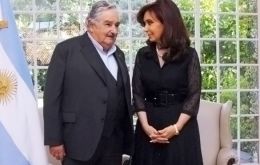
Uruguay has banned the docking of Falklands/Malvinas flagged vessel in the port of Montevideo, following on complaints from Argentina that several fishing vessels with that flag, in recent months had been operating from Montevideo.
-
Wednesday, December 14th 2011 - 04:11 UTC
Argentine organized labour leader challenges CFK with massive political rally
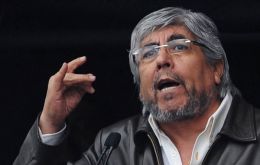
A few hours before Truckers’ Day to be celebrated at a soccer stadium and in the midst of the dispute with the Argentine government, the leader of organized labour CGT, Hugo Moyano again challenged President Cristina Fernandez saying that inflation to discuss wages is that of the supermarkets.

