MercoPress. South Atlantic News Agency
Argentina
-
Thursday, October 18th 2012 - 16:00 UTC
Green light for gold and silver mine project in Patagonia Santa Cruz province
Gold miner Minera IRL Ltd reports it has secured government permits to build its Don Nicolas pit mine in Argentine Patagonia and is now seeking financing to get the 57 million dollars project up and running next year, the company said on Wednesday.
-
Thursday, October 18th 2012 - 07:15 UTC
Argentina takes Falklands sovereignty claim complaint to the Security Council
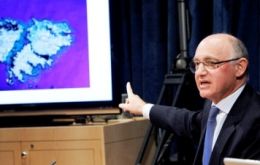
The Argentine Foreign ministry said in an official release on Wednesday that the UN Security Council had received, and incorporated to its agenda, a formal complaint on the UK latest military exercises in the Falkland Islands.
-
Thursday, October 18th 2012 - 07:11 UTC
YPF sells medium term debt in Pesos equivalent to 423 million dollars
Argentina's state-controlled energy company YPF sold medium-term local currency debt equivalent to a total of 423.2 million dollars on Wednesday, a stock market filing showed.
-
Thursday, October 18th 2012 - 07:02 UTC
Chilean far right push for extradition of Senator murder protected by Argentina

The Inter-American Commission of Human Rights (IACHR) began proceedings this week concerning Argentina’s refusal to extradite Galvarino Apablaza for the 1991 murder of emblematic conservative Senator Jaime Guzmán.
-
Thursday, October 18th 2012 - 06:57 UTC
Moody’s downgraded debt ratings of several Argentine provinces and cities
Moody's Investor Service announced on Wednesday it has downgraded the issuer and debt ratings of several provinces and cities in Argentina, due to the risks these states may face to access foreign currency and “serve their obligations in foreign currency.”
-
Thursday, October 18th 2012 - 06:52 UTC
Lula da Silva calls for Argentine/Brazilian business corporations
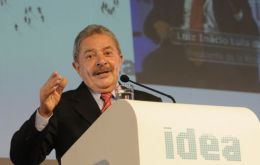
Brazil's former President Lula Da Silva blasted the “protectionist” measures of the developed countries and called for the alliance between businessmen from his country and Argentina's, as he highlighted that Brazil “grows, but with a controlled inflation rate”.
-
Thursday, October 18th 2012 - 06:49 UTC
Argentina's sovereign debt, a matter of time says The Economist
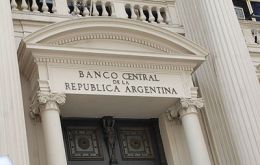
When Argentina proposed a brutal 65% haircut to holders of its defaulted sovereign bonds in a 2005 restructuring, one argument the country’s officials used to justify the offer was that the country could not take on more debt than it could reasonably expect to pay. As painful as the loss might be, the argument went at least the new bonds the government would issue would be creditworthy.
-
Thursday, October 18th 2012 - 01:55 UTC
Argentine soft-porn film star named as official ambassador of pop culture

In one of her latest surprise moves to prop gender and culture, President Cristina Fernandez has named soft-core porn film star Isabel Sarli, as the country’s official ambassador of pop culture.
-
Thursday, October 18th 2012 - 00:57 UTC
Hedge funds targeting Argentina miss the target: BIS deposits free from embargoes
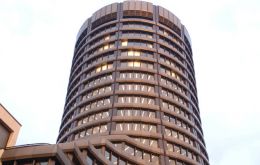
Switzerland’s government rejected a law suit filed by US hedge funds asking to set an embargo on Argentina's assets deposited in Switzerland based Bank for International Settlements as they claim the payment of a 1 billion dollars debt.
-
Wednesday, October 17th 2012 - 20:57 UTC
Mapuche protest in Bariloche demand removal of statue of “the man guilty of the greatest genocide”

Members from the indigenous Mapuche community in Patagonia protested angrily at the south Argentina resort of Bariloche demanding that a statue in honour of President General Julio A Roca be removed since “he was responsible for the greatest genocide in our history”.