MercoPress. South Atlantic News Agency
Brazil
-
Saturday, July 20th 2013 - 05:31 UTC
Brazil Catholic church losing ground to Protestants and Pentecostals
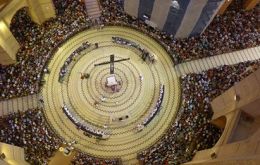
Brazil's Catholic population has declined since 2000 while its Protestant population has grown during the past two decades, a Pew survey fund.
-
Friday, July 19th 2013 - 06:29 UTC
Pope Francis wants direct contact with the crowds when he visits Brazil next week
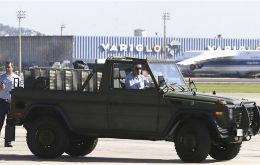
Pope Francis will not use bullet-proof ‘Pope-mobiles’ on his visit to Brazil next week to allow him more direct contact with crowds despite the security risks, according to a Vatican release.
-
Friday, July 19th 2013 - 06:03 UTC
Blatter joins Brazilian protestors, tells politicians “need to take responsibility”
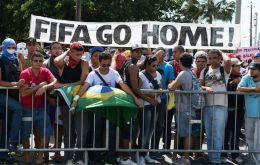
Sepp Blatter, president of FIFA, has placed heavy pressure on World Cup 2014 organisers Brazil, after witnessing the social unrest that accompanied the Confederations Cup during June.
-
Thursday, July 18th 2013 - 09:08 UTC
President-elect demands rule of the law before Paraguay returns as active Mercosur member
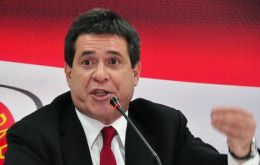
Paraguayan president elect Horacio Cartes confirmed that his government will insist in its position regarding Mercosur, which expects Paraguay to return as full active member following the inauguration ceremony 15 August.
-
Wednesday, July 17th 2013 - 07:50 UTC
Brazil downplays the Pacific Alliance significance, as an “integration project”
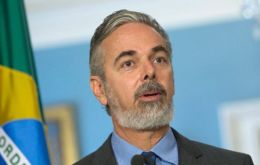
Brazilian Foreign minister Antonio Patriota downplayed the significance of the Alliance of the Pacific, the free trade agreement which includes Chile, Peru, Colombia and Mexico, arguing it is not a “real deep integration” as the one proposed by Mercosur.
-
Wednesday, July 17th 2013 - 07:31 UTC
Bolivia violated military aircraft immunity, claims Brazilian Ministry of Defence
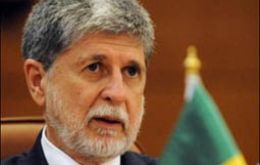
Bolivia violated the immunity of a Brazilian Air Force plane which in October 2011 was carrying Defence minister Celso Amorim and with no search warrant proceeded to inspect the aircraft suspecting opposition Senator Roger Pinto might be on board, claimed Brazilian authorities.
-
Wednesday, July 17th 2013 - 07:16 UTC
Brazilian lawmaker blasts ‘unnecessary hostility and arrogance’ towards Paraguay
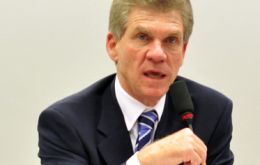
An influential member of Congress from south Brazil strongly criticized his country’s foreign policy towards Paraguay and Mercosur condemning the ‘unnecessary hostility’ and for abandoning legitimate interests and basic principles for an ‘ideological affinity solidarity’.
-
Tuesday, July 16th 2013 - 20:45 UTC
Dilma Rousseff suffering impact of protests: approval rating plunges 24.4 points

A freefall drop in Brazilian President Dilma Rousseff's popularity following last month's social unrest is altering the outlook for next year's presidential elections, according to a poll released Tuesday.
-
Tuesday, July 16th 2013 - 17:10 UTC
Argentina has dealt a ‘mortal blow’ to Mercosur that has become ‘a political forum’
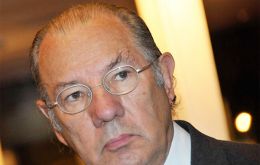
Speaking for a Brazilian business association in Sao Paulo, Rubén Barbosa accused the government of Argentina of dealing a ‘mortal blow’ to Mercosur, the regional grouping that was originally focused on economic integration and has since become a political forum for the region’s leaders as was again evident during the last summit in Montevideo.
-
Tuesday, July 16th 2013 - 05:48 UTC
Brazil expects president-elect Cartes accepts the return of Paraguay to Mercosur

Brazil Foreign minister Antonio Patriota said he expects that Paraguay president-elect Horacio Cartes will accept the return to Mercosur following his taking office ceremony scheduled for next August 15.