MercoPress. South Atlantic News Agency
Economy
-
Wednesday, May 26th 2010 - 06:25 UTC
IMF chief warns Brazilian economy runs risk of ‘overheating’
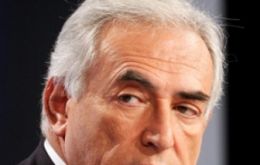
The Brazilian economy can grow as much as 7% this year, raising the risk of overheating, said on Tuesday International Monetary Fund Managing Director Dominique Strauss- Kahn, who described Brazil as “a success story”.
-
Wednesday, May 26th 2010 - 05:56 UTC
Financial regulation should be coordinated internationally, says IMF
The world avoided a great economic depression and will recover thanks to close cooperation from the international community, said IMF chief Dominique Strauss-Kahn.
-
Wednesday, May 26th 2010 - 05:48 UTC
US Judge seizes 2.43 billion USD Argentine government deposits in New York

New York Federal Judge Thomas Griesa seized 2.43 billion US dollars that Argentina’s government owned Banco Nación had deposited in the city in response to a claim presented by a group of Argentine bondholders that did not make it into the debt-swap.
-
Wednesday, May 26th 2010 - 04:09 UTC
Italy joins the Euro-support club; announces budget cuts of 24 billion Euros
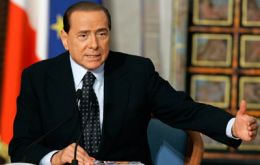
Italy joined Tuesday the group of European countries that have decided to trim government spending in an effort to convince investors that Euro nations are capable of fiscal balance and defending the single currency.
-
Wednesday, May 26th 2010 - 04:01 UTC
European Central Bank drains 26.5 billion Euros from money markets
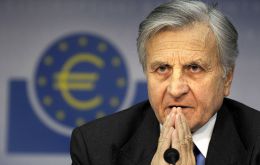
The European Central Bank drained 26.5 billion Euros in one-week funds from Euro-zone money markets on Tuesday, in line with its aim. The operation aims to offset purchases of government bonds by Euro zone central banks.
-
Tuesday, May 25th 2010 - 06:17 UTC
Fears of Europe’s debt crisis on global recovery hits Brazil’s Real
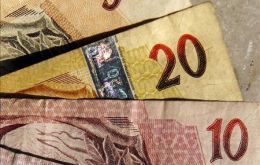
Brazil’s currency fell Monday over concern Europe’s debt crisis may slow the global economic recovery. The Real slid 0.9% to 1.8704 per U.S. dollar from 1.8534 on May 21. The currency has declined 6.7% this year after rising 33% in 2009.
-
Tuesday, May 25th 2010 - 00:57 UTC
IMF bluntly tells Spain austerity and reform measures are not enough

The International Monetary Fund has raised fresh concerns about Spain's economy, saying “far-reaching” reforms are needed to ensure its recovery. It said the country faced “severe” challenges, including the need to urgently reform a “dysfunctional” labour market, and its banking sector.
-
Tuesday, May 25th 2010 - 00:43 UTC
UK outlines start of massive cuts to “wasteful spending across the public sector”

Less than a fortnight after the Conservative-Liberal Democrat coalition took power in Britain, Chancellor of the Exchequer George Osborne outlined plans to cut £ 6.2 billion pounds (8.92 billion USD) from government spending to help reduce the budget deficit.
-
Saturday, May 22nd 2010 - 07:02 UTC
Argentine indicators show the economy picking up strongly

Argentina's economy grew at its fastest pace in nearly two years in March, expanding 8.1% from a year earlier as strong industry activity strengthened a recovery, according to government data.
-
Saturday, May 22nd 2010 - 02:53 UTC
‘Dr. Doom’ Roubini anticipates a ‘double-dip downturn’ and 20% fall in markets

With the Euro-zone crisis renewing fears over another financial crisis, economic pessimists have again regained stage, among them Nouriel Roubini professor at the Stern School of New York University (NYU).