MercoPress. South Atlantic News Agency
Economy
-
Monday, February 22nd 2010 - 01:01 UTC
Ecuador strongly defends relations with Iran, in spite of black list
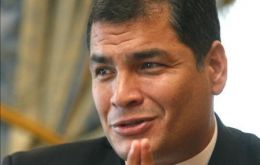
Ecuador's inclusion on an international list of nations accused of lagging in the fight against money laundering is a hypocritical punishment for its relations with Iran, Ecuador's president said during his weekly television address.
-
Sunday, February 21st 2010 - 01:09 UTC
Germany denies “concrete” aid package for Greece
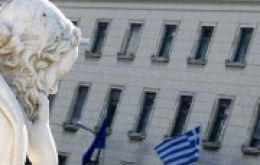
Germany’s Finance Ministry said on Saturday it has no specific plans for helping Greece combat its deficit crisis, denying a magazine report that euro-area governments may offer as much as 25 billion Euros in aid.
-
Saturday, February 20th 2010 - 21:20 UTC
US Fed members insists borrowing costs will remain low
The US Federal Reserve poured cold water on speculation that a surprise hike to its emergency lending rate signalled a change in monetary policy, saying borrowing costs in the economy would remain low.
-
Friday, February 19th 2010 - 21:11 UTC
Argentina rejects orthodox recipes to fight inflation; promises “competitive” peso
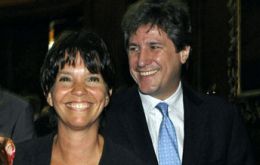
Argentina’s Central bank new authorities rejected orthodox recipes as a way to fight rising consumer prices anticipating they will focus on helping companies boost output as private economic analysts forecast inflation ranging between 20 and 30% this year after having reached 15% in 2009.
-
Friday, February 19th 2010 - 21:08 UTC
Embattled Greek PM warns in London of “contagion”
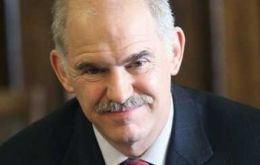
The Greek Prime Minister has admitted there is a “fear of contagion” as his nation battles its debt crisis. George Papandreou also insisted his country was not looking for a banking-style bailout and denied that his people were “reckless”.
-
Friday, February 19th 2010 - 21:02 UTC
Argentine central bank and Economy ministry seal “policies coordination”

Argentina’s Economy Minister Amado Boudou and Central Bank Governor Mercedes Marcó del Pont announced the appointing of the Council of Exchange, Financial, Economical and Monetary Politics.
-
Friday, February 19th 2010 - 21:00 UTC
Obama names bipartisan taskforce to tackle US budget deficit
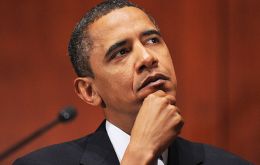
President Barack Obama has set up a taskforce to tackle the growing US budget deficit.
The body will report back by the end of the year on what steps need to be taken to get the deficit down to 3% of GDP. -
Friday, February 19th 2010 - 05:20 UTC
Federal Reserve tightens policy raises discount rate to commercial banks

The United State Federal Reserve tightened monetary policy Thursday for the first time in more than a year, raising by 0.25 percentage points the discount interest rate at which the US central bank lends directly to commercial banks.
-
Thursday, February 18th 2010 - 13:48 UTC
Argentine consumers expect inflation in next 12 months to reach 30%
Argentines expect consumer prices to rise 31.1% over the next 12 months, led by higher forecasts from the lower income category, according to the average estimate in a poll from Torcuato Di Tella University.
-
Thursday, February 18th 2010 - 00:02 UTC
Argentine consumers boycott meat to force lower prices

A consumer group had called on Argentines, world leaders in beef consumption, to boycott the meat for a week in an effort to lower prices, according to news reports from Buenos Aires.