MercoPress. South Atlantic News Agency
Economy
-
Friday, January 22nd 2010 - 14:53 UTC
Stock markets fall sharply in response to Obama’s bank reform proposal
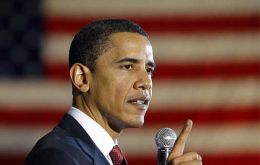
World stock markets have fallen sharply in response to far-reaching plans by US President Barack Obama to curb the activities of the biggest US banks. The Dow Jones closed down 2%, its worst fall since October, while Japan's Nikkei closed at a three-week low.
-
Friday, January 22nd 2010 - 05:15 UTC
World Bank warns recovery will slow down as fiscal stimulus impact wane

The global economic recovery that is now underway will slow later this year as the impact of fiscal stimulus wanes. Financial markets remain troubled and private sector demand lags amid high unemployment, according to a new report from the World Bank.
-
Friday, January 22nd 2010 - 04:54 UTC
East Asia and Pacific region growth rate forecasted to double Latinamerica’s

According to the World Bank Global Economic Prospects 2010, regional outlook, the East Asia and Pacific region led the rebound in the global economy last year, reflecting robust fiscal policy steps and strong domestic demand.
-
Thursday, January 21st 2010 - 12:23 UTC
Uruguay had a record tourism industry year in 2009

Uruguay had a very good tourist year in 2009 when the number of visitors climbed to 2.1 million and income reached 1.5 billion US dollars which is considered a record, according to Tourism Minister Hector Lescano.
-
Thursday, January 21st 2010 - 12:17 UTC
According to Argentina’s two tier statistics system unemployment fell to 8.4%

Argentine President Cristina Fernández de Kirchner announced Wednesday the unemployment rate had fallen from 9.1% to 8.4% in the last quarter of 2009.
-
Thursday, January 21st 2010 - 06:53 UTC
China freezes liquidity and sends global markets tumbling

Global shares have fallen amid concerns that China's plans to reduce lending by its banks will hurt the worldwide economy. The falls came after Chinese state media said authorities had ordered commercial banks to stop lending for the rest of January.
-
Thursday, January 21st 2010 - 06:51 UTC
“The best place to mine in South America (Chile) just got better”
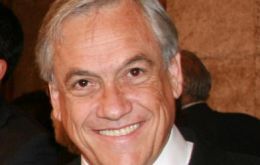
International mining groups this week were effusive in their support of Chile’s newly elected president Sebastian Piñera, a billionaire businessman with substantial holdings in Lan Airline, Chilevision (a TV station) and Colo Colo (a popular soccer team).
-
Wednesday, January 20th 2010 - 12:51 UTC
Argentine depositors look for security and discretion in Uruguay’s banks

Argentines disenchanted with their current government are taking their savings to refuge in neighbouring Uruguay where deposits of non residents have soared 20% during 2009, according to primary estimates from the Central Bank.
-
Wednesday, January 20th 2010 - 09:06 UTC
Argentine president travels to China to boost trade and cooperation

Argentine President Cristina Fernández de Kirchner will visit China next week as the country is in the middle of a controversy with Congress over a debt repayment plan which would appeal to Central bank resources but has been frozen by the courts.
-
Wednesday, January 20th 2010 - 09:03 UTC
The process to keep Japan’s flag carrier alive has began, says minister

Japan Airlines is to slash about 15,700 jobs and receive an 8 billion USD lifeline as part of turnaround efforts after filing for bankruptcy protection. The collapse of JAL, Asia’s top carrier was widely expected after it struggled with the aviation downturn and a debt burden of more than 25 billion USD.