MercoPress. South Atlantic News Agency
Economy
-
Tuesday, January 28th 2014 - 05:00 UTC
Brazil current account deficit ended 2013 at its widest in twelve years
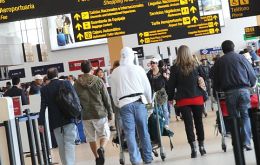
Brazil's current account ended 2013 at its widest deficit in 12 years amid a weakened foreign trade balance, heavy outgoing service payments, overseas profit remittances and an overall lack of confidence in the country's economic policies.
-
Monday, January 27th 2014 - 19:26 UTC
Coca Cola CEO warns youth unemployment is a great risk for social peace

Unemployment among teens and young adults represents a huge global problem, says Muhtar Kent, CEO of Coca-Cola. In the United States, teenage unemployment totaled 20.2 percent in December and if the situation isn't addressed, the results could be devastating, the social peace and fabric of the world is in danger.
-
Sunday, January 26th 2014 - 12:06 UTC
Maduro sets limits on company profits and prison terms for hoarding or over charging
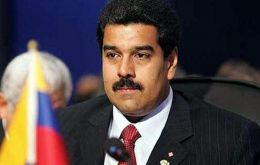
Venezuela decreed a new price control law that sets limits on company profits and establishes prison terms for those charged with hoarding or over-charging, part of populist President Nicolas Maduro's efforts to tame inflation.
-
Sunday, January 26th 2014 - 11:56 UTC
Argentine squid exports increased 84% last year compared to 2012
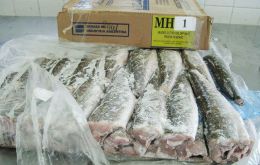
Argentina fisheries exports reached 441,255 tons in 2013, up 19.6% over the previous year when 368,915 tons were shipped abroad. Among the items with outstanding performance figures squid with over 100.000 tons and 84% higher than in 2012, according to the official stats from Argentina's Senasa, National Health and Food Quality Service.
-
Sunday, January 26th 2014 - 02:27 UTC
Four Wells planned by Rockhopper for 2014
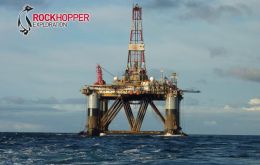
ROCKHOPPER Exploration has identified four wells it plans to drill in the upcoming 2014-2015 drilling campaign in the Falkland Islands.
-
Saturday, January 25th 2014 - 03:25 UTC
Argentina rolls back dollar restrictions hoping to contain market volatility; Monday test day

Argentina lifted on Friday restrictions on personal US dollar purchases for citizens, ending a prohibition on greenback savings that began at the end of 2011. The new measures, which occur one day after both the official and parallel 'blue' dollar saw record rises, were announced in a short press conference by Cabinet Chief Jorge Capitanich and Economy Minister Axel Kicillof. The measures become effective from Monday onwards.
-
Saturday, January 25th 2014 - 00:28 UTC
Mantega insists that the Mercosur/EU trade agreement includes Argentina

Mercosur is preparing for trade negotiations with the European Union and they include Argentina, said on Friday Brazilian finance minister Guido Mantega at the World Economic Forum taking place in Davos, Switzerland. The comment seems to contradict other recent statements which said the trade deal with the EU will go forward with or without a reluctant Argentina.
-
Friday, January 24th 2014 - 03:35 UTC
Mercosur/EU with their own problems still don't have a date to continue negotiations

Mercosur and the European Union continue to work on their tariff reduction proposals list but have no scheduled date for negotiators to meet and advance on a long delayed trade agreement according to Uruguayan diplomatic sources. However what is certain is that when the date is agreed it will be clear if Mercosur consensus proposal will include all founding members of the group.
-
Friday, January 24th 2014 - 03:33 UTC
Ecuador airline suspends flights to Venezuela because of tickets' debts

Ecuadorean airline Tame has suspended flights to Venezuela, demanding 43m dollars in overdue payments for tickets. Some 80 passengers were left stranded on Thursday at the airport in the Ecuadorean capital, Quito. Tame says the Venezuelan Central Bank has not transferred any money to its account in Ecuador since April 2013.
-
Friday, January 24th 2014 - 03:28 UTC
Falkland Islands cruise ship season looking “relatively healthy”
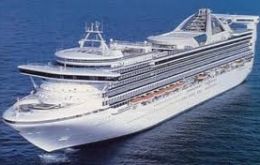
The Falkland Islands cruise ship season is looking “relatively healthy” to date, according to Sulivan Shipping Tourism Coordinator Samantha Marsh, with a third of the estimated 45,000 (total) passengers scheduled still to visit during February. The season got underway in October and to date 12,300 passengers have landed from 41 vessels of varying sizes.