MercoPress. South Atlantic News Agency
Economy
-
Wednesday, April 24th 2013 - 06:03 UTC
Latam/Caribbean region forecasted to expand 3.5% propped by domestic demand

Latin American and Caribbean countries will grow on average 3.5% this year supported by a strong domestic demand and the improved performance of Argentina and Brazil compared with 2012, according to the latest “Updated economic review of Latin America and the Caribbean 2012’ from the UN Economic Commission for Latinamerica and the Caribbean, ECLAC.
-
Wednesday, April 24th 2013 - 05:49 UTC
Brazil to the rescue of the sugar-ethanol industry with lower taxes and soft credit
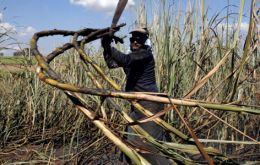
The Brazilian government has come to the rescue of the sugar-ethanol industry announcing that as of next May first the mandatory content of ethanol in gasoline will increase from 20% to 25%, taxes on the sugar-cane fuel will be eliminated and there will be soft loans to keep expansion going.
-
Wednesday, April 24th 2013 - 01:06 UTC
Chile’s growing concern with soaring Peso and plummeting dollar in local market
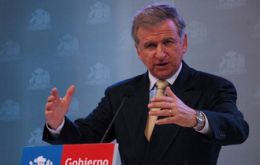
Chilean authorities are feeling “calmer” with the exchange rate nearing 480 pesos per US dollar, Finance Minister Felipe Larrain said on Tuesday, as the currency retreated from the year-and-a-half highs it reached earlier this month.
-
Tuesday, April 23rd 2013 - 21:17 UTC
Will Cartes fall prey to the past or make Paraguay part of an emerging new Latinamerica?

By R. Viswanathan (*) - Horacio Cartes of the Colorado party won the presidential elections held last Sunday in Paraguay. The Colorados had ruled the country continuously for 61 years in a one-party dictatorship until 2008 when Fernando Lugo, the leftist “Bishop of the Poor” defeated the Colorado candidate and made history.
-
Tuesday, April 23rd 2013 - 21:12 UTC
World economic forum on Latinamerica’s future begins in Lima

In the midst of global economic uncertainty, Latin America has maintained steady levels of economic growth and financial resilience over the past decade. The region has a forecast of almost 4% economic growth in 2013, and it is this encouraging prospect that is the focus of the 2013 World Economic Forum on Latin America in Lima, Peru, which opened on Tuesday 23 until April 25.
-
Tuesday, April 23rd 2013 - 06:46 UTC
Brazil investigating sale of 20 Embraer E-190 to Aerolíneas Argentinas fearing surcharges

Brazil’ aircraft manufacturer Embrear is again resurfacing suspicions regarding the sale of commercial planes to Aerolineas Argentinas involving several million dollars in surcharges. The company informed the US Securities and Exchange Commission, SEC, that it is investigating companies from five different countries to which it sold aircraft allegedly in transactions suspicious of irregularities.
-
Tuesday, April 23rd 2013 - 04:15 UTC
Ralph Lauren fined in the US for briberies committed by Argentine subsidiary

Ralph Lauren Corp. has agreed to pay 1.6 million dollars to the US Securities and Exchange Commission, SEC, after finding that its subsidiary in Argentina repeatedly bribed customs officials, federal authorities announced Monday.
-
Tuesday, April 23rd 2013 - 02:09 UTC
Argentina and Brazil private sectors team up to promote exports to Arab countries

With the intention of boosting exports to Arab nations, the Argentine and Brazilian chambers of commerce have established an Arab-South American Commerce Federation it was reported in Buenos Aires.
-
Monday, April 22nd 2013 - 07:43 UTC
Mathematician will be responsible for putting Venezuelan inflation back on its feet
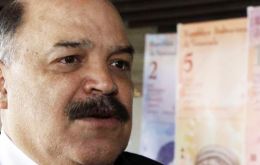
President Nicolas Maduro replaced Venezuelan Finance Minister Jorge Giordani, appointing central bank chief Nelson Merentes in his place two days after being sworn in as Hugo Chavez's successor.
-
Saturday, April 20th 2013 - 09:07 UTC
Uruguay investing hundreds of millions to support the US dollar and exports edge

Uruguay’ financial and political stability is backfiring as the Central bank is forced to buy a massive inflow of foreign capital which in turn creates an abundance of Pesos that need to be absorbed to control inflation and support the competitive edge of the country’s exports.

